The Cabinet of Curiosities tales brief and sinister 2019-02-03T19:49:37Z https://enterthecabinet.com/feed/atom/ WordPress Stefan Bachmann <![CDATA[Carlotta]]> https://enterthecabinet.com/?p=1886 2019-02-03T19:49:37Z 2019-01-08T19:32:18Z   When autumn came, Carlotta’s parents brought in the trampoline from outside and set it up in the living room. “So it doesn’t blow away,” they said, and Carlotta watched from around a door-frame and thought about how she might use this turn of events to her advantage. Once her parents were outside in the […]

The post Carlotta appeared first on The Cabinet of Curiosities.

]]>


When autumn came, Carlotta’s parents brought in the trampoline from outside and set it up in the living room. “So it doesn’t blow away,” they said, and Carlotta watched from around a door-frame and thought about how she might use this turn of events to her advantage.

Once her parents were outside in the garden, she approached the trampoline slowly, the way one might approach a bear in the woods when one is not sure if it is dead or only sleeping. She bounced on it cautiously at first, small, exploratory bounces. Then she leaped up and came down with all her weight and was hurled high into the air. She smashed through the ceiling and hung for a moment, her head among the mouse droppings and plaster of the crawlspace, her legs kicking in the room below. Then she fell back down and bounced several more times on the shiny black material, staring up at the hole she had made with her head.

She was not hurt, only a little stunned, but it awakened in her the great wish to go back into the space between the floors and crawl about in it. She had seen it for a split second, a hidden world squeezed between the downstairs and the upstairs, and it had not looked bad at all. She had the idea she would find animals there – mice or birds or rattlesnakes – that liked to be alone as much as she did, and paradoxically, that they would want to be her friends. She dreamed of tunnels worming among the beams and air ducts, secret chambers and quiet corners where she could hide. She imagined herself as one of those feral children from books, haunting her family with frightening cackles and knocks. She was always looking for secret places, always looking for small, quiet corners in the great, bleak expanse of the world. Sanctuary: that was the word that always popped into her head when she thought of her mission. She was looking for a sanctuary.

She went quickly to the window and peered out to make sure her parents were still busy. Then, shaking the plaster out of her hair, she fetched a wobbly stepladder from the broom closet. She balanced it on the trampoline, and climbed it, and peeked again through the hole in the ceiling. It was at this inopportune moment that her parents decided to come back in from the garden.

“Carlotta!” they both exclaimed together, when they saw the trampoline, and the stepladder, and their daughter wobbling at the top of it, her head inside the ceiling. “Did you do that?”

Carlotta did not answer. She waited a moment, wondering which direction to choose – up into the crawlspace, or down to face the noise and angry faces of her parents. In the end, the ladder made the decision for her, toppling over and sending her down into the brightness of the living room. She collapsed onto the trampoline and blinked at her mother and father, who blinked back at her, perplexed. Carlotta’s parents never knew quite what to make of their daughter, and Carlotta often thought they would give her back if they could, and exchange her for someone better.

Carlotta,” her mother said at last, gesturing at the ceiling and the scraps of plaster everywhere. “Why would you do that? Use your head.”

Carlotta had used her head. That was what had made the hole in the ceiling. But she knew it was futile to argue, and so she went and got a dustpan and cleaned up the plaster, and then her parents sent her to her room and had a good, long talk.

*

In the end, it was the trampoline that sent Carlotta to school in the country. “It will do you good,” her parents said, the morning they took her little suitcase and put it into the trunk of the red Jensen. “To be away. To be among other children.”

Carlotta’s mother drove the car. She was not a good driver, and this made Carlotta’s father – who did not know how to drive at all – feel obliged to give directions.

“Turn left up here, Lotta,” he said, pointing to a sign. “It will cut our journey in half.”

“I don’t think that leads anywhere. Are you sure, Carl?”

“Quite sure. I have a knack for directions. And Carlotta,” he added, noting his daughter’s dour expression between the front seats. “Don’t worry, darling. St. Ethelburt’s is a good school, a veritable temple to learning-”

*

St. Ethelburt’s might have been a good school for some children, but it wasn’t for Carlotta.

She didn’t like math, and though she had always thought she liked history, the history teacher smelled of chewing tobacco and Violet Mints and sounded like the drone of a lawnmower engine, and so Carlotta decided she didn’t like history either.

Choir was a trial, sport an exercise in humiliation, and nothing Carlotta did seemed quite right by other people’s standards. During outdoor drawing class, Carlotta would walk about in her great green rain-boots, peering at people’s work over their shoulders like a curious, slightly senile old person. The other girls swatted her away, but she only pushed her glasses – round as a pair of coins – up her nose and continued tottering about.

“Carlotta,” the drawing teacher said. “Sit down and make your own picture. Don’t you have any ideas?”

I’m not looking for ideas, Carlotta thought, frowning. She was going to draw a picture of a hand drawing a picture, and was only looking to see whose hand cast the nicest shadow. But when her gaze darted across all those staring eyes, and the pinched face of the drawing teacher, she paused and hunched her shoulders and could not bring herself to explain this.

The teachers at St. Ethelburt’s were confusing to Carlotta. The science teacher, a Mr. Tweedy, would sometimes not teach science, but would assign them reading and then sit in the light of one of the great classroom windows, looking out from time to time, and then leaning over a table and writing desperate letters, his spectacles sliding down his nose. Miss Larch, the maths teacher, had switched schools six times in three years and was rumored to be a fugitive from the law. And the headmistress had broken up with her fellow just a little while ago and all the girls had talked about it for weeks. One day Carlotta caught her in an empty hallway, primping in front of a mirror and crying. The headmistress had seen Carlotta and had smiled brightly and hurried away. She always gave Carlotta little sideways glances after that, as if she were worried Carlotta would tell on her, and Carlotta wondered often about that mirror and what it must have shown the headmistress to make her cry.

Then there was the trouble of Dido Binnington. Unlike Carlotta, for whom the world was like a prickly, scratchy, much-too-large sweater, the world seemed to have been made to fit Dido like a lovely party dress. Dido was the captain of the rowing team and the head girl for that year, and she thought Carlotta shouldn’t be allowed anywhere near her. In fact, whenever Carlotta came clumping past in her galoshes, Dido would make a face as if she smelled something bad, and would whisper something to her friends. Carlotta didn’t know this, but having the world fit you like a lovely dress came with all sorts of its own insidious troubles, and the truth was Dido was not a happy creature. The mere sight of Carlotta, half-blind behind her spectacles, drove Dido to wrath. She didn’t know why. She only knew that when she pushed Carlotta in the hall, or made a comment about her in class that made everyone laugh, she felt a great satisfaction, the sort she normally only felt when squashing bumblebees or stepping on snails.

Carlotta thought Dido was far too old to care whether Carlotta wore galoshes, and really, it was more pathetic that she paid attention to Carlotta at all, when Carlotta was only in Year 3 and Dido in Year 9. Sometimes Carlotta thought the others should notice how silly Dido was, too, how she picked at her hair whenever someone else’s joke got a louder laugh than her own, and how she spoke a great deal about being good at things, but wasn’t. The other girls didn’t seem to notice anything, however, and it only confused Carlotta further. How easily you could trick the world, Carlotta thought. How easily you could pretend to be good, but be all sorts of nasty underneath. It made Carlotta shake her head. It made her want to go away.

*

Carlotta resumed her search for a good sanctuary during her very first week at St. Ethelbert’s. She decided right away that the school’s crawlspace would not be an option. Her parents’ house had been made of plasterboard and had been put together by a crane, and thus was easily permeable. The school, on the hand, was old and built of stone, and Carlotta thought if she placed a trampoline on the floor of one of the rooms and tried to torpedo herself into the ceiling the results would be significantly less successful than they’d been at home.

Instead, she took to the woods that edged the school green, wandering the little glens and picking her way along the stony shore of the lake, just inside the shadow of the pine stands. There was a folly some ways into the woods. It had once been a gazebo of some sort, or a tower, with Grecian pillars and high windows, but either most of it had fallen over or it had never been built in the first place. It had no ceiling, strange writing on the walls in bright paint, and bottles on the ground. It looked as if it hadn’t been used for a very long time. Better yet, thought Carlotta as she entered for the first time, it had a black iron door in one pillar that looked just large enough for her to crawl into.

She lay on her stomach among the dirt and leaves, and peered at the door. It was a bright, warm day, the golden sun piercing the trees and warming the stone. Birds sang and crickets sawed. Carlotta began to pry at the latch. She thought the door looked like a door in Alice in Wonderland, a door meant for small things only, that would sort out all the larger ones and keep them from entering.

The latch did not open at once, but Carlotta was patient. She picked slowly at the rust of the latch, jiggling it every minute or so. She hummed to herself and imagined what she might find behind the door. She pictured a tunnel, sloping downward, growing wider and wider, and then a stair, and then a great, cavernous chamber with a lake still as glass, and a castle at its center. The castle would have spires and diamond-paned windows, and all its window would be twinkling with warm, orange, inviting light. Music would float toward her across that silent water, and soft voices, and the sound of cutlery, for there was a feast to welcome her. We’ve been waiting for you, they would tell her, the strange quiet inhabitants of the castle. We’ve been waiting a thousand years for you to find the little black door in the folly and come to us.

Of course, Carlotta would leave through the little black door every once in a while if she wanted to. She would see her parents on birthdays and holidays, and go to lessons at St. Ethelbert’s when they interested her, and everyone would be very surprised to see her. But then she’d slip away again and return to her castle underground. She would be an enigma, a mystery to the world above, and it would make sense that everyone thought her strange there, because it was not her world at all.

At last, the latch jiggled and slid back, and the small black door creaked open. Carlotta wrenched it wide and wriggled forward to look in. All was dark. There was indeed a space behind the door, a tunnel of some sort, just as she had thought! Carlotta’s heart felt warm and slithery, for suddenly it seemed entirely possible there was a lake and a castle under this folly, that anything might be waiting in the dark ahead.

She wriggled further until her head was inside the door. . . .

*

Back at St. Ethelburt’s, Dido Binnington had watched from an upstairs window as Carlotta wandered away across the green. Carlotta had been swinging a little stick, walking in wide zigzags so that it took her twice as long as would be strictly necessary to get from one point to another. Dido had snorted. But then she had thought, “What is that little creep up to? Where is she going all by herself?” And Dido had run down the stairs and out over the grass, and followed her.

*

Carlotta did not see Dido standing in the space between two of the crumbling pillars. She was much too busy thinking of what lay ahead. Her feet disappeared inside the little black door. The noise of the trees and the birds was faint in there, cushioned by the velvet dark. It was cool and damp, and Carlotta was aware of her uniform becoming soaked with the mud. She wriggled a foot or so more. The tunnel sloped steeply downward, but it did not become any bigger like it had in her mind.

And all at once, she heard a sound behind her: quick footsteps crunching across the leaves and then a pause as someone crouched down. There was no laughter or taunting, no words at all. Only a quick, sharp breath, and then the black iron door swung shut with great force.

Carlotta remained very still for a moment, her chin on her hands, her entire body pointing down into the earth, like a worm. Then she began to back up slowly until she felt the door with her foot. She tapped the toes of her boot several times against the metal. It was certainly closed. Carlotta frowned. She pushed harder. It was closed and locked.

*

Outside, Dido stood with her arms crossed and looked at that small black door. She wasn’t sure what she meant to accomplish by locking the numpty girl inside. But she felt the familiar satisfaction – the crush of bug carapaces, the squelch of snails – and so she only waited, hoping to hear Carlotta scream or panic.

But no such sounds came from that little black door. Only a faint tapping that went on for several minutes and then stopped.

Dido scowled. She smoked a cigarette, and then sat down in front of the black iron door and waited. Then she wrenched it open, saying, “All right, come out, you little freak.”

But there was no one there. She peered in and saw only blackness, a tunnel extending down steeply, and a little trail in the mud that a girl might have made, wriggling along. Dido looked up sharply. She glanced over her shoulder and the trees seemed to be watching her, silent and disapproving. “Carlotta?” she demanded, in a shrill voice.

Carlotta did not answer.

*

Dido went back to the school slowly, feeling sick. She had left the door wide open. It wasn’t her fault if the idiot had gotten stuck somewhere, or suffocated, or. . .

She thought of going to the headmistress. She thought of telling her friend, Opal, who was dull and reasonable and only said things that made Dido feel better. In the end Dido said nothing, because everyone would ask what she was doing at the folly in the first place, and why she had followed Carlotta, and she could not think of anything that wouldn’t sound foolish.

There was a roll call before dinner, and Carlotta was found to be missing. The younger girls in Carlotta’s room looked about in frightened confusion. Dido stared straight ahead. Opal, after a quick glance in her direction to gauge the winds and the currents, did the same.

The school was searched. One of the girls told the headmistress that Carlotta had once spoken of living inside a mattress, like a feather, and so everyone had gone prodding the beds to make sure she wasn’t inside one of them. But she was not in any of the mattresses, or anywhere in the school. The police were called. Dogs barked and the beams of flashlights went wheeling in blinding white arcs across the grounds.

Dido went to bed, but she didn’t sleep. She thought of that dripping tunnel behind the black door, the trees, watching her, the muddy soles of Carlotta’s rain-boots vanishing into the dark. Finally, Dido couldn’t bare it any longer, and she leapt up and went running out across the fields to the folly. She wanted to go to the little black door, scream into it, “Carlotta! Carlotta!”

But when she arrived, the folly was already full of dogs and police men, and the headmistress was speaking to an officer in low tones, and Dido could only stand like a ghost among the trees, listening. “A coal chute,” she heard the officer saying. “For the oven that used to heat the place. A large room at the bottom. It will have been mostly filled with water, and if she went in face-first, well-”

Dido stared at the little iron door. In the night, it looked like a maw, like the oven in a witch’s cottage. Then she turned and went slowly back to her room. She crawled into bed, wide-eyed and white as her pillowcase. She knew Opal was looking at her questioningly from the bed next over, but she did not catch her gaze.

And just as she was closing her eyes and beginning to cry bitterly for what a dreadful person she was, and how she would henceforth dedicate her life to orphans and little freaks like Carlotta to atone for her wicked past, she heard a sound: the rubbery squinch-squinch-squinch of galoshes, damp and muddy on polished floorboards. The door to her room opened, a cold draft brushing her cheek. And there was Carlotta, standing at the end of her bed, drenched and muddy, her hair hanging into her eyes, which were dark and glaring. She stood there for a good twenty seconds, Dido frozen, her sheets clutched to her chin. Then Carlotta reached up and plucked a gobbet of mud from her hair and lobbed it at Dido. The mud struck her square between the eyes. Carlotta lobbed another gobbet at Opal, because she knew Opal liked to be the same as Dido. Then Carlotta shuddered grotesquely and squinch-squinched out of the room, and with one last portentous look, closed the door with a bang.

Dido and Opal sat for many minutes, mud dripping onto their sheets, staring at each other. Then they screamed and screamed and screamed.

 *

As for Carlotta, she took a bath, and the next morning presented herself at breakfast. She did not know why everyone was startled to see her. She’d not been gone half as long as she had intended. The coal tunnel had been an unsatisfactory refuge. It had been dark and chilly. There had been no castle at the bottom, only a small black chamber full of water, and for a moment, when she’d tipped into it, she thought she might drown. But no, she’d found a little ledge and sat there for who-knew-how-many-hours, humming and murmuring to herself and trying to make the best of it. She’d searched the walls for more tunnels, tunnels that went deeper and farther, where castles might still lie. But no matter how hard she searched, she saw no distant lights and heard no voices calling her name. In the end, she’d crawled back up the tunnel, and finding the door open, went out again. It was night by then, and somewhere between the folly and the edge of the woods, she’d decided to play a prank on Dido, who was always so mean to her.

She could not help feeling a little disappointed at the little black door in the folly. But tomorrow the search would continue. There were still plenty of places to look, and she was almost certain there was something marvelous to find in the old school, or in the woods, or if not there then somewhere, eventually. She thought that when you grew up and got older, you could not help but find those places what with all the days and years you had. She watched Mr. Tweedy scribbling his letters, and the headmistress eying herself in brassy gleam of her desk-lamp and tugging at the skin around her eyes, and she waited for classes to end.

The post Carlotta appeared first on The Cabinet of Curiosities.

]]>
1
Katherine Catmull <![CDATA[Ghost Fox, Ghost Forest]]> https://enterthecabinet.com/?p=1870 2018-12-17T19:25:19Z 2018-12-17T18:28:31Z It’s late, too late to be walking my dogs, but I was grading papers and lost track of the time, so by the time Bugsy lays a sad snout on my leg, it’s already dusk. I leash him up, corral Arya, who is yapping hysterically because she saw maybe a spider? And out we go, […]

The post Ghost Fox, Ghost Forest appeared first on The Cabinet of Curiosities.

]]>
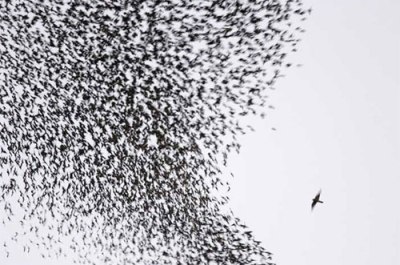
It’s late, too late to be walking my dogs, but I was grading papers and lost track of the time, so by the time Bugsy lays a sad snout on my leg, it’s already dusk. I leash him up, corral Arya, who is yapping hysterically because she saw maybe a spider? And out we go, down the neighborhood streets to the park.

It’s dusk, and the street and houses look like a picture you tried to take in the dark, spooky, hard to make out. Finally the streetlights come on—and right at that moment, about a half a block ahead of me, a fox runs past. But it’s not a regular fox. It’s  . . .  I don’t want to say “ghost fox,” but it looks like a ghost fox, spectral, long, and lithe. It runs up from the creek, crosses the street in front of us, and heads into the park.

ghost fox

Image courtesy of Greyloch on Flickr.

But here’s what’s weird: my dogs don’t notice anything at all.  They don’t bark—and Arya barks at everything, and Bugsy loves to chase critters. They don’t even look up. They just stand there, patient, like they’re wondering when I’ll start walking again.

So I do start walking, start running, actually. We’re heading for the park anyway, and I want to get a better look at that fox.

And now we’re in the park itself, under the dark limbs of some suddenly really creepy-looking trees. It’s ridiculous. I know this park, I’ve been here a million times. It’s just a city park, not a Mysterious Forest.

I thought I knew it, anyway.

Just ahead of us, a low gray shadow flicks up the dirt path, and I follow. The dogs are not only not interested in this chase, they’re actually hanging back a little now. Arya whines. I have to bring them to heel.

We run toward the back of the park, following that slender gray shadow as it runs across the open ground. It’s muggy and hot and it’s time to go home, and both dogs are whining now, and pulling back, but I have to see.

Not so many park lights here toward the back, and the trees are getting thick, elms and poplars and oaks thick with leaves that look black in the darkness. We fight our way through a clump of tall shrubs, my dogs crying high and scared, and come to a clearing where the moonlight falls bright and cold as a knife.

And we stop, and the dogs go silent, because something’s  . . . wrong.

This isn’t the same park.

These aren’t the same trees.

This is a forest. A ghost forest. The trees aren’t low and dark and thick with leaves. They’re tall and slender as bones, white and bare, with twiggy twisted branches like an old person’s hands.

The tree right in front of me is the tallest of all, thicker than the others. And low on its trunk is a great black hole, shaped like an elm leaf, like an inky mouth.

A tiny white hand emerges from this black hole, and grips the side of the tree.

The leashes yank out of my hand, and silently my dogs scatter away.

But I don’t move. I don’t know why I don’t move.

Another little white hand appears, and grabs this other side of the hole. With great effort, the little hands pull and pull until a small white creature spills from tree and staggers out to stand a few yards from me.

The moon is like a spotlight. It’s a child. A tiny child, a young child, maybe four or five years old at most.

And I have a sudden thought, which is: the moon is revealing this child to me.

So that I can save her?

Or to warn me?

But she looks so sad, this child. A sad little girl, tiny and thin in her white-gray rags, white as the moon all over except for the purple around her black eyes and her lank, tangled black hair. I’d say she was a ghost—maybe she is a ghost — except that she smells so bad. She smells like my house the week a rat died in the walls and his body slowly decayed decayed until dust was all that was left, and the smell was gone.

“Are you all right?” I ask stupidly.

She stares at me. Her eyes are like the black hole in the tree.

“You okay, you need . . . ”

Her voice is high and rasping. “You have to take care of me.”

“Of course I will, are you lost?” I say. “Are your parents . . . “ I don’t know how to finish that. I don’t even know where I am, what this place is. Is she even real?

But that smell—well, that smell. She must be real.

“You have to take care of me,” she says again.

She sounds like some little queen. I want to laugh.

“You have to take care of me.” She takes a step forward. Her voice is sharp as a needle now. “You HAVE TO. YOU HAVE TO.”

And then somehow, faster than I can see it, she’s right next to me, and her arms are around my waist. And suddenly she’s climbing me like a monkey, she’s incredibly strong, and her thin little arms  are around my neck like ropes and her mouth is wide open, and inside it’s as black as a cave, black as the hole in the tree, and she’s screaming YOU HAVE TO, YOU HAVE TO.

And then I feel it.

I feel sharp little teeth plunging into my neck.

I feel her little black mouth sucking on my throat, every mouthful a pulse of blood straight from my heart, like she’s a hungry baby and my heart is a bottle of milk she’s draining dry.

I am screaming, I know that. I hear myself, screaming. I am trying to pull her off, but she’s incredibly strong. I hear the crunch of dead leaves under my knees before I realize I’ve dropped to the ground.

“Don’t,“ I hear myself moaning. “Don’t, don’t.” But the hard arms wrap tighter around me, the bone-fingers wrapped in my hair, the wiry little legs like a tight leather band around my chest, and I’m falling, I think I’m falling, the white moonlight goes black, and  . . .

And . . .

Well, I’m telling the story. Aren’t I? So you know I didn’t die, don’t you?

Don’t you?

. . . Did I die?

I don’t think I died. I woke, anyway, later. A snuffling came at my ear. Bugsy, I thought (no way it was Arya, that idiot): he hadn’t abandoned me after all.

But the bright sharp little tongue, and the narrow snout—those weren’t either of my dogs. It was a low gray shadow at my side, the gray fox. The moonlight had left the grove, had moved on, so it was too dark to see. But I stood, I was dizzy as hell, but I stood, and I followed the fox.

It felt like I followed that ghost of a fox all night. It was taking me in circles, I was sure, and I thought again that I would die, this couldn’t be right, it was playing with me.

But one last left turn, and I was standing on the street, with in the bright ugly light of the streetlight. And I started crying, I cried, I was so relieved. I walked and stumbled and ran the few blocks left toward home.

And I’m home, I made it home. But my dogs never came back. I posted rewards, I checked the Humane Society, but I never saw those dogs again. I miss them every day. Even Arya.

And somehow I can’t quite get myself to go to work. I sit in my house all day. I just rest here. There doesn’t seem much reason to go out.

After a few months, I started hearing voices in the house. Voices of people talking, like they live here or something.

Are they ghosts?

Am I the ghost?

Where are my dogs?


(Inspired by my friend Patrick Lopez’s story about a ghost fox. Funny, I haven’t seen Patrick in a while.)

The post Ghost Fox, Ghost Forest appeared first on The Cabinet of Curiosities.

]]>
5
Stefan Bachmann <![CDATA[Beware the Hunter]]> http://enterthecabinet.com/?p=1788 2017-05-11T20:02:49Z 2017-03-18T20:35:53Z Far out among the hillocks and lumps of a misty moor, there stood a house with three chimneys and four windows and six children who lived there all alone. They were very comfortable. Their house was snug and smelled of violets and clary sage, and its insides were well-stuffed with cushions and coal-stoves and crackly, […]

The post Beware the Hunter appeared first on The Cabinet of Curiosities.

]]>
Far out among the hillocks and lumps of a misty moor, there stood a house with three chimneys and four windows and six children who lived there all alone. They were very comfortable. Their house was snug and smelled of violets and clary sage, and its insides were well-stuffed with cushions and coal-stoves and crackly, yellow-paged books. Outside was a hawthorn tree and a wash-barrel and a small square of grass, and all of it was enclosed by a high stone wall, its door kept firmly locked from the outside.

Now and then a woman would emerge from the fog that lay forever around the house, and would bring the children pails of fresh milk and trays of meat pies covered with linen handkerchiefs, but she almost never spoke to the children. When she did, she called them “My little lords and ladies” in a sad sort of voice. She would come very early in the morning, before the sun had risen, and would ring a brass bell to let the children know she had placed the pails and trays inside the door into the garden. Then she would go away again in a great hurry.

The children’s names were Betsy, Wilbur, Elihandra, John, Calendula, and Cripps.

Betsy was the eldest. She was ungainly and strong, and would sometimes pause in the middle of a sentence to ponder her words, which made Wilbur think her foolish, because he seldom paused to ponder anything.

Wilbur was second-eldest, loud and insufferable.

Elihandra was waifish and golden-haired, and liked people to get along, so whenever there was a quarrel, she was the one to comfort whomever was crying and also the one to drag the one who had caused the crying out from under a table to apologize.

John and Calendula were twins, and conspired together against everyone else.

And then there was Cripps, who was very tiny and quiet, and wandered about  smelling the bristly purple flowers in the garden and poking his nose into cupboards and the tops of shelves where only spiders lived, and into the chimneys, where nothing lived, but which were very intriguing. Cripps wondered often what they were all doing in that house on the moor and why the door was always kept locked, and why the woman always went away in a hurry. He had a great deal of thoughts, but he kept them to himself so as not to ruin them.

* * *

After some years, when the children were only slightly older (there were no calendars in the house, or clocks), they noticed the woman had not arrived in several days, and they were very hungry. Their meat pies ran out. Their pantry became bare. Elihandra suggested they grow their own food – she’d read about it in books, and she knew it could be done – but though they placed seeds carefully in the dirt along the north wall of the garden, and watered them, and waited patiently for their food to grow, none did.

After two days, when still no one had arrived, Cripps climbed up onto the wall with the help of Betsy’s shoulders, and looked over. “There’s a shoe!” he called down. “Poking out of the fog!”

“A shoe?” Betsy said. “Is there . . .” She paused to think. “. . .a person attached to the shoe?”

Cripps wasn’t sure. He had gone very still; twenty paces to the left of the shoe, a figure stood, just visible in the mist, facing the cottage.

Cripps shouted at the top of his lungs. “Hello! Please help us! We’re very hungry, and we can’t get out!”

But at the sound of his call the figure only shuddered and twisted, and then there was the sound of feet thudding on the heather, and the figure vanished into the white.

Cripps and Elihandra went back to the other children, and they all sat in their chairs in the parlour, becoming hungrier and hungrier by the hour.

* * *

“We’re going to have to leave,” Betsy said finally, when they were all so thin they could see their ribs and the shapes of the bones in their hands. “There’s no food, and Miss Bell-of-brass hasn’t been here in days.” (Miss Bell-of-brass was what they called the woman with pies.)

Everyone said no, they couldn’t possibly go. Surely someone would help them. But though the children waited and waited for the tinkle of a bell, and knocked and pried at the door in the wall, no one came for them. The sounds of the moor beyond the wall became strange and unsettling where before the children had never noticed them at all. Sometimes Cripps thought he heard hands and bony fingers tapping at the door, and distant voices. Wilbur became more insufferable, and Betsy took even longer to say things, and there were quarrels that not even Elihandra cared to diffuse. After one particular angry spat, Cripps went after Betsy, who was crying, and followed her into the garden. Betsy was scrubbing a shirt at the washboard, though it wasn’t dirty, and Cripps slipped his hands into the soap and helped her. “I think we should go,” Cripps whispered, very softly. “I think we should escape.” But Betsy only cried and cried.

At last, when the very smallest of crumbs were gone, and the children were so tired they simply sat for hours, their stomachs growling . . . then finally did Elihandra and Wilbur and all the others agree.

“We’ll climb over the wall,” said Elihandra. And so they did. The very same day, the six of them built a ladder out of all the chairs in the house, scaled it unsteadily, and leaped down the other side of the wall.

Cripps was the last to go. He waved goodbye to the cottage, and the scrawny hawthorn tree, and the wash-barrel, and the three chimneys and four windows, and then he leaped gingerly from the top of the wall, arms outspread as if he hoped he would fly.

It was a long drop to the moor, but the children steeled themselves and made it without injury, and set off into the bank of fog.

They had not gone more than twenty paces when they came upon the woman who had brought them their milk and pies. She had been mostly eaten. There was blood all down her front, and all over the gorse around her, as if the moor had bloomed briefly in spatters of crimson flowers.

“What d’you suppose happened?” the children asked, gazing down at her solemnly.

“A beast,” said Elihandra. “Or worse. We don’t know what might be out in this fog.”

Cripps knelt and closed the woman’s eyes, which had been staring unsettlingly at the locked door in the wall, and then the children continued on their way.

* * *

After a while, they came to a town. It was crackly, rust-brown and mossy, and all the gables and chimneys leaned in one direction, as though at one point a giant had attempted to flatten the town with a hot-iron. The children walked down its street, staring around them at all the dark, locked-up houses. And though the doors were all closed and the shutters bolted, they were sure the town was not abandoned. They thought they saw figures moving in the mist, and heard people going about their business within the houses.

When they passed a tall, pointed window, they heard a breathless, frail voice from beyond the shutters. “Go away,” it said, delicate as bird bones and rattling with fear. “Go back to your own place. We have nothing to give you.”

The children glanced at each other. They came to a window that seemed to have grown inside a lilac bush, but in fact it was the lilac bush which had grown strong and tall and swallowed a house and window.

A hand went up to the window, and an old face peered out. “Off with you, children,” said an old woman, her cheeks rosy and her eyes black and bright. “You are not welcome here!”

The woman’s hand at the window was oddly purplish and long-nailed, and did not seem to go along with her face. It was as if someone else’s hand was poking from her lacy sleeve.

The children put their heads together and conferred. Then, because Elihandra was the politest, she said: “Could you give us something to eat, please? We’re very hungry.”

“Hungry?” the woman said. “Aren’t we all: hungry and cold. We have our own troubles here. Be gone. And beware the hunter!”

The children did not want to be gone. They were tired and starving, and they could see a fire burning beyond the casement of the old woman’s house, and they supposed if they could have gone inside, they might have been able to beware the hunter better (whoever that might be). They stood below the window in the lilac bush, looking up wretchedly and hoping she would change her mind, but then the old woman came out onto the doorstep, and her two old sisters with her, and they stood there in their starched aprons and clean caps, and shooed the children away, cawing and crying like a trio of ancient birds.

* * *

The children left the town and followed a road, on and on into the fog. Their feet hurt and the slippers they had worn at the three-chimneyed house had gone threadbare and ragged, but there was nothing for them to do but walk. After a while they came upon a gang of boys.

The boys were small and grubby and wild-looking, and their clothes flapped in tatters around them.

“Hurry,” one of them said, soft and desperate. “Hurry! Run! They’ve seen us. They’ll catch us all, and what will they do with us?” And then the entire pack – as if they were one single body – turned and fled into the fog, giggling in a piercing, frantic way, like a cry.

The six children stared after the tattered boys, and then wandered on. They walked for what felt like days. It was difficult to tell, because there was no sun or moon in this fog, and it never seemed to become darker or lighter. They could not exactly sleep, because somewhere at the edge of their senses someone was always murmuring or laughing. Once, Cripps looked over his shoulder and was sure he saw the woman who brought them their milk standing at a break in the drifting mist, her front wet and shiny with blood.

When they had been walking a very long time and were hardly more than bones, Elihandra stopped abruptly with a cry, and felt about her back. Several black strings extended from it, stretching away into the fog. It was as if she had snagged her coat on something and unraveled it on and on behind her. And when the other five children looked behind themselves, they saw that all of them had threads in their arms and their backs, vanishing back into the mist.

“Beware the hunter!” the cry came suddenly very close by, and the children ran as fast they could, the strings hissing through the gorse behind them, unspooling on and on.

* * *

In time, the children slowed again, because nothing had come after them.

“Do you think someone caught us?” Elihandra asked, examining her strings. “Like a fish?”

“The hunter, perhaps?” said Elihandra.

“Oh, I don’t think so,” said Wilbur. “If he caught us, why are we still doing as we please?”

But in the end, they could not agree what the strings were for, and because they could not rip or break them, they decided to follow them to see where they ended. It became a sort of game. They wrapped the coarse threads around their arms until they each had a coil of it, and they began to move more quickly and talk amongst themselves and dart among the hillocks, leaping like sprites, and they didn’t feel quite as tired anymore. . . .

Until all at once, they froze.

There was the hunter, looming in the mist just ahead. He was dressed all in black, and wore a dark hat that drooped over his eyes, and he had a blunderbuss strapped across his back and many large, scabbed knives in his belt, and in his right hand were a pair of small silver scissors of the sort used for needlework.

“There you are,” the hunter said, and he raised the silver scissors, and dove toward the children.

He cut Elihandra’s string first, and she stared in horror at the hunter and then at the other children, and then the mist drifted and swallowed her up, and she was walking away though she didn’t mean to, calling over her shoulder until her shouts and farewells were lost.

Next went John and Calendula, their strings cut at the exact same moment. “Off you go!” the hunter said, almost merrily. “This is no place for you to wander.”

But at Cripps, the hunter stopped. Cripps was standing very calmly, frowning at the hunter, and he said: “Why are you cutting the strings, and where have Elihandra and John and Calendula gone?”

“Onward, silly!” replied the hunter. “And you should, too! And where is the woman? I haven’t found her yet, the poor soul who died at the door to your cottage. They made it look like a wolf did it, but it was so savage, I think only a human could have. I’ll find her soon, and ask her.”

“But what do you mean? Why was she dead? And why were we locked up? And where is onward?”

“She was one of the few who knew you were there,” the hunter said, “far out on Wickham Heath.” The hunter’s eyes skipped across the children, and glimmered not unkindly from under his hat. “And I’m afraid someone wanted there to be one fewer who knew. You’re the kings’ children, that’s the trouble. But kings mustn’t have too many children, and when they do, the children must be hidden far away. Poor things. It’s not your fault, what happened.” And then the hunter said: “I catch all the lost souls and set them free.”

What? thought Cripps. Elihandra was gone now, and even Calendula and John had wandered off, hand in hand into the fog, which now seemed even thicker and colder than before. The remaining three children stared at the hunter. They were very tired. They were gaunt and sleepy, and all they wanted was to find the end of the black strings, and perhaps sleep a while, and so when the hunter approached them, they leaped on him and tore his blunderbuss from his hands and blew his head off.

His body collapsed on the gorse, but he rose from it shortly in a tangle of black string and looked angrily at the children.

“Why’d you do that?” he demanded, but Betsy, Wilbur, and Cripps were already running away, following their strings, looping them haphazardly over their shoulders. They ran and ran and ran, thumping across the moor. They passed through the flattened town again, and they saw the three old sisters with strings extending from their backs, too, sweeping the step of their house inside the lilac shrub. They passed the rowdy boys again, and saw they were all tangled up together, their strings knotted like the tails of a rat king, hurtling through the mist like a desperate comet, shouting: “Get away! Get away, they’ll catch us!”

The children came at last to a high stone wall. The threads went over it and disappeared. The three children stood on each other’s shoulders and pulled each other up and dropped down the other side. There was the cottage, the hawthorn tree, the three chimneys and four windows. Only now there were six skeletons on the chairs in the cottage, and the chairs had not been removed at all, or stacked against the wall. The six children had not escaped. They had sat on their chairs and waited.

“Beware the hunter,” Cripps said, settling himself into his skeleton at the table, which was very comfortable, like an old sofa.

Betsy looked sadly out the window for Elihandra and the twins, but there was only the wall and the fog, and the black strings seemed to drape the cottage now, tying it down and tangling them up with the earth. The three of them curled into cushions, and opened books and spoke to each other softly, and the fog rolled over the house and swallowed it, and they waited for someone to come and feed them.

The post Beware the Hunter appeared first on The Cabinet of Curiosities.

]]>
1
Katherine Catmull <![CDATA[The Substitute]]> http://enterthecabinet.com/?p=1654 2017-05-11T19:16:50Z 2016-08-17T01:06:06Z Substitutes are the worst obviously, but this one wasn’t so bad. She was pretty, for one thing, with a snub nose and eyes sort of permanently smiling at you. And she was pretty nice, without being goopy. She just seemed regular. We liked her. Especially I liked her. Our regular teacher doesn’t really like me […]

The post The Substitute appeared first on The Cabinet of Curiosities.

]]>
Substitutes are the worst obviously, but this one wasn’t so bad. She was pretty, for one thing, with a snub nose and eyes sort of permanently smiling at you. And she was pretty nice, without being goopy. She just seemed regular. We liked her.

Especially I liked her. Our regular teacher doesn’t really like me very much, but the substitute did.

She was there the week we presented science projects.

My friend Mariela went before me. Her project was on lobotomies, where they stick a needle in your eye to kill a bad part of your brain. Or it turns out now they do it in surgery, but in the past they used to stick a needle through your eye into your brain. And this is not like a hundred years ago, but even in the 1960s and 1970s! Gross.

My project was “Extraterrestrial Life—ALIENS AMONG US.” The title was kind of corny because obviously there aren’t real aliens. But some people think there are alien microbes around. In fact some people think that’s actually how life on earth got started even, maybe—some alien microbes landed here and life started growing from them.

“So maybe life just came raining down on us from outer space,” I said at the end of my presentation. “And maybe that’s even still happening now.”

Then I curtsied, which is ridiculous, but whatever, I just did it to show I was done. The class clapped for me, and when I passed her desk to sit down, the substitute leaned toward me.

“I think you’re righter than you know,” she said, and smiled.

The final bell rang, so we packed up to go home. I was kind of glowing. But the substitute stopped me at the door.

“Got a second, Aisha?” she said. “I loved your project. Lovely work. Let’s talk a bit more. Maybe we should consider this project for the district science fair.”

I have always wanted to be in that big fair, and I had worked so hard on this project. I know it sounds stupid, but just, I was excited. I pulled a chair up to her desk and sat down.

“Why do you think alien microbes might still be visiting?” she asked. Her long red nail was sort of drawing along her grade book, like she didn’t notice it. Her eyes were on me, warm and brown. “What do you think they want?”

“Oh, well,” I said. I was stumbling a little because I wasn’t sure what she meant. “They’re just microbes so . . . I don’t think they want or don’t want things.”

When she smiled, her eyes crinkled in such a nice way. “What about Noah’s presentation, though?”

Noah had done his on toxoplasmosis, which is where cats spread this microbe around, and when mice eat the microbe, they start liking cats and being super friendly to them. It’s like this bug whispers in their brains that Cats are the best! No reason to be afraid of cats!

And once they stop being afraid of cats, well, they’re a lot easier for the cats to catch. Which is convenient for the cats. But it’s bad for the mice they kill and eat.

The substitute was leaning over me now, looking at my presentation on my school iPad. Her hair was touching my hair. She put one long pretty finger on my iPad, like she was about to make a point about something there.

I felt weird, like she was too close. Her arms were making a cage around me. And she had pushed in so that my chair was scootched all the way to the desk, so I couldn’t even slip down. My heart started beating a little hard, like it was scared for no good reason. She’s nice, though, I told myself. She’s really, really nice.

She put her lips close to my ear, so close I could feel that the lips were smiling. Then long and slow, with a long, raspy breath, she whispered: “I’m not really nice.”

I didn’t feel anything going in my ear except breath.

I didn’t feel a worm or a bug or anything.

But something must have gone in. Something did go in. What went in me? I don’t know. Maybe it was a microbe.

All I know is now there’s something that’s not me inside my head.

At first I hardly noticed. Our regular teacher came back the next day, and she wasn’t as nice, and she said my science project was Nonsense and not only would I not be going to the district science fair, I would have to start all over with a new idea just to get a passing grade. I couldn’t believe it.

And that same day, this thing in my head started doing things. But it wasn’t me.

I had to go to the library to find a new topic. They let me on the computer for twenty minutes to google around about it. I didn’t really have any ideas.

But then all of a sudden, I did. Or this thing in my head did, this thing that wasn’t me. It made my hands type out “Dr. Cynthia Weinstein new vaccine” in the google box. Which, I have never even heard that name before. And something came up! I was so freaked out from my hands typing on their own I almost got out of the chair, but my body stayed where it was and made me read the first article. Which was hard because it was pretty sciencey, but apparently this Dr. Weinstein had invented a flu vaccine that she said would prevent not just this year’s flu, like most vaccines, but all flu, ever. You take this vaccine once when you’re a kid, and never get the flu!

At first other scientists had said it couldn’t be. But I guess now some were coming around. It was a Debate in the Scientific Community.

Yeah, that would be good for a science project. But: I didn’t want to do a science project on something my hands typed out without my permission. So I tried to get up. But my body stayed sitting. It turned to the librarian, all straight and proper, and this thing in my head said to the librarian, “Miss? I wonder if may I print this article, please?”

Who talks like that? Not me. Not me.

When the librarian gave it to me I rushed out words in my own voice, saying I felt sick, really sick, I had to go home. She called my mom, and when Mom came and saw me, the madness fell off her face.

All the way home I tried not to talk, in case the other voice came out.

For the next week, I fought with the thing in my head. It wanted me to do my science project, but I wouldn’t. I stayed in my room playing Minecraft instead. I stopped looking in the mirror, because when I looked in the mirror I saw my eyes were half scared and half hard and angry. The scared part was me.

But even though I tried, that thing got better and better at using me. It made me hold the back of my neck stiff and hard, so it ached at night. It wouldn’t let me just do things, he had to be mean about it. It talked with my mouth, it sounded fake. It answered in class in its stupid prissy voice and made everyone hate me, even my friends.

One night I before I went to bed, I saw the article. I didn’t want to see it, it was scary, so I flipped it over. But when I did I saw something, and I picked it up after all. The microbe this doctor wanted to use in the vaccine—the name of it, a long scientific name, sounded familiar. I went to get my old science project on the aliens. The thing in my head didn’t WANT me to, it made my fingers so stiff I had to pushed on the iPad with flat fingers.

It’s getting stronger.

But I found the presentation. I saw where that name came from.

It’s one of the microbes this one scientist thinks is alien.

I looked again at that article the librarian printed out. It had a picture of Dr Cynthia Weinstein. And her face had that same look I see in the mirror. Her eyes were scared, with something hard and angry standing behind them.

The microbes want me to do my science project on this new vaccine, I thought. Because they want everyone to take the new vaccine. 

Because then everyone will be like me.

**

I am hardly myself any longer. The words I say are almost never mine. How can’t everyone tell it’s so fake?

But they can’t, even my mom can’t. I think they think I’m the fake—but it’s not me! It’s these imposter microbes or aliens or whatever!

HaHA laughs the imposter. When something wasn’t funny.

While I’m writing this, the imposter in my head says SHUT UP, SHUT UP, STOP. It’s angry.

I have an idea how to kill him, while I can still control my body a little. But will it kill me, too?

My idea is that maybe I could I find the exact spot in my head where the imposter is, and stick a needle in there and kill it. Like in a lobotomy, only I’m not killing MY brain, I’m killing this bad thing inside me.

Supposedly you can do it through the eye. I imagine a long knitting needle sliding in, and part of me is afraid, and part of me is furious and happy.

And I don’t know which part is the me part.

I’m going to kill that lying thing before it destroys me, before it destroys the whole world. While I’m still here to know I’m not that thing, I’m going to kill it. I’m going to kill it. I won’t be a mouse in love with a cat.

And I’ll tell the world, I’ll tell Dr Cynthia Weinstein, I’ll tell everyone how to stop the aliens microbes, and I’ll make them believe me.

I hope it works

Here goes.

The post The Substitute appeared first on The Cabinet of Curiosities.

]]>
2
Stefan Bachmann <![CDATA[Red Raincoats]]> http://enterthecabinet.com/?p=1630 2017-05-11T19:45:26Z 2016-07-28T18:37:49Z Not a lot of exciting things happened in Bucky Creek, and not a lot of bad things happened either, at least none anyone talked about, and that was very disappointing to Jeanie Kramer because she wanted to catch a murderer. Jeanie Kramer was eight, and a liar. If you asked her what her name was […]

The post Red Raincoats appeared first on The Cabinet of Curiosities.

]]>
Not a lot of exciting things happened in Bucky Creek, and not a lot of bad things happened either, at least none anyone talked about, and that was very disappointing to Jeanie Kramer because she wanted to catch a murderer.

Jeanie Kramer was eight, and a liar. If you asked her what her name was she would say it was Stella Goldfish, and if you asked her what grade she was in, she would lower her voice darkly and tell you she didn’t have time for school because she was a private eye, and if you asked her where she was going so quickly with mud all over her front and a dripping bag in one hand, she would wave you close and tell you that she had just solved a hot case and there were six dead bodies lying in the streambed at Willow Crossing, and she was on her way to fetch the police.

The truth of the matter was somewhat different: Jeanie had never actually seen a dead body, at least not a human one. The six she had found in the stream-bed were rats that had been surprised in their holes by a flashflood and washed out, all matted fur and yellow, translucent claws. Jeanie had never put anyone in jail either. Her only case so far had been finding old Mrs. Brodzinksi’s cat in the storm-drain, and then running all the way back to Mrs. Brodzinksi’s house and waiting on the rickety porch until Mrs. Brodzinksi came home and telephoned the fire department. But – and Jeanie was quite firm on this – none of that mattered. Just because something wasn’t true now, didn’t mean it would never be true. She would be named Stella Goldfish one day. She would be a detective, and if people laughed at her, well, they would just have to solve their own murder cases.

* * *

Her way to achieve her goals, she had decided, was to catch a killer. Murder was the worst sort of crime you could commit. Even the word sounded dreadful – MURDER – all red and raw and awful. So it stood to reason that if you could catch a murderer you had to be pretty bright. You had to be fearless and brave and better. Jeanie had already imagined many times a scenario in which she found one. They were either great grizzled men with beards, or shivery, wild-eyed women in nightdresses, or sometimes a pumpkin with a knife. (Jeanie didn’t quite believe that last one, but she had dreamed about it one night, and had henceforth always regarded pumpkins with suspicion).

In Jeanie’s daydreams, she would leap onto the scene just as the murderer was about to commit his dastardly deed, and then things became rather fuzzy, but they usually involved the murderer tripping, or Jeanie using a crossbow to shoot him.

Jeanie didn’t have a crossbow in real life, and she didn’t know what she would do in the case that there was no fortuitous clumsiness, but that wasn’t the point. When you got into tough situations, either things went your way, or they didn’t, and Jeanie felt they would go her way, because why would things go well for an evil bearded man or a crazy lady?

* * *

Jeanie’s parents were not best pleased with her pastime. Neither was her older brother, who wore spectacles and ratty sweatpants, and always seemed to find something wrong with everything Jeanie did. He often gave her long speeches about the ill-effects of having morbid interests, but whenever he started on those Jeanie made a point not to listen to him.

At breakfast, her father would look over his newspaper at her. She hardly noticed, was usually busy reading How to Sharpen your Powers of Observance in 10 Simple Steps, whil  her eggs grew cold and congealed in greasy puddles on her plate. He would say, “Jeanie, I think if you found a murderer, you wouldn’t know what to do with him,” at which Jeanie eyed him sharply over the top of her book and said, “It might not be a ‘him’. Ladies kill people, too, sometimes.” At which point her father lost all interest in the conversation.

* * *

Jeanie and her parents and her dull brother lived outside a town that was very small, in one of those brown, scraggly states that no one really talks about except to express dismay at their voting habits. Her house was out on a long stretch of highway, and there were fields around it for miles, no trees, just lots of brown dead grasses, waving like so many dry, thin dancers. Sometimes Jeanie would sit in the yard and peer out toward the fluttering brown sea and imagine what might be going on in there, or just beyond the horizon-line.

It was lonely out here. It was lonely in Bucky Creek, too, because it took ages to become friendly with people. Once you did, you started to wonder whether you really knew them, or whether they simply knew you.

The Kramers had moved into the house about two years ago, after Jeanie’s parents became convinced the city was too dangerous to raise a family. Jeanie had not been happy about the move. The Kramer house was a low, one-story get-up, with a few shingles missing and a screen-door with a too-quick spring that snapped shut on your heels if you weren’t quick enough. There was a patch of lawn and a few dark bushes and a creaky swing-set and not much else. It was exactly the sort of house, that, when you pass by on a long road trip, you wondered with a pang of pity what sort of sad, going-nowhere people must live there, and sometimes when Jeanie walked home she thought the same thing.

She had not been as keen on murderers as a six-year-old as she was now as an eight-year-old. It had happened slowly. The kids at school were farm kids who had so many brothers and sisters they didn’t need anyone else. They didn’t have time for games, and they talked about livestock a lot. None of them really liked detectives. And Jeanie had decided that if she couldn’t fit in, she had to stand out wildly.

She got used to the town. She got used to the library. The house wasn’t so bad on closer inspection, and once you stepped safely through the screen door it was actually quite homey; it had a TV and running water and all that, which some people maybe would not have guessed at first glance.

But there were no murderers. Jeanie had checked. She had even checked the shed far out in the fields behind the house. It had looked very promising, but had proved to be empty.

* * *

Jeanie made a sign and colored it yellow and put it in the driveway. It said, “Stella Goldfish, private-eye, 2$” and unfortunately that had not turned out well. Her brother had laughed uproariously when he saw it, and Jeanie had stared at him, confused, because she thought it was a good sign. When he had calmed down enough to speak, he asked, “What happens when they pay 2 dollars? Do they get to keep you? There’s a no-returns policy, I hope?” And then he started laughing again, and Jeanie shook her head and furrowed her brow and said, “No, then I solve their cases, duh.” But her stupid brother hadn’t stopped laughing.

No one responded to the sign. Maybe the people in the cars driving by laughed, too, when they saw it, or maybe they saw the house beyond, and the brown fields, and had that twinge of pity, thinking, “What sort of sad, going-nowhere people live here?” And it made Jeanie angry because she didn’t want to be a sad, going nowhere person. She wanted to be someone. She wanted people to stop laughing, and she wanted to do something brave and wonderful like Arthur Conan or Nancy Drew. No one ever laughed at them, did they?

And then one day, not to be deterred, Jeanie put on rain boots and a red raincoat and took the bus into town.

* * *

Jeanie went to the library. “Hello,” she said at the desk. “I need some books about murder.” The librarian was a nice-looking person with frizzy hair, who said, “Oh, you mean mysteries. Well, I don’t know if they have murder in them, but let me find you something.” She came back a few minutes later with three small, bright books that had children in sneakers and flashlights on the covers, and titles with exclamation points.

Jeanie looked at the books and looked at the librarian. The librarian smiled at her, waving the books encouragingly. Jeanie sighed. She knew the librarian meant well, but she also knew that these were not the sorts of books she needed.

“Can I look around?” she asked, and the librarian smiled and nodded.

Jeanie found a section on forensics, some illustrated volumes on crimes scenes, and one book full of glossy pages of photographic evidence. She had just gotten comfortable at a table under a window with a large stack of books, when the librarian swooped in out of nowhere and said, “Sweetie, I don’t think these books are good for you right yet,” and started gathering them up and putting them back on shelves before Jeanie could even open her mouth.

Jeanie watched her, annoyed.

“If you really want something on the subject, how about trying these books!” the librarian said cheerily, and set down a few old-looking books. “There’s some tingly local stories in them and you’ll get some history, too.”

Jeanie blew a strand of hair out of her face and picked up one of the history books despondently. She began to read. The history book was surprisingly good. It didn’t tell her the really necessary things, like how victims were identified when they had been dead for a while, or what the police did when they knew someone was guilty but he wouldn’t confess. But there were nuggets here and there that intrigued her. It seemed that this particular county, with its brittle yards and ochre-colored houses, had just as many terrible people as anywhere. The difference was simply that they lived very far apart from one another, and no one ever spoke of the bad things that happened. They knew. Everyone knew. But they didn’t tell outsiders. They didn’t tell book-writers; they didn’t even tell the police necessarily.

Jeanie read about a few cases the book-writer had been able to glean – a woman who drove off a bridge, and a man who stayed in his house so long that when they found him he was covered in dust and cobwebs, still breathing, because his dog had brought him sparrows and blackbirds to eat. Jeanie’s eyes grew wider and wider as she read, and the clock ticked, and the shadows grew longer. The librarian came by once or twice just to make sure she was okay, and probably also to make sure Jeanie didn’t make a run for the Criminology shelf.

And then Jeanie saw it, and her skin prickled. Murder. Murder right here in town. She shivered.

The Raincoat Killer: 22 years ago, in the sleepy town of Bucky Creek, a shocking murder tore through the community. An entire family slain. Remains never found. Perpetrator vanished without a trace, presumed dead. All that was recovered from the crime scene was a shred of plastic, probably belonging to a raincoat.

Jeanie’s heart squeezed. She was suddenly glad for the librarian hovering around and shelving books and making friendly, normal noises. The murderer had been identified immediately, but somehow before the police could arrest him he had gone into the grasslands and no one had ever seen him again. They found some evidence later, but no one ever found the remains of his victims. The murders had taken place in one of the houses in Bucky Creek, and it was still standing, and there was a black-and-white photograph of a knife that-

Jeanie closed the book with snap and looked over at the librarian, who was humming and flipping through a notepad, casting Jeanie nervous glances. Jeanie sat very still, breathing shallowly. Then she scooted off her chair and hurried out of the library.

She didn’t think about what she had read. She was not even sure she had read it. It was half in and half out of her brain, and somehow it was in just enough to disturb her a lot. She thought of the murderer, imagined him a man with silvered glasses walking along the street in his gray raincoat. She thought of the nice people who stopped for him, and she wondered where they might have gone had they not stopped. It made her feel cold and sad and hollow.

She thought about going home, but she felt she ought to investigate now. She was closer than ever. A murder had happened right here in Bucky Creek and no one had ever solved it. One part of her, deep, deep down, was telling her she shouldn’t go snooping anymore, and she wasn’t sure why because it was all she had wanted to do for years now. She wasn’t afraid, not of murderers. But something told her she might be afraid of this one.

* * *

She wandered all up Bucky Creek’s main street, then down its only side street, one called Peachtree Drive, even though there were no peach trees and probably never had been. She peeked in windows and crept over scraggly lawns, quiet and sharp-eyed. She looked everywhere for clues. She saw bad things, that was for sure, things no one should really see, garbages full of glass bottles, quiet fights, and whispered words behind a wood-stack. But it was not enough, and it wasn’t what she needed. After a while, she went to Mrs. Brodzinski’s house and stood with a stick, banging it against the mailbox post. She saw old Mrs. Brodzinski on her porch and walked over. The woman was crying, her white hair stuck to her face.

“Why are you crying?” Jeanie asked, peering at her from below, and Mrs. Brodzinski’s head came up with a start. She didn’t answer, just stared at Jeanie, wide-eyed.

“I miss them,” she said. “I miss them so much.”

“Who?”

“Oh, kiddo,” said Mrs. Brodzinski. “What do you want? Why d’you keep coming ‘round here, causing mischief?”

Jeanie wandered off, but she couldn’t get Mrs. Brodzinski’s words out of her head. It wasn’t mean, the way she’d said it. It was so sad.

* * *

Jeanie went to the bus stop and waited for the bus to take her home. It was a gray, windy evening. She sat down on the bench next to a woman who was chewing gum and flipping through an envelope of static-y, freshly developed photos. The woman smiled at Jeanie, but Jeanie didn’t smile back. She was busy thinking. The police had never caught the Raincoat Killer. Ever. They never found all his victims. This was her chance. She would search the town far and wide, look into windows, use her very sharpest observational skills. She would find him. . .

But what Jeanie didn’t know was that she already had. A third figure was waiting at the bus-stop. Behind the bench where Jeanie and the gum-chewing woman sat, behind the glass of the bus-stop’s wind-break a huge, gray man loomed. He had hunched shoulders and a great, gray coat with a piece missing. She looked back in that direction several times but she didn’t see him, right there on the other side of the glass, standing among the wet leaves and shrubs that grew close and tangled behind the bus-stop.

* * *

Jeanie shivered one last time as the bus pulled up, and climbed in. She didn’t see the figure behind the glass flicker, like film, skipping frames. As the bus took her out of the town and down the road, she thought she saw someone there on the shoulder, blurred by the windows. But the bus was going fast and it was getting dark and she couldn’t be sure it wasn’t just a friendly farmer. She did think it was watching her, though, standing still, eyes following the bus as it passed.

She had to walk the last distance from the bus-stop to her house. She got off and started along the ditch next to the road. She didn’t even bother going into the house, which was oddly dark for so late in the day. She went around the back, and pulling her raincoat around her, hurried into the fields. There was that shed, far out back. She had investigated it before, but had she dug in the dirt floor?

She walked through the brown grasses, poking along with her stick. The wind flittered through the top of them. Faraway she heard crows calling, and suddenly she wondered if there was not another sound, a drifting, sighing sound a few feet away in the sea of brown. But she ignored it and began humming, walking, humming, poking with her stick. It was a big field, but Jeanie always kept a compass with her, and she knew which way was home. She walked until she came to a tiny clearing, where there was a twisted black tree. She stopped and stared up at it. The brown grass made a clearing around the tree, and she saw the tree was full of blackbirds, silent, watching her. She crept around the tree and kept going into the field.

And all at once she stepped out from a particularly high clump of shrubs and found herself face-to-face with the shed. She dropped her stick and hurried toward it. It was small, leaning, almost tipping over, its back facing a ditch full of stagnant water, an old creek-bed maybe, overgrown with brush.

She pushed open the door. It was dark in there. The air smelled old, wet. She felt suddenly sick and giddy. . .

She knelt down on the floor, scratching in the dirt. She did not see as the gray figure came and stood in the doorway behind her. She found a bit of a flannel shirt, a hammer, a ring . . . and all the while the figure in the door stood, motionless in that wrinkled gray raincoat, eyes hidden behind silver glasses. The door began to close with a creak.

Jeanie looked up with a start. She didn’t look over her shoulder, but suddenly she felt very cold. She knew, she just knew that the ground under her was a lacework of skeletons, a white tangle of bones extending into the earth. And she knew there was someone behind her.

“Who are you?” she asked, without turning. She kept her voice steady, but her heart was going off like a jackhammer.

The figure didn’t answer. The door was almost closed, the faint gray light from outside becoming narrower and narrower across the floor. Jeanie turned her eyes downwards, watching the triangle turn to a thread. Her breathing sped up.

And all at once the huge man turned and shrank, and his coat wriggled, and then it was a child, standing there in the shadows, her back to Jeanie.

Jeanie stood up and spun.

Who are you?” Jeanie shouted. “Are you-“ She cleared her throat and said loudly, “Are you the Raincoat Killer?”

The other girl began to whisper. Her face was hidden in the shadow of her coat’s hood. Her hands were clenched at her sides. “Your brother is so annoying. So is Mrs. Gilthrope. They’re all so stupid and mean. They laugh. They laugh at you. Gacker-gacker-gacker.”

The girl made a hideous noise, dry and chittering.

“What are you talking about?” Jeanie asked. Something was wrong. This was not how murder investigations went. Who was this girl?

“They all know, Jeanie,” the girl said. “The librarian, Mrs. Brodzinski, that woman on the bus. They see you, but they never talk about it, because nothing bad ever happens in Bucky Creek.”

“I don’t know what you mean,” whispered Jeanie.

“You know. Truth is, Jeanie, you don’t need to go looking for bad things in other people’s yards, because, oh, there’s plenty in your own.”

The girl dropped to her knees and scrabbled wildly at the dirt floor, scabbed fingers clawing at the earth. There were the bones, peeking out, almost gasping for the air, white, white, white in the darkness. . .

A pair of spectacles. Ratty sweatpants. A wedding ring. A brother, a mother, a father, rumpled under a thin skin of earth. And far out in the fields another body, one no one had ever found, even though her coat was bright red, like a stoplight.

“No,” said Jeanie Kramer, putting her hands to her ears. “It’s not me. It’s not me.”

The shed door crashed open. The girl was gone. Jeanie chased her. Back, back through the fields, past the tree full of black birds. Jeanie’s head was buzzing. In the distance – the direction of the house – she heard a sound, a clattering, maybe voices, but it was being drowned out by the cloaked hum inside her skull. She ran faster, faster, and she could have sworn she heard screams, the screen-door snapping open-closed-open-closed as people ran through it in a panic. . .

She arrived at the house. All was silent. There was the girl again, standing still, looking down at the bare earth at her feet. The knife was still in her hand. Jeanie tackled her and the blade spun away, and she ripped the hood from the girl’s head. It was like a string had been cut, like a door had been battered down inside Jeanie’s head.

It was herself she was looking at. Jeanie Kramer, in her favorite red raincoat and muddy galoshes. Pasty and wide-eyed, her lips blue, her skin pocked with black, turning to decay, like old china.

Six dead bodies in the stream-bed at Willow Crossing. The spout of a hose pressed to the black, wet dirt, to the mouth of the warren, rats squeezing out, gasping for breath and then washed away. She had gathered them up and took them though the town, a lonely, desperate ghost, looking for anyone who would listen to her, listen to her whisper about how someone had murdered, someone awful, not her, not her, someone worse.

Why do you come around here causing mischief? What do you want?

She wanted so much. She wanted someone to know what she had done. She wanted someone to find her bones and bury her. She didn’t want people to forget her. She wanted to be a detective. . .

The house was so quiet. The knife was nowhere to be found.

Slowly, Jeanie rose to her feet. Her knees were muddy. Her fingers were red.

“I caught one,” she said crazily, and wandered down the driveway. It looked for a moment as if she were wringing her hands, her dirty fingers pinched tight around each other. But then it became clear that she was gripping her own arm, guiding herself along. “I caught one!”

She stumbled into the road, and then she began to run, on and on along the chipped yellow line. Cars passed her – a sad little ghost in a red raincoat – and the tall grasses began to dance, their scaly heads whispering in the wind, and behind, the house shrank and darkened, a black memory swallowed whole by the gathering dusk.

* * *

Back in town, the librarian opened a book to replace the checkout sticker. The dedication quote caught her eye:

How comforting are our neighbor’s evils, distracting us ever from our own.

The post Red Raincoats appeared first on The Cabinet of Curiosities.

]]>
2
Emma Trevayne <![CDATA[Every Person a Prism]]> http://enterthecabinet.com/?p=1611 2016-08-25T19:26:19Z 2016-07-13T13:42:58Z Curator’s note: Well now, what have we here? A new story, collected from the adventures that have kept us so long away? By carrier pigeon and smoke signal, letters in the sky and messages sent on the wind, your four Curators have kept in contact even as we each traveled to the most far-flung, forgotten […]

The post Every Person a Prism appeared first on The Cabinet of Curiosities.

]]>
Curator’s note:

Well now, what have we here? A new story, collected from the adventures that have kept us so long away? By carrier pigeon and smoke signal, letters in the sky and messages sent on the wind, your four Curators have kept in contact even as we each traveled to the most far-flung, forgotten corners of worlds both real and decidedly not. We always knew we would return, and that our joyous reunion would be alight with tales of the things we had seen. Stuffed to the gills with cake and thrilled to all be in the same place again, we held our curious new treasures up to the light and debated where each might best fit in our Cabinet. Now, you might well imagine that on our journeys we encountered all manner of people, creatures, and objects, most–if not all–of which were not at first what they seemed to be. For that reason, our newest collection is on the theme of imposters.

Please, do enjoy.

Your Curators.


The car pulled up outside a tiny house on a narrow street in a small village. None of it was familiar except Evie’s grandmother, already waiting on the front porch. Evie waved through the window and smushed her face up against the glass as her mother parked in the driveway. Grandma June waved back, a smile eating up all the wrinkles on her face.

The moment the car stopped, Evie yanked off her seatbelt and jumped out, running up to get her hug. Grandma June gave her lots of hugs in the week or two they spent together every summer, but this first one was always the best. Soft and squishy and perfumed with roses and talcum powder.

“Hello, my darling,” said Grandma June, squeezing the very breath out of Evie. “How are you today?”

“Good,” gasped Evie. Grandma let her go, and together they waited for Evie’s parents to join them with Evie’s small, green suitcase. Her mother had originally picked out a pink one, but no, Evie had wanted the green, the color of the apple skins that littered the kitchen counter while the smell of baking pie filled grandma’s house. They always baked a pie on their first day together, and they’d eat it with ice cream for dinner, making a pact not to tell Evie’s parents that there hadn’t been a vegetable in sight.

The pie had fruit in it, anyway. It was healthy.

But it would be a different house this time, a different kitchen counter. Grandma June used to live in a city almost the same size as the one Evie lived in, but a few months ago, she had decided the hustle and bustle was more than she could take in her old age. She wanted quiet, she said, and to go to the shop for milk without a thousand people getting in her way, or huffing rudely because she wasn’t quick on her feet anymore. She had moved while Evie was still in school, so Evie had stayed with her best friend for several days while her parents had helped Grandma June move everything she wanted to keep to this tiny house.

“You planted your flowers,” said Evie’s mother to her mother, pointing at the beds below the porch. “They look beautiful.”

“Thank you, dear. Couldn’t live without them, wherever I am.”

“Are you settled in?” asked Evie’s father. “Enjoying it here? It’s very quiet, isn’t it? We didn’t see a single person on the way through.”

“Oh, yes,” said Grandma June. “Quiet, for certain, but I was after quiet! I do have a new bridge club here with some lovely friends, and a very nice young man comes to cut my grass, though I tell him every time that he’s not to touch my flowers, and the sweet people at the grocery store know my name and fetch the things I can’t reach. Now, will you stay for a drink? We could have it out here,” she said, pointing at the wicker furniture. “It’s such a beautiful summer day, I made lemonade. Mrs. Hill down the road gave me lemons from her tree.”

“I’ll get it,” said Evie’s father, patting his mother-in-law on the shoulder. “You sit down.”

“I’ll help,” said Evie. She wanted to see inside the house. Grandma’s old house, where she’d lived with Granddad before he died, had been big and tall, full of so many rooms that Evie had always been able to pick which bedroom she wanted to sleep in on the trip. This house was only one floor, Evie saw that from the outside, and when she stepped in, she could see practically the whole place from the front door. A kitchen was to the left, and a living room to the right, and ahead was a hallway with two bedrooms and a bathroom leading off it. It was very different, but it smelled like Grandma, all roses and talcum powder, and that was the most important thing.

A big bowl full of green apples sat on the kitchen counter. Evie smiled to herself.

As was tradition, Evie’s parents stayed for a drink and a bit of a rest after the drive, then they kissed Evie and Grandma June goodbye and got back in the car. They would go home, back to their jobs, leaving Evie and Grandma June to get up to whatever mischief they could find to get into. Evie was the only grandchild, so she and her grandmother had all of that special kind of mischief to themselves, just between the two of them. Grandma June had taught her how to knit, and bake, and play chess so well Evie could beat her father at it now, and she was only ten. They did all kinds of fun activities together. Besides making apple pie, the other thing they’d do today is choose a book from Grandma’s shelves, and spend evenings taking turns reading it out loud.

First, however, there was some housekeeping to do. They put the empty glasses in the sink and then Grandma June showed Evie her new bedroom, the empty chest of drawers into which Evie could unpack the clothes from her little green suitcase. All right, so she didn’t have bedrooms to choose from anymore, but she recognized the furniture from Grandma’s old house, and there, in the middle of the pillows, was an old, threadbare stuffed elephant. At home, with her parents, Evie swore she was too grown up for stuffed animals, but it was unthinkable to sleep at Grandma June’s without Henry. Evie looked forward to seeing his ragged trunk every summer almost as much as she looked forward to seeing Grandma June.

They put away Evie’s things and returned to the kitchen, where the bowl of apples waited. While Grandma peeled, Evie mixed together the butter and flour for the crust. The oven heated up, slowly warming the room around it on an already warm day, but it wasn’t unpleasant. It felt cozy, it felt like living inside all the happy memories Evie had of Grandma June, even while they were making a new one.

“How was school, my darling?” Grandma June asked, using a very sharp knife to slice the apples. “I’m not sure your letters told me everything.”

“It was okay,” said Evie. She stabbed at a particularly stubborn chunk of butter with the end of her wooden spoon.

“Just okay?”

Sometimes, Grandma June knew Evie better than anyone.

“Well,” said Evie, “Beth wasn’t in my class this year. I missed her. I kept getting paired up with Melissa Jones for projects, and she hates me. She pinched me all the time when Mr. Watson wasn’t looking.”

“Did you tell your parents?”

“No,” said Evie. Some things she just didn’t want to tell them, she didn’t want to worry them, but it was safe and warm here. “It’s all right now. Hopefully she won’t be in my class when we go back to school, and Beth will.”

Grandma June nodded in time with the slicing knife. “You are a little ray of sunshine, aren’t you? Always looking on the bright side. You get that from me. Which reminds me, we’re going to have tea with a friend of mine tomorrow. I’ve been telling her all about you since the day I moved here and she was the first person I met in the street, and she’s simply desperate to meet my little Evie.”

“That sounds fun,” said Evie. “Have you made many friends here?” She didn’t want Grandma June to be lonely in this new place.

“Oh, yes,” said Grandma June. “In a small place like this, you get to know everyone in the blink of an eye, and heaven forbid you have a secret! Tell one person, and five minutes later everyone’ll know it.”

“That’s not nice,” said Evie. “People shouldn’t tell other people’s secrets.”

Grandma June chuckled. “They’re not really secrets. It’s nice to feel welcomed here, part of the community. It’s much harder to feel like that in a big city.”

It was time to assemble the pie. Soon, the smell of it cooking wafted through the small house, making Evie’s mouth water.

They ate it for dinner, its warmth melting the scoops of ice cream Grandma put on top of both their slices. Evie licked her plate clean, and Grandma June pretended not to notice. Full and happy, they curled up together on the same flowered sofa that had been in Grandma June’s old house, with a book from the same bookshelves. When the sun set outside the picture window and the room grew dim, Grandma June switched on a lamp and they kept reading until Evie’s eyelids began to droop and she yawned between the words.

It had been a long day, what with packing her little green suitcase and the hours in the car, plus the happy ones with Grandma June since she’d arrived. Evie climbed gratefully into bed, hugged Henry the elephant to her chest, and fell into a deep, long sleep.

Morning came, Evie’s first full day with Grandma June. After breakfast, Evie put on her shoes and took Grandma’s hand as the two of them headed off to see the village. Everything was new to Evie, the shops and little cottages and pretty squares, laid with grass and flowers, ringed with wrought-iron fences.

“Where is everybody?” Evie asked. It had suddenly occurred to her that there should be people about, running errands or simply strolling along in the summer sunshine, as she and Grandma June were.

“Oh, here and there, I imagine. You must remember this isn’t the city, my darling. Not nearly so many other souls here. Can you hear that?” Grandma June tilted her head and closed her eyes.

Evie copied her, but she couldn’t hear a single thing. “I can’t hear anything,” she said.

“Exactly!” said Grandma June.

A bird chirped from a nearby tree, breaking the silence.

“Well,” said Grandma June, blinking, “if it’s people you want, let’s go call on Mrs. Watson, my friend I told you about, remember? Since my company isn’t good enough for you.” She winked to show Evie she was teasing.

They turned the next corner, into a winding lane lined with houses. There was an old, crumbling church, too, with crooked headstones in the churchyard, but the bell in the tall tower was silent.

“June!” A door two houses down opened and a woman stepped out onto the front step, waving. Grandma June waved back, leading Evie to the garden path that ran up to Mrs. Watson’s home.

“You must be Evie,” said Mrs. Watson, coming down to join them. “It’s so nice to meet someone I’ve heard so much about!”

Evie focused her eyes on the little diamonds in the print of Mrs. Watson’s blue dress. “It’s nice to meet you, too,” she said politely, though she couldn’t say she’d heard much about Mrs. Watson. Only that she was one of Grandma June’s new friends here. Mrs. Watson looked to be younger than Grandma; her hair was blonde instead of white, and she had fewer wrinkles, but Evie loved Grandma June’s wrinkles.

“Well, come in, come in. I’ll put the kettle on and we can all have a nice chat. I just might be able to find some cake, too.”

That made Evie smile. Cake was always a reason to smile. Mrs. Watson gave her a knowing look, and Evie relaxed. It would be nice to meet Grandma June’s new friends.

Inside, the house showed a different sort of taste than Grandma June had, or Evie’s parents had. Everything was sleek, modern, in black or white or gray. Evie was slightly afraid to touch anything, and the sofa she perched on was stiff and uncomfortable.

A kettle whistled, plates clinked together. Mrs. Watson came in with a tray, laden with a clear glass teapot and china plates as white as bones.

“Now, Evie, tell me everything about yourself that June here has forgotten to mention,” said Mrs. Watson, handing Evie a slice of chocolate cake. “Oh, and don’t worry a bit about the crumbs, that’s what vacuum cleaners are for. Now, I want to know all about you.” Mrs. Watson leaned forward, her eyes bright, curious.

Evie’s face flushed with warmth. Um. She never quite knew what to say in these sorts of situations. Her parents had friends like this, too, who wanted to seem interested in Evie but weren’t very good at being normal about it. Adults could be very strange sometimes. “Er. I like to read?” she said, as if she wasn’t sure herself. “I play the piano, but not very well. I don’t like broccoli.” That wasn’t everything, but she couldn’t think of anything else to say.

“Well, you’re delightful,” declared Mrs. Watson. “And you’re very pretty. Do all the boys at your school chase after you?”

Evie blushed even more deeply and shook her head. Grandma June laughed. “She’s far too young for that kind of thing, Marilyn. Plenty of time for that later.”

“But you and I are running out,” said Mrs. Watson. “Which reminds me, I caught that Mr. Lee at the post office giving me the eye the other day.”

“Oh, did you, now?” asked Grandma June.

Evie ate her cake, being careful of the crumbs. Whatever Mrs. Watson had said, she didn’t want to make a mess. As she chewed, she looked around the room, but there wasn’t very much to see. A few glass vases that were quite like the teapot, really, and a shiny gray bowl filled with odd white sticks.

Grandma June was laughing as she and Mrs. Watson discussed some man at their bridge club. Evie frowned. She’d never seen her grandmother like this before, and it hadn’t been so very long since her grandfather died. Grandma June couldn’t have forgotten him already, could she?

Evie sipped her tea through a frown and waited for the two of them to finish talking. Which, finally, they did.

“We’d best not take up all of your day–you need to go to the post office, after all,” said Grandma June, winking.

“Thank you very much for the cake,” said Evie.

“My pleasure, my dear. Do call on me again before you go home, will you? It’s so nice to have visitors.”

Evie nodded. Time had passed curiously in the house; it felt as if they’d been there ages, but when she checked her watch, it wasn’t even lunchtime yet. Perhaps this was just the way of sleepy little villages.

“Let’s go home a different way,” said Grandma June, taking Evie’s hand. All the quiet, tree-lined streets looked nearly the same to Evie, but she trusted that this was not the way they had come. She could sort of understand why Grandma liked it here, it was indeed very peaceful. The village was surrounded by rolling fields, over which, in the distance, a summer storm was brewing, the clouds dark and coiled, ready to strike.

Evie stopped. All right, not all the houses in the village were the same. That one was strange.

“Who lives there?” she asked, pointing. It sat in the middle of a huge lawn, far back from the road. Weathered shingles threatened to fall off its jagged roof at any minute. Its porch was rotting, sinking into the ground, and starving ivy crawled across the dark red brick.

“Why, every village has to have a creepy old house. Where else would the monster live?” Grandma June laughed. “Oh, darling, I’m teasing. It’s empty, so far as I know. Shame, isn’t it? It’s a lovely old place.”

Evie wasn’t certain about that. She thought creepy was truly the right word.

They made it home before the rain, and sat reading as lighting flashed and thunder crashed and drops pelted the window. When Evie’s stomach growled–the cake had been a while ago, and breakfast a while before that–Grandma June made them sandwiches. Evie didn’t worry about getting crumbs on the sofa this time. Afternoon turned to evening, with dinner and more of their book. This was how Evie liked Grandma June, settled in a cozy living room, just the two of them.

And so the new routine of their summer visit began. Every day, after breakfast, they would leave the house and go for a walk, dropping into the shop to buy milk on their way, or stopping to speak to the rare people they encountered on the street, on errands of their own or walking their dogs. Everyone they met already knew about Evie, and she had to keep coming up with things to tell them about herself. She was nine years old, she wanted to be a librarian when she grew up so she could read books all day, she liked butterflies but not caterpillars. It was certainly different to the visit they’d had only last year. When she’d visited Grandma at her old house in the city they had gone exploring, of course, but to zoos and museums and art galleries, and in a place with so many people they’d almost never run into anyone Grandma knew. Here, though it was so quiet, so seemingly empty, everyone they did meet knew Grandma, and she knew them.

And Grandma June was different, too. Evie couldn’t quite put her finger on how. Perhaps it was, simply, that the setting was new, and so Grandma June was a little bit new, too.

But she was still Grandma June, with her books and apple pies and roses and talcum powder, and that was the important thing.

Evie awoke, Henry the elephant clutched to her chest. It was still dark in her room, and she checked her watch on the nightstand, pressing the button on the side to make the little screen light up. Just after midnight. She didn’t know what had woken her, maybe there’d been a noise outside.

Her heartbeat sped. Maybe there’d been a noise inside.

She froze under the covers. If she lay very still and held her breath, she’d be safe.

But she couldn’t do that. Grandma June was old. What if there was someone in the house? Evie had to protect her. It took all of Evie’s might to force herself from the bed, her bare feet silent on the carpet as she crept into the hallway. Moonlight shone in through the windows, the curtains open everywhere because it was supposed to be safe here in this little village.

Inch by inch, she moved toward Grandma June’s room. The door was ajar, and it pushed open without even the hint of a squeak.

Grandma June was a lump of shadows and blankets in the bed. Evie tiptoed across the floor until her knees touched the mattress.

Grandma June rolled over, and the moonlight hit her face.

Evie’s hand flew to her mouth so fast and so hard she hurt herself as she tried not to scream.


*


“Good morning, my darling. Did you sleep well?”

Evie rubbed her eyes. “Yes,” she said softly. The nightmare was over, but it had felt so real at the time. She’d never had a dream like that before, where the feeling of being awake and terrified had lasted for hours, all the way until dawn. Now, in the bright summer sunlight of morning, she wasn’t sure whether she’d left her bed at all. She didn’t think she’d ever sleepwalked before.

It had felt so real. She stared into her bowl of cereal, but all she could see was Grandma June’s face…or rather, the blank, featureless mask where her face should have been, lying against a ruffled, rose-printed pillow. It had looked like a face Evie might have sculpted from clay in one of her art classes, smooth and unwrinkled, with little marks from her fingernail for eyes, nose, mouth.

“Are you sure, my darling? You look tired. Perhaps we’ve been adventuring around the village too much. Shall we stay home today?”

Evie shook her head, clearing it of the horrible lingering nightmare. “No,” she said, squaring her shoulders. She’d had bad dreams before–none like that, admittedly, but she’d had them, and they always wore off. No reason to ruin a perfectly good day. “No, I’m all right. Let’s go for another walk.”

“As you wish,” said Grandma June, her smile making all her lovely wrinkles deepen. Evie breathed a sigh of relief. Everything was back to normal, the nightmare was fading already.

They went to the street where all the shops were, and stopped outside one whose entrance was nearly blocked with plants and flowers. A man a little older than Evie’s father waved through the window, and Grandma June pushed open the door.

“You must be Evie!” said the man, smiling down at her.

“Evie, this is Mr. Patel, who helps me find the perfect flowers for my garden.”

“And for you, young lady, I have these,” said Mr. Patel, moving to a nearby table and picking up a pot of the most beautiful lilies, striped with orange. Evie startled. Grandma June must have told him those were her favorites.

“Thank you,” said Evie.

“We’ll plant them this afternoon,” said Grandma June. “Now, Mr. Patel, about my roses…”

Evie wandered around the shop, barely listening to the discussion about how best to keep pests away from Grandma’s perfect flowers. The scent in here was almost overwhelming, but in a good way; she breathed deeply and inspected all the different plants, orchids and sunflowers and spiky little cactuses. The memory of the nightmare was almost completely gone now, but a new thought had replaced it. She thought she might know why Grandma June seemed a little bit new here.

“Do you talk to Mr. Patel about flowers a lot?” asked Evie when they were back out in the street, cradling the pot of lilies in her arms.

“Of course,” said Grandma June. “That was the first thing I did when I moved here, found someone who could help me with everything I needed for the garden.”

“And you talk about the man at the post office with Mrs. Watson.”

“Among other things, yes, but I do believe you’re right, she’d like to find a new husband, that one.”

“And at the grocery store, you told that girl which was the best flour for pie crusts.”

Grandma June gave Evie a look. “And with you, I’m Grandma June,” she said, smiling. “You’re right, you know. I’ve noticed it more too since I moved here. We are all different people to different people, does that make sense? We make friends for all kinds of reasons, and together, all those reasons make up an entire person, like you, or me.”

Evie thought about this for a minute. She had her very best friend; they always went to the library together, but at school, she played hopscotch or tag with other kids. And she thought her next-door neighbor was annoying because he was younger than her, but when he invited her up to his treehouse, he was sort of all right. Those were all different parts of Evie, but they were still all Evie. She was just seeing new sides of Grandma June, here in the new village with all her new friends.

That made sense. Grandma June always made the world make sense.

The sun shone on them all afternoon while they worked in the garden, planting and pulling weeds, spraying water from the hose. Tired and muddy, they ate dinner on the porch as the sky darkened and, in the distance, a light in the empty, creepy old house flickered on and off.

“Did you see that?” asked Evie, pointing.

“See what, my darling?”

Evie blinked and squinted. She was sure she’d seen a light in the topmost window, just visible over the roofs of the other houses. But it was off now.

She shook her head. Maybe it had been a reflection, or a firefly.

That night, the bad dream came back.


*


It was Evie’s last night with Grandma June. Part of her was sad, and part of her was not. The part that was sad would miss the reading, the gardening, the walks and apple pies. The part of her that was not wanted a good night’s sleep in her own bed, where she never had that dream. Every night since the first time, she had dreamed of waking up, getting out of bed, creeping to Grandma June’s room, seeing the featureless, clay-like face on the pillow. And every night, she had stopped herself from waking up Grandma June in the dream, afraid of what might happen if she did. Would Grandma wake up in real life? Would Evie? Would both of them scream at once?

Moonlight shone in through the windows. The carpet was soft under Evie’s toes. She was asleep, she knew it, but she had to follow the nightmare through to its end. Grandma June’s bedroom door opened without a squeak, and the terrifying, blank face slept on the pillow.

It was her last chance.

Evie reached out her hand.

The voice filled her head, and the room, but it did not wake Grandma June.

“I wouldn’t do that, if I were you,” it said.

Evie did scream this time. And it did not wake Grandma June. She wheeled around, peering into the shadowy corners. A ghostly, wispy shape hovered in front of her, its face as blank as Grandma’s.

“It is so lovely to finally meet you properly,” said the shape. “Of course, I have been meeting you in all manner of ways for two weeks now. Evie, who loves lilies but not broccoli, and reading but not the girl who pulls her hair at school.”

Evie’s heart hammered in her chest. This was a nightmare. A very strange nightmare. She just had to go back to bed.

Her feet wouldn’t move. “Who are you?” she asked.

“A good question,” said the wispy thing. “I am everyone. Do you remember the conversation you had with your grandmother? With me? We are all different people to different people. You, my darling, are a prism, each facet of you casting a new rainbow to the chosen few who see it.”

Evie’s mouth went dry. She had to force the words out. “What do you mean, the conversation I had with you?”

The shape shimmered in the darkness. And there, standing before her, awake and smiling, was Grandma June. The Grandma June behind Evie in the bed rolled over and muttered something in her sleep. The shape shimmered again, and there was Mrs. Watson. Again, and there was Mr. Patel from the flower shop. “I had to learn everything I could about you,” it said. “All the different things you’d tell different people, that together make up who you are. Only then could you become part of me.”

Another shimmer.

And there, in front of Evie, was Evie herself.

Evie, the real Evie–for she was real, wasn’t she? Real and asleep and having the most terrible dream–closed her eyes and ran, stumbling blindly from the room, crashing into the wall, feeling her way to her own bed. She clutched Henry the elephant to her chest and refused to open her eyes until the sun was high in the sky.

Slowly, she made her way to the kitchen. Grandma June smiled at her over a chopping board piled with strawberries.

“Good morning, my darling,” said Grandma June. She looked like Grandma June, sounded like her, smelled like her, roses and talcum powder.

It had all been a nightmare.

“Good morning,” said Evie.

“Your parents made an early start. Eat up your breakfast and pack your case, they’ll be here soon.”

“Okay,” said Evie.

She waited on the porch for the familiar car, glancing between the road and all of Grandma June’s flowers. Her little green case sat beside her, and Grandma June was in one of the wicker chairs, sipping at her tea with a smile. The moment the car came into view, Evie jumped up and ran down to the driveway.

“We missed you too, Evie-girl,” said her father as he climbed out and gave her a big hug. “The house is too quiet without you.”

“We won’t stay,” said Evie’s mother to her mother, “we’ll let you have your quiet back, I can only imagine how busy this one has kept you! Come for a visit in a month or two.”

“I will,” said Grandma June, kissing Evie’s mother’s cheek. “We’ve had a wonderful time here. I’m already planning all the things we’ll do next summer.”

A sick feeling filled Evie’s stomach, but she forced a smile and nodded. She might have the nightmare here again, if she came back. She might have it at home, but she didn’t want to think about that. She hugged Grandma June goodbye. It felt like Grandma June.

Evie buckled herself into the back seat and waved as the car pulled away. She twisted to look through the rear window, at Grandma June still standing on the porch.

With Evie, right beside her.


The post Every Person a Prism appeared first on The Cabinet of Curiosities.

]]>
1
Emma Trevayne <![CDATA[The Cabinet Curators are Out Adventuring]]> http://enterthecabinet.com/?p=1413 2016-08-25T19:25:59Z 2015-09-14T15:34:21Z Do you hear, dear reader, that mournful wind in the hallways of our once busy abode, the insects in the walls, scuttling to and fro? Or perhaps you saw the hastily painted sign on one of our many front doors, or peered in a window and glimpsed the layers of dust on the furniture. We have not dusted […]

The post The Cabinet Curators are Out Adventuring appeared first on The Cabinet of Curiosities.

]]>
Do you hear, dear reader, that mournful wind in the hallways of our once busy abode, the insects in the walls, scuttling to and fro? Or perhaps you saw the hastily painted sign on one of our many front doors, or peered in a window and glimpsed the layers of dust on the furniture. We have not dusted in a while, we know. In fact, we are all off adventuring in the wilds of various Continents, and are hardly ever in, except to snatch up the odd satchel of ruby-dust, or a brass periwinkle machine, or other such necessities.

In short, we are on a brief hiatus from our storytelling and cataloging duties, and will announce our re-opening when we have returned to the Cabinet hale and healthy. In the meantime we wish you all the very best on your own curious adventures, and hope you will return to us, in time, for our new crop of shivery and downright bizarre tales of a brief and sinister nature.

Yours,

The Curators

The post The Cabinet Curators are Out Adventuring appeared first on The Cabinet of Curiosities.

]]>
0
Katherine Catmull <![CDATA[Night Walkers]]> http://enterthecabinet.com/?p=1396 2015-08-14T20:10:36Z 2015-08-14T00:03:10Z They’d started late. The baby had spit up something, so they waited to see if he was sick, but he wasn’t. So they left anyway but not On the Dot of Six like Dad had said. A lot later. The van sped down the highway, then rolled along blacktop roads, then crept down a gravel […]

The post Night Walkers appeared first on The Cabinet of Curiosities.

]]>
800px-Night-sky-stars-forest-trees_-_West_Virginia_-_ForestWander

They’d started late. The baby had spit up something, so they waited to see if he was sick, but he wasn’t. So they left anyway but not On the Dot of Six like Dad had said. A lot later.

The van sped down the highway, then rolled along blacktop roads, then crept down a gravel track crowded by dark trees. “It’s not the end of the world if we don’t finish the hike,” Mom said. “If it starts getting dark, we can just turn around.”

Dad didn’t say anything.

Toni sat in the back by the baby, watching him kick at the air. She had a new backpack with her own bottle for water, her own small flashlight, and purple plastic binoculars. She wore a hat, and her face was smeared with sunscreen. She was excited.

Now the van pulled up by a tiny log building. A smiling woman in a ranger hat stuck out her head, took some money, and handed Dad a trail map. Then she glanced at her watch, and her smile faded a little.Now you be sure to get back before dark,” she said.

“Oh, of course,” said Mom. Her long hair was tied up under a wide-brimmed hat.

“Late start, so that might mean turning back early,” said the ranger.

“Nah, we’ll make it,” said Dad.

“But if we don’t, we’ll turn back,” said Mom. “I mean right? It’s not a competition.”

“That’s the right attitude,” said the ranger. “Ten years ago, when I was new at this job, a family like yours went out on this hike. But they stayed out after night fell, and”–she glanced at Toni, then leaned in and lowered her voice. Mom’s face became a worried frown.

The ranger straightened and smiled uneasily. “Anyway,” she said. “Made a big impression on me. So just make sure to get back before nightfall, all right?”

“Sure,” said Dad. “And if we don’t, we have a flashlight.”

Mom frowned.

“I’ll leave a light on for you,” the ranger said. She smiled as if she had made a joke. But Toni thought it wasn’t a real smile.

The beginning of the hike was all trees and going down and down for a long time. The air smelled woody, fresh and alive. Dad carried a pack with sandwiches and insect repellant and water; Mom carried the baby on her back.

The next part of the hike was long grass and yellow and pink flowers and a flat trail. Toni liked that. They walked a long time. Then came a bad part of the hike, which was more trees, thicker and older ones, and a trail that went up and up forever.

Toni didn’t like this part, but you Shouldn’t Complain. Once they stopped and ate tuna fish sandwiches.

After a while, their shadows got long, and the birds woke up to dart and sing around them. Mom said, “I wonder if we should turn back.“

“We’re almost there,” said Dad. His eyes were bright. He was looking ahead, and not looking at them.

Mom jogged to catch up with him, bouncing the baby on her back. Toni heard her say, “But remember what the ranger said about . . . ” She couldn’t hear any more.

Dad was wrong, it wasn’t almost, it was a long while yet. In that long while, as they trudged on, Toni watched her parents’ shadows grow spindly-tall and monstrous. Even the baby’s shadow-arms were long and thin, waving on the green and yellow grass.

Finally they came to an enormous lake, gray in the slanting light. “This is it,” said Dad.

“I’m gonna take off my shoes and socks and put my feet in!” said Toni.

Her mother looked hard at her father.

“Ah, I think we need to head back right away, buddy,” Dad said. “The walk took a little longer than I thought. We want to get back before dark.” He looked at her mom, and his look said Sorry. “We should probably head back right now, actually,” he said.

“But I’m hungry,” said Toni.

“Grab an apple and eat it on the way.”

They walked down and down, and they walked flat, till Toni was tired of walking. The shadows went away, and the light turned clear and strange, then dim and dimmer. Then light was hard to see in; then it was almost gone. The birds went away.

When they came into trees again, the light was gone.

Dad switched on his flashlight. “Well, now we’re in for it,” he said, in a voice like a joke. But no one laughed, and after a while he said, “We’re fine, you guys. Come on. It’s the same place we just walked through, only now it’s dark. It’s the exact same place—it wasn’t scary an hour ago.”

But it was scary now. The night had fallen on them, the night held them in its black jaws. Far above, wind rushed through the tops of trees like a long sigh, then went silent. The flashlight played ahead of them, worrying in all the corners of the trail as it ran down and down and down.

At least it isn’t the going up part anymore, Toni thought.

“Toni?” said her mother suddenly.

“I’m here.”

“Stay right by me,” said Mom. “Hold onto the strap of my pack and don’t let go.”

Toni watched the patch of light running along the ground ahead of them like a ghost.

“Should we sing?” said Mom.

No one answered. The night was like a black wool blanket wrapped all around them.

The ghost-light raced up the path, growing smaller and smaller. “I can’t move that fast with the kids,” said Mom. “Slow down.”

“Hang on,” said Dad. His voice was farther away. “I think I heard something.”

“Don’t go far,” said Mom. “We shouldn’t separate. Remember what the ranger. . . besides, we need the light.”

“Not going far,” said Dad.

“Toni, hold onto that strap,” said her mother.

The light was a small bobbing thing now, a glowing apple far up the path. It moved to the left, played against trees. Dad’s voice: “I just want to see—“

The light went out.

There was silence.

“Honey?” said Mom. Her voice was high. “Anything wrong?”

Silence.

“Steve?” she called, louder.

Silence, except the night insects, and the sighing, invisible wind.

“Steven!” she shouted.

The backpack strap yanked out of Toni’s hand; she heard steps, running along the dirt. “Mom!” Toni called. She was too afraid to move. The steps stopped. There was a long silence. They listened to each other breathing hard.

“Toni.” Mom’s voice, finally. “Do you still have that flashlight?

Toni kneeled down to open her backpack, feeling around blindly inside. By the time she had it in her hand and the pack shrugged back on, the warmth of Mom’s big, safe body was at her side. They found each other’s hands in the dark, and Mom clicked the flashlight on, shone it around. It only made a little egg of light, compared to Dad’s, but it was something.

Together, Mom and Toni and the baby walked a few yards in the darkness, calling for Dad. The toy flashlight ran a dot of light across the trees, then along the ground among the trees, where it picked out bark, a leaf, a black shape, a stone. They walked and called for a long time.

Mom told Toni to wait for a minute with the baby while she walked off the trail. Toni sat on the ground, holding the baby’s soft, drool-wet face by her own, and closed her eyes. “Keep talking,” she said.

“I’m here, it’s fine, I won’t stop talking,” said her mother from the trees.

After a while, Mom came back, with a new, darker silence around her, and put the baby on her back again. Together they walked down the dark trail. “We’re getting help,” said Mom. Her voice came fierce out of the dark above Toni, like she was arguing with someone. “We’re getting help, people with big lights and megaphones, people who know this area, who can help find him.”

Their feet crunched over stones. Even walking down as they were, it was hard to keep up with Mom right now. “Is he dead?” Toni asked.

“Of course he’s not dead,” said her mother sharply. “Why would you say something like that? He probably just twisted his ankle or something.”

“Then why doesn’t he answer us?”

“Are you holding on to that strap? Hold tight. Just hold tight.”

It had been hot in the day, but now the cool wind felt around your sleeves and collar for a place to slip in. Toni felt like her eyes were as wide as they could go, but still she saw nothing at all, unless she looked up and saw stars.

They walked for a long time. “Mama, I’m really tired.”

“Honey, I can’t carry you both.” The sound of her hiking the baby higher on her back, tightening the straps.

Then the flashlight went out.

“Mom.”

“It doesn’t matter. It wasn’t enough light to make a difference anyway.”

The cold air felt clammy on Toni’s faces. She zipped up her jacket higher. “Mom. What did the ranger lady say about that other—“

“Oh, nothing. Some old story. Keep up, honey. We’re going to walk a little faster. Are you holding onto the strap?”

Toni was starting to feel confused about up and down, ground and sky. The black trees were closing in around them, with their insect whisperings, with their low, scary night-bird calls.

“Look!” said Mom.

Toni looked. Far ahead, in the black distance, was a tiny glowing light.

“We’re there!” said Mom. She sounded like she might be crying a little. “We’re there, that’s the ranger station, we’re almost there. As long as you have something glowing to walk toward, you’re all right. So we’re all right.”

The baby, who had been so good all day, started crying. But at least that silenced the trees, the birds. They walked toward the glow, hearing only their crunching steps and the baby’s sobs.

Toni’s shoe came loose. She bent down in the dark, feeling for the shoestrings, pulling them tight across her foot.

Abruptly, the baby stopped crying. At that same moment, Toni realized she had let go of the strap.

“Mom?” she said.

First she said it in a small voice. Then she said it louder, in case Mom hadn’t heard.

But there was no answer, only insect whispers and animal breaths and the sighs of trees.

“Mom!” she screamed. She screamed it again. She screamed for her mother, over and over, eyes closed tight, shoe untied, feet planted on rocky dirt she hoped was the path. Toni screamed for her mom until she could only whisper, but she kept whispering, she wouldn’t stop, she whispered against the dark.

She opened her eyes and saw that tiny glow down the path. 

As long as you have something glowing to walk toward, you’re all right.

She walked again, blind in the breathing dark.

Getting help. People with big lights and megaphones. I will be the one who saves them. 

She looked up between the waving shadows of tree and saw the trail of wild, cold stars. She looked back at the glowing light.

“Mom?” she whispered, over and over. “Mom?”

Or they’ll be there, and they’ll save me. Someone will save someone.

“Mom?”

Toni walked toward the light, down and down the sloping trail. Sometimes her path wavered, so that she stumbled against a tree or brush, but then she straightened herself again. Once she stumbled over something soft, too soft for the rough forest, but she didn’t stop to pick it up.

Didn’t stop to find that it was shreds of a baby blanket.

As long as you have a something glowing to walk toward. As long as, as long as.

The cold hand of the wind slipped around her throat. A rock sprang up in front of her foot and she slipped and fell, tumbling down the sloping trail.

Wait, though.

Toni sat in the blackness, crying a little, holding her hurt knee, thinking.

The trail was going down. But when they had started the trail, they’d been going down.

So if they were nearly back at the ranger place, the trail should be going up.

So why was the trail going down? she wondered. And if wasn’t the ranger station, who was making that light?

As if in answer, the light grows larger. The light is walking toward her now, brighter, bigger by the second.

And with the light comes a sound, a terrible sound, a sort of gurgling moan, half like a laugh, half like a strangled scream.

Toni’s almost blind again now, not from dark this time, but from the light in her eyes. But before she goes quite blind, she sees something behind the light. Three tall, black figures are coming toward her, elongated as afternoon shadows. The creatures are reaching out towards her with their long, spindly arms, making raspy growls in the back of their throats, gurgling, laughing, strangling back their own excited screams.

Mom, Toni whispers, as the long, thin arms snake towards her.

But then it’s dark again.

And then it’s dark forever.

The post Night Walkers appeared first on The Cabinet of Curiosities.

]]>
2
Katherine Catmull <![CDATA[How It Feels When They Come]]> http://enterthecabinet.com/?p=1389 2015-07-15T17:05:00Z 2015-07-15T17:04:20Z It starts when you feel a little tickle on your right ankle. You’re lying on the couch, reading a book, and then this little . . . tickle. Small as a cat’s whisker. But the cat’s not around. It’s a good book, so you don’t think about it. But then—ugh—you feel the tickle moving. The […]

The post How It Feels When They Come appeared first on The Cabinet of Curiosities.

]]>
It starts when you feel a little tickle on your right ankle. You’re lying on the couch, reading a book, and then this little . . . tickle. Small as a cat’s whisker.

But the cat’s not around.

It’s a good book, so you don’t think about it.

But then—ugh—you feel the tickle moving. The little tickle is climbing up your leg, right up onto your calf.

swarmDisgusting. You slap at your leg.

Too late, though. It’s already crawled up to your knee, the soft, inside part of the knee, and it’s scratching away there. You’re sitting up now, trying to sort of reach up inside your pants’ leg to get it . . .

. . . but now you feel another tickle on your collarbone, like something walking across your collarbone on tiny insect feet.

Ugh, GROSS. You reach to pinch it off, to get it off you, but it’s already scurried down lower, inside your shirt. And now there’s another one on your other ankle—no, that one’s fast, it’s already up your calf. And the collarbone one is already tickling down your breastbone, straight down toward your navel.

Now you’re on your feet, of course. The book’s on the floor half open, its pages bent. There are so many little tickles now—god, one’s in your hair—and you claw at your hair: get it out, get it out.

Then you realize that you said that out loud, you shouted it, actually, and you’re still shouting, GET IT OUT! GET THEM OFF ME!

Clawing at your hair, you grab one of the little creatures. YES. You GOT it. But did you get it? Or did it get you? Because you can feel tiny, clawlike fingers and toes clinging to your index finger.

So you look at your hand, at the thing that’s wrapping itself around your finger. It isn’t a centipede; it isn’t a roach; it isn’t a horrid little spider. It isn’t anything you’d imagined.

It’s a human sort of thing, but tiny, and dull gray all over, with thick black stripes, and hands and feet like little claws. It has a sort of face, with shiny black eyes like tiny stones in its head. And it’s wearing a tiny black hat.

You look at the thing. It looks at you. Its dark gray lips twist up in a grin, exposing little black needle-sharp fangs.

Then, without warning it scuttles down your hand and up your arm, inside your sleeve.

And now you scream for real.

Because you see them, now, you see them all: streaming out of the walls, marching out of that faint crack in the ceiling, pouring out of the stuffing of the couch you were just lying on so comfortably. They’re running toward you on their tiny feet, hundreds of them, thousands.

Why are they here? Who are they? You don’t know. And honestly, right now you don’t have time to think about stuff like that.

Because the one on your stomach is biting. It bites hard. It hurts so much, so shockingly much, the pain radiates from your stomach throughout your body like an electrical field. For a moment you’re paralyzed with pain, you can’t move, you can only feel the agonizing pain, and behind it the tiny claw-hands and claw-feet that scamper over every part of your body.

Now, on your thigh, another bite. At your soft throat: another bite.

You run.

You scream and scream and you run out your front door. HELP ME, you’re screaming. THEY’RE ON ME! THEY’RE BITING!

Screaming, you fall down on the street, rolling on the hard surface, trying to crush the horrid, grinning little biters. But it’s as if they’re made of rubber or something—they won’t crush. They spring right back, and dig back in with their poison-needle fangs.

Neighbors are out now, they’ve run to you on the street, and from the way they stop short, from their horrified faces, you have a flash of what you must look like: red face, bulging eyes, rolling on the street, screaming Stop them, it hurts, they’re hurting me.

The neighbors call an ambulance, of course, and the ambulance takes you away. The ambulance people say things that make no sense, and they don’t help you, they don’t get them off you at all.

You’re at the hospital, and your parents have come, and your mom is crying. But are they here right now? she asks, do you feel them even right now?

And you, clawing and slapping and flapping at yourself under the sheets: Yes, of COURSE they’re here now, can’t you see them, look, just LOOK.

And your dad says, really soft, I’m sorry, I’m so sorry, but we can’t see them. No one else can see them, kiddo. Don’t you think—

But just then one of them bites you extra-hard, and you scream, and the nurse comes running in. Now your dad is crying, too.

You pull up your shirt, for the millionth time that day, and scream, Look! Look! Will somebody just look? Look at them and look what they’re doing to me! You look down at your stomach, the writhing gray creatures with their little black claws and evil grins, at your skin with its swelling blisters and oozing sores.

You looks at your parents, you look at the nurse.

And your mother says wetly, through the tissue at her nose, But there’s nothing, honey, there’s nothing at all.

And the nurse says, I’ve got a sedative here, that will help, at least for a while.

And as the drug takes effect, you hear a voice saying—and is it your voice? it might be—saying, They’re on me, get them off . . get them off . . .


The post How It Feels When They Come appeared first on The Cabinet of Curiosities.

]]>
2
Stefan Bachmann <![CDATA[Tick Tock]]> http://enterthecabinet.com/?p=1360 2016-02-25T17:59:08Z 2015-07-02T15:56:29Z The strange tale which I am about to recount took place many years ago, in the summer of 19—, upon my return from university in Hertfordshire for the summer. My parents, as you will recall, had died in my youth, and I was staying with my aunt, who, being of busy disposition and not entirely sound mind, had decided […]

The post Tick Tock appeared first on The Cabinet of Curiosities.

]]>

Artwork by Félix Resurrección Hidalgo

The strange tale which I am about to recount took place many years ago, in the summer of 19—, upon my return from university in Hertfordshire for the summer. My parents, as you will recall, had died in my youth, and I was staying with my aunt, who, being of busy disposition and not entirely sound mind, had decided to abandon a handsome rental in St. Albans and move north to the country, for no particular reason other than that she felt it might be a pleasant change. She had purchased a snug house in Ivydale and was eager to get there as soon as possible.

She had been hasty in her decision, however, and had completely overlooked making arrangements with the landlord concerning the St. Albans lease, not to mention paying her debts at the shops and saying goodbye to the bridge club and farewell to the postman and the milkman and the woman who did her cleaning on Wednesdays. She asked whether I wouldn’t travel up a few days early to make sure the house was weather-tight and all was in order, and she would follow directly after. I said yes, of course, Aunty, I’d be happy to.

In truth I was utterly miserable at the prospect.

Ivydale, as it happens, was the town where my Aunt grew up, and it was also the town where my parents had lived, and thus, of course, where I had lived with them when they were alive. I had fond memories of sunny lanes and ripe, buzzing fields, and now that I was older and reasonable, and viewed everything exactly as it was, I feared I would find the town dull and commonplace, and all my recollections would be tainted. But I was in no position to argue with my aunt, being little better than a charity case, and having found university rather a lonely place full of clever, frightening people,  I decided to make the most of this latest inconvenience. I packed my satchel and took the train up first thing the next morning.

_____

I had sent a telegram ahead to what friends I could still remember from my years in Ivydale. I did not expect to see any of them, but upon stepping off the train, four familiar faces were there to greet me. There was Jenny, who had shared a desk with me in the first year of school. There was Bill, who had been a braggart in the play-yard, and was still a braggart now. He told me straightaway he had ‘thought about leaving this dowdy old town’, but did I know, the money here was so much better than in the bigger places? I found this claim to be dubious. Then there was Oliver, who thought himself superior to all of us because he had been stationed in London at the very tail-end of the war, and there was his own acquaintance, a dour boy named Hackford, who I did not know and who was very quiet and long in the face.

We went on a short trip ’round Ivydale to our old haunts – the brook along the town’s border, a red-brick bridge and the weeping willows, Mrs. Whyst’s Cake Shop – and we were rather a loud, uncommonly merry group compared to what I was used to. I was in good spirits and happy to find the town mostly unchanged since I had last been there. It was still tiny, and leafy, bleeding effortlessly from grass to dusty lane and back again. The people had grown a bit grayer and more wrinkled since my last visit here, and there was now a train station, but otherwise progress seemed to have passed Ivydale by completely, without so much as a general store or movie theater deposited in its wake.

_____

After several hours, I told my friends of the reason for my coming here, and of my Aunt’s new abode. When I told them its address, they agreed to accompany me there and to inspect whether it was up to snuff for a lady from the City, though I noticed that Hackford looked up sharply when I mentioned the location of the place.

We went along the lane out of the center of town, laughing and talking. Jenny pointed out the house to me as we approached. It stood at the top of a low hill and was lovely from the outside, bright-white and neat, with climbing roses and a high, stone wall around the garden. The roof was steeply pitched and the shutters had been painted not long past.

I unlocked the door with the key my Aunt had supplied me, and we all crowded into the hall. The house was very small inside, dim and tight. A small parlor opening off one side of the entry and a cramped study on the other. I observed the air was musty and close, but I also observed that there was no dust on any of the furnishings. I wondered if someone had come up from the village to clean before our arrival. We resolved right away to open all the windows and give the place a good airing. We proceeded to go through the house, throwing the casements wide, and as we went Bill asked if I planned to stay here alone until my Aunt arrived. I said, of course I would, but with no great conviction and soon it happened as I had secretly hoped,  and Oliver, Bill, and Hackford agreed to stay in the cottage the first night to keep me company. We each chose sleeping spaces for ourselves on the second floor and explored all the little rooms. The house was not small, really, but it had been partitioned so many times that it seemed almost like a collection of closets, opening one into another. Another oddity we noticed, and which Jenny commented on at once, was the fact that the previous owner, whose things were still everywhere, appeared to have had a fondness for little Victorian dolls and clowns. There were a total of fourteen of them lined up on a shelf in the parlor.

_____

It came about evening, and we went down to the inn for a bite, and to the corner shop for basic supplies. Jenny left our group then, with a backward wave and a merry farewell, and we set off back to the house. When we returned, we found it just as we had left it, only I realized we ought to have closed the windows before going out, as a wind had kicked up in our absence and was flapping the curtains madly, and racing so strongly I was worried it might send some of the many baubles and dolls flying out into the night.

We hurried through the house, closing the panes against the wind. I noticed at once, when we had finished and were congregated again in the parlor, that the whole exercise had done very little good: the house still felt tight and tiny, and the air smelled musty, as if the very walls and furniture had closed their pores and cracks against any sort of invasion of fresh air or newness. I decided it must be the decor; Aunty had warned me the house would be just as it was when the previous owners lived in it and she said she was most assuredly going to throw everything away when she arrived and decorate the house to the modern style, but for the moment, I wouldn’t mind, would I?

And I had said, no, Aunty, of course not, I’m sure it will be lovely.

_____

We stayed a while in the parlor, lit a lamp and spoke of old times under the watchful, beady little black eyes of the dolls and clowns, and when the clock on the mantel began chiming 10, we all rose and bid each other a good night. I thanked Bill and Oliver and Hackford for being good sports about the house, and was apologetic to its faults, and tried to make it clear that I was very grateful they were there.

Bill, no doubt deciding I was becoming soppy, went to wind the clock on the mantel.

“Don’t bother,” Oliver said. “You don’t want that loud old thing going off at all hours of the night. Let it wind down on its own.”

And then we all went upstairs, peculiarly hushed, as though we had suddenly said everything we could say. There were two bedrooms on the second floor, down a short, narrow corridor from the stairs, and I thought, of course, that we might split the space evenly. Oliver had different plans, however, and took one room to himself, insisting he was of the highest rank among us and thus entitled to it. This left Bill, Hackford and myself the room across the corridor from him. I explored the second story a bit longer after the others had lain down on their makeshift beds, and came upon a small bathroom, very old-fashioned, with nary a spigot or running water to speak of. I found there on the edge of the basin a small square of terry cloth, filthy and damp of the sort a gardener might use after a long day of toiling in the soil, and I wondered at it being left there when the rest of the house was so fastidiously clean.

_____

I returned to the bedroom and there we sat up a while longer in the light of a monstrous old kerosene lamp and spoke.

“You know,” said Hackford, after a while of idle talk. “I don’t fancy this house. And I don’t think your aunt will either once she gets to know the place a bit.”

“What d’you mean?” I ask him.

“Shut up,” said Bill, but Hackford continued.

“The man who lived here before . . . he was an odd one. His wife had died, and then he became a bit warped, always smiling when he came down to the shop in town, always friendly. But he had this cold, glittering sort of gaze above his smile that would make your heart stop in your chest. None of us really liked him.”

“He was just an eccentric,” Bill said. “There was no ‘cold and glittering gaze’, or whatever you said. We didn’t know him well enough to dislike him.”

“Well, that’s all the reason one needs to dislike someone,” I said, hoping to sound clever. “Not knowing them, I mean. What happened to him? He moved, I suppose.”

“Yes,” said Bill, staring up at the ceiling. “Or died. He had grown incredibly large in an unhealthy sort of way. Liked those cakes of Mrs. Whyst’s. Skin like flaps of old cheese, last I saw him, wandering about town in an odd hat and an odd suit. Probably went off to a nursing home like old Mr. Beecham from the shops. You know Mr. Beecham?”

The conversation turned to other things and then died down altogether. After some time, I drifted off to sleep.

_____

Slowly, I came to my senses again to the distinct sound of a clock, ticking, somewhere in the house.

I lay still for some minutes, trying to sort out where it was coming from. And after a while I became certain the ticking was from downstairs in the parlor

I sat up in bed. The room was very dark. I was in no mood to go downstairs, but I was sure Bill had said it was about to wind down. Why, then, was it still ticking? It seemed very loud, and suddenly there was sharp clang and I suppose it must have reached midnight for it began ringing incessantly. Bill shifted somewhere on the floor, but did not wake. I decided I could not return to sleep with this racket going off and so I climbed from the narrow bed, resolving to go downstairs and wind the clock down by hand.

I slipped out into the hall and down the stairs, shuddering somewhat; the walls seemed very close, and the doors did too, and it all combined to give me the impression that if anything dreadful were in this house it would  have no option but to be uncomfortably close to me. I came to the parlor and stepped in. Sure enough, there on the mantel, the parlor clock was tick-tocking merrily away, almost too quickly, like a maniacal little seesaw. I went to it, found its key on the backside, and wound it down sharply. It is not wise to wind a clock down by hand, as it is likely to damage the gears, but I was tired and Aunty would not be needing the clock anyway. I twisted the key all the way to its end, hearing the gears grind and snap in protest, and then I set the clock back down and turned and stepped into the entry way.

I had hardly gone five steps when I heard a sound behind me, a swift, metallic clicking and the rasp of a key, and then a brushing sound, like fabric being drawn swiftly over the floor. I spun, just in time to see the clock falling from the mantel and shattering to the floor.

The silence that followed was quite sudden and complete, my heart hammering in my ears.

I stared at the clock on the floor, illuminated by moonlight through the tiny windows. I looked at the fourteen dolls and clowns on their high shelf. They seemed like a small jury, inspecting me. And where there more dolls now on the shelf, more than fourteen? I thought perhaps I should go into the parlor and see what had caused the fall, but for some reason I dared not step over the threshold. Feeling suddenly very cold, I forced myself to do it and hurried about, careful to avoid the glass on the floor. The windows were all firmly closed. I found no evidence of a slant on the mantel that might have caused the clock to slip. My mind went to Hackford suddenly, and I recalled his dower ways and sinister descriptions, and wondered if he was playing a practical joke on us. But Hackford was soundly asleep upstairs – I had stepped over his body on the way out of the room –  and what a foolish thing it would be if one were not even awake to enjoy the aftermath of one’s wicked jokes.

I started slowly back up the stairs, pondering the clock. When I reached the second floor, I noticed at once a light coming from the bathroom at the end of the corridor. It was very faint and it wavered as if someone were walking in front of it. The door stood slightly open.

I spun away and went straightaway back to bed, taking care to note the measured breathing of Hackford and Bill. I burrowed under the covers and waited, and there was not a sound, nor a disturbance, until I fell asleep.

_____

I woke the next morning refreshed and well-rested, as if nothing had occurred, and recounted my tale to the others.

“Don’t worry,” Bill said. “We’ll bin it all up.” And we set about doing just that, gathering the clock and all the hideous dolls, and putting them outside together with a great deal of other turn-of-the-century rubbish.

After some hours my friends departed and I sat in the kitchen for my dinner. Aunty would be arriving tomorrow. The house was in good order, though I was beginning to agree with Hackford that she would not like it. This last night I was to be on my own. I must say I dreaded it greatly. I recalled I had forgotten to ask any of them if they had used the bathroom late that night and I very much wish I had. The smashed clock was gone and so were the dolls, but I could not forget the words Hackford had said, about the man with skin like old cheese, always smiling, cold and glitt’ring, cold and glitt’ring. I imagined him pawing over all the little knickknacks, rocking in the chair, dusting the furniture, and I felt a trespasser entirely.

I went to bed early, determined to sleep soundly and wake soon, but it was not to be. Sometime in the night, a small creaking from the corridor pulled me from sleep. I sat bolt upright. It was the unmistakeable sound of footsteps, and not quiet, stealthy footsteps, but someone walking quite freely down the corridor, soles clacking on the wooden floor. I rose quickly, unsure what to do, and then I took up the great old lamp and crept out into the corridor. It was empty. I was terrified I would see some ruffian, the flash of a knife or a pistol, but no one was there.

I was sure I had not imagined it. The corridor was so small and narrow, and I distinctly remember the sound of someone striding down it, perhaps even wheezing breaths and great arms touching the walls.

I turned to look down the stairs. Turned to look to at the opposite end. . .

And what should I see but the light of the bathroom on again, flickering, and a sound: the unmistakable sound of someone shaving his face; the scratch of a razor and sweeping rasp of a brush in barber’s cream; and humming. High, shrill, deeply unpleasant humming, in time to the sound of the blade and the foam.

Tick Tock

Broke my clock

Clickety Clack

I’ll snap his back

I froze, gripped by such cold terror I could scarcely breathe. The voice was real, neither imagined nor dreamed. I could hear the wheezing breaths again, and how the man seemed to swing around in the small space, a great beast in that tiny closet of a room. And as I watched I saw the toes of a pair of great black shoes, just peeking past the edge of the door, as the man stood before the mirror.

I turned slowly, meaning to go down the stairs and flee, but as I was turning the floor contrived to squeak loudly and the sound of the razor and the foam-brush stopped. So did the wheezing and so did the song. I stood frozen, the air around me electric, as if waiting in expectation for some untold horror to occur, and when I looked back over my shoulder I saw only the toes of the shoes, motionless before the sink, and a huge pale hand gripping a razor.

I fled for the stairs, clattered down them, and coming to the front hall, rattled at the door. It was locked by my own hand, earlier that night, and the key was upstairs beneath my pillow. I fled into the parlor. The high shelf was empty, but for one doll, a little clown holding a satchel, with a wide red grimace on its bone-pale face. It was lying strangely, and I realized its back was broken, snapped into a triangle.

Upstairs, a slow tread emerged into the hallway, advancing toward the stairs, and whatever it was began to sing again, a stone-cold malice in its voice:


Tick Tock

Locked the lock

Weep, shout

He won’t get out

High in the rafters, deep in the earth

My lies in the roof and my truths in the dirt

They’d have me strung up

By my tail, by my hair

Too late for that now, friends

Too late for that now


And here, whatever it was up there in the hall reached the head of the stairs and I saw in the darkness a face, or perhaps a mask, and it seemed like that of a clown, freakishly exaggerated and grinning, black eye-holes in a pale face, and lips painted red as a wound.

I turned and smashed the window to the lawn, and leaped out and fled across the grass and through the gate. I did not stop running until I was at the inn, and there I banged on the door until the proprietor screamed at me and let me in. But even in the crisp sheets of my new bed, with the owner below and the guests above, I was still terrified that whatever was in that house might follow me down the hill and snap my back like a pencil.

________

It happened, later, that the police were brought in to investigate what I had told them was possibly a squatter or wandering criminal. They told me they found no evidence of such a person staying there, but they did find several large knives and a cleaver and a little room with a bolt on the outside, and in the end, the lovely little yard was dug up and there were discovered fourteen bodies buried at various depths, belonging to the many folks thought vanished or runaway from the village over the years. And in the attic, under a heavy blanket, was found the great corpse of the owner, who had died inside a chest which he had specially constructed to bolt from within, so that he might stay in his house even after death. Judging by the level of decomposition, the police suspected him to have been dead at least six months.

Later that year I returned to Hertfordshire and university, quite shaken by the entire ordeal and in fact very much excited to never go back to Ivydale again. As for my aunt, she was persuaded she did not want to live in the house on the hill after all the unpleasantness with the lawn coming up corpses, and she moved instead to a modern cottage in town, with running water and very many large, bright windows to let in the sun.


The post Tick Tock appeared first on The Cabinet of Curiosities.

]]>
2