Author Archive
Butterfly Blood
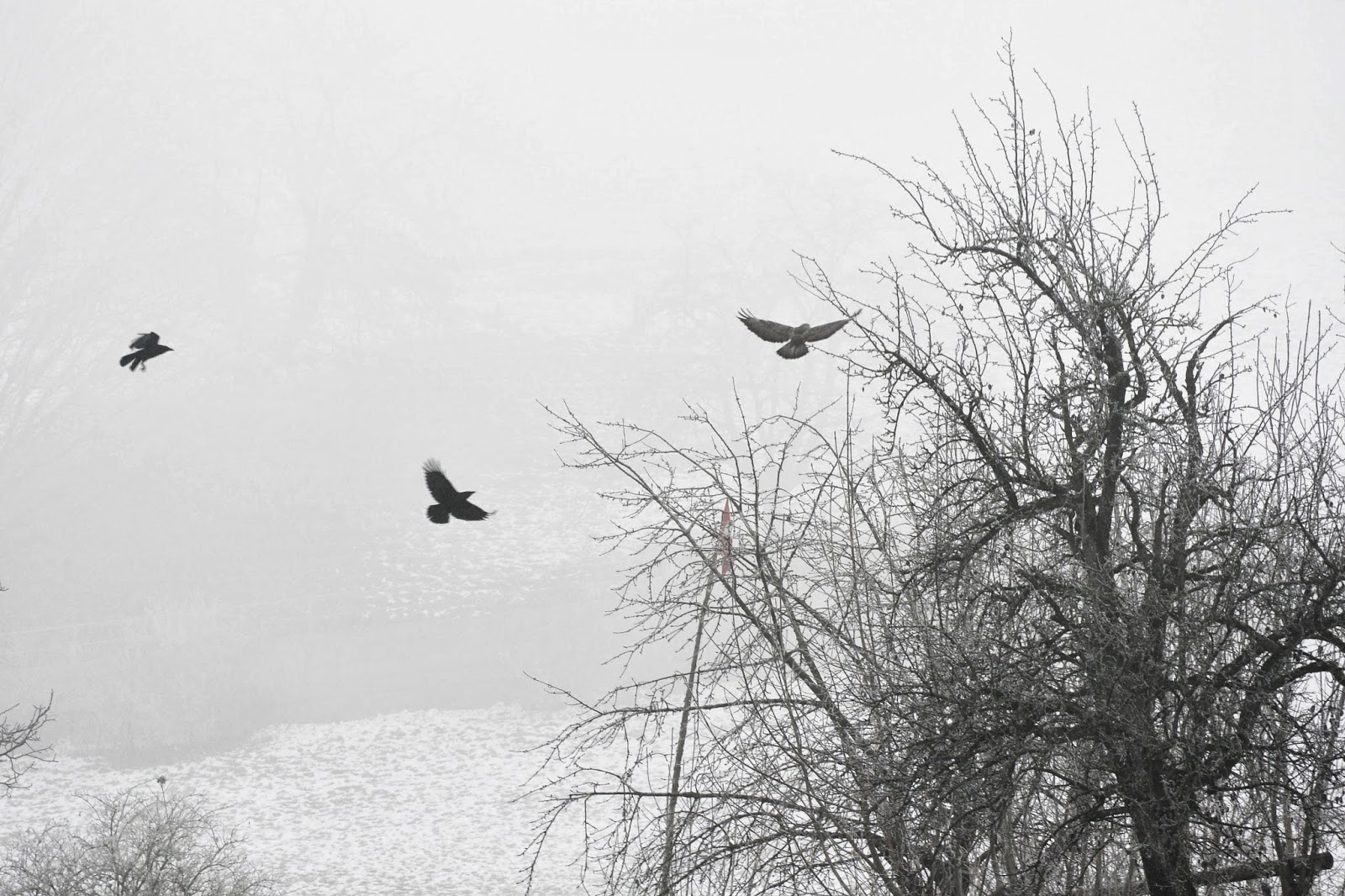
(©Thomas Bachmann)
In the middle of a wide, snowy field, beneath a solitary tree, two nuns stood, side by side. Their black habits—blacker than the tree—flapped about their ankles. Their white wimples—whiter than the ground—framed their faces. Their sensible shoes, patent leather and pointy-toed, shone dully in the winter light.
The nuns did not move a muscle.
A man was approaching them from far across the barren field, tramping steadily through the frost and the silence. The man’s head was far too small. Or perhaps his body was simply too large. At any rate, he had a freakish look about him, like an ogre, and his skin had a pale, greenish tinge, a slimy-wet sheen.
The nuns regarded him as he approached, their expressions inscrutable. One of them, the smaller one, had her eyes opened very wide, but whether it was out of surprise or simply the permanent state of her face was impossible to say.
As the man approached, it became apparent that he had no fingers on either hand, only stumps, stopping at the first knuckles. When he ducked his tiny head, one could see he had no ears either, only holes on either side of his face.
The smaller nun didn’t say a word, but her eyes grew a fraction wider.
The man stopped several paces away, just outside the spreading reach of the tree. He bowed heavily and then straightened, shifting from foot to foot.
The nuns turned slowly and looked at each other. Then they looked back at the man, and the taller of the two held out a hand, as if to say, Have you got it? We have walked many miles. We have waited in the cold. Give it to us.
The man with the too-small head looked at the tall nun. Then he grinned gapingly, and the nuns gasped in unison because he had no tongue. No ears. No fingers. No tongue. Eyes, he had, but those are not nearly as useful as most assume.
He was the perfect messenger, of course. He could never tell on anyone, or whisper a tale, or scribble a note. That was why the nuns had called him. They should not have been surprised.
The taller one regained her composure and held out her hand again, more insistently this time.
The man nodded his tiny head, and his eyes lit up, and he slipped something from his sleeve.
It was not a bottle, or a packet, or anything like that. It was a butterfly, sapphire-winged and veined with black, and it emerged out of his sleeve and came to rest delicately on the end of one of his poor old stumps, flapping slowly, feelers curled against the wind.
The nuns looked at each other again. The smaller nun’s eyes were very nearly rolling down her cheeks. The man with the too-small head simply smiled at the butterfly in his palm, a look of wonder on his face.
Finally the tall nun nodded and inclined her head formally toward him. Then she put the butterfly in a small cage made of wire, and the two nuns went away across the field.
***
The man with the too-small-head watched them go, and watched the glimmer of the blue butterfly-wings in the cage.
When they were gone, he shook his head and grinned again, and he didn’t exactly disappear so much as simply move someplace else, someplace that was not the snowy field, but was perhaps just behind it, very close by.
***
The nuns arrived back to their nunnery very late. Before going inside, they made sure to pat some wet earth on the knees of their habits and clump a bit around the frosty heels of their sensible shoes, before finally letting themselves in through the great door.
They had herbs under their arms, but they had collected them the day before so as to have some time free to seek out the man with the too-small head.
They looked around stealthily as they entered the nunnery, stood still and nodded as other nuns passed by. The cage with the butterfly they kept hidden, clutched tightly behind their backs. When the Mother Superior saw them, she twinkled at them, her eyes very bright, and they both inclined their heads as she passed, but their faces remained like stone.
As the Mother Superior went on down the corridor, their eyes followed her, and the younger nun’s mouth may have twitched a bit—just a tiny, tiny bit—but in that flat, empty face it was like a bomb blowing up.
***
The nuns took the wire cage to their cell and sat a while, admiring the butterfly through the mesh. The nunnery was an austere place, busy and soft, full of shadows and whispers and echoing songs. The music was often rather sad and the colors were either dark or white, and so it was something of a marvel, this blue-winged butterfly in the gray cell.
The smaller nun, finally, looked at the taller one in a questioning way, as if to say, Do you think it will do the trick?
And the taller one looked back, eyebrows raised, as if to say, Who can know? They promised it would. Those wild things in the fields and moors, they promised, and I know they lie, but it should. It should do the trick.
Then she undid the latch of the cage with two long fingers. The butterfly crept out, blue wings flickering tentatively.
It was about to fly away, about to beat those wings once, twice, and flutter toward the ceiling. . . .
But the younger nun took a wooden mallet from the folds of her dress and smashed the butterfly onto the table top.
***
The nuns let the butterfly sit, squashed to the table, overnight, exactly as they had been instructed. Then they scraped the blue from its wings and the clear, watery blood from its veins, into a tiny thimble-sized bowl and set it out on the windowsill, in the cold, fresh air.
The smaller nun looked at the taller one, and her eyes said, I hope it works. We haven’t much time left. And what if someone starts to suspect?
And the taller one nodded in a way that meant, It will work.
The moon came out, half-full, like a sleepy eye, and squinted down at the bowl on the windowsill, and at the nuns, who looked away quickly and closed the casement.
In the bowl, the blue and the blood sat and drank in the moonlight, but also the night and the shadows and the cold, and the nuns went down to the evening mass and tried to forget about it until it was ready.
The Mother Superior was at mass, of course, and though her back was toward the two nuns, anyone raising her head from the hymn-book might have noticed the smaller nun staring at the Mother Superior, her eyes so wide and still. . . .
***
Five weeks earlier, the nuns had gone to the Mother Superior and asked her a question.
“Please,” the taller one had asked, and her voice was surprisingly soft and regular-sounding, papery and cool. “Might we have the third Saturday of next month off?”
The Mother Superior had twinkled at them. She said, “Of course you may have a day off! But not that Saturday. We’ll need you here for the weeding and the churning, and it’s baking day. You may have the fourth Saturday off. I will mark it down.”
You never would have guessed the nuns’ disappointment. They had looked at each other briefly, had nodded at the Mother Superior, and had slipped away without another word. But behind their placid faces, anger was roiling and tumbling like flames.
***
Here was the situation: a great violinist, Master Garibaldi, was on a tour across the continent. He was playing Bach, all the Chaconnes and Voluntairs, and the nuns pined to hear it, and pined to see him, too.
They could not tell the Mother Superior this. They were sure she wouldn’t understand how lovely Maestro Garibaldi was, and how his hair shook like a lion’s mane when he played his violin and how his music felt like a lamp, glowing behind your ribs. And so, when the tall nun and the short nun had been told they could not go to the City the day of the concert, they began to plot.
They read great grimoires in the library and went on long walks across the moors, and came upon the creatures of stone and moss in the wild hills, and all the while Maestro Garibaldi crept closer and closer across the continent toward the City, and the nuns worked more and more urgently, until at last they had it all, everything they needed for their plan, everything but the last bit, the most important bit.
There is a price to pay for all good things, one of the old, crusty books in the library told them. The highest price is not what one pays one’s self, but what one makes others pay for one’s own happiness. If you are willing to, you can have anything you like in life, only know that something beautiful must die.
The nuns had no compunctions about this and had gone to the man with the too-small head, and fetched the butterfly, and squashed it to the tabletop.
***
When the nuns were sure their mixture had ripened well on the windowsill and had turned into a good thick paste, silver-gray and speckled with flecks of shimmering blue, they brought it out into the early morning, to an open place where the wind blew strongly.
There, they set the bowl on the ground and the wind dipped into it at once, picked up its contents and blew it into the air. The flakes whirled a moment and then began to form a shape. A human-shape. A nun in a black habit—blacker than the stone walls of the nunnery. A white wimple—whiter than the nun’s teeth as they smiled and watched.
The wind swept over again, and the last of the mixture grew into the second nun, small and stout, with eyes like marbles.
The two sets of nuns stood looking at each other, one pair smiling, the other not. Then they nodded to each other and one pair set off into the nunnery and the other took off its sensible shoes and put on ones with bows and went to the City, where it heard the great Garibaldi playing on his violin and fairly well swooned.
***
That night, the wind came and reclaimed its breath from the delicate shell of butterfly blood and moonlight, and the false nuns fell to nothing. But by that time their namesakes where comfortably in their beds and fast asleep.
They weeded twice as many beds in the herb garden the next morning, those two nuns, and churned three times the butter, and perhaps, if one had watched them very closely, one might have seen them wink to each other over their work, their heads all full of music.
The butterflies of the area were less pleased, however, and there was an infestation the next year in the nunnery’s dining hall, small onyx-winged insects all up the rafters and under the edges of the plates. No one could understand why it happened, not even the two who had caused it.
The Interview
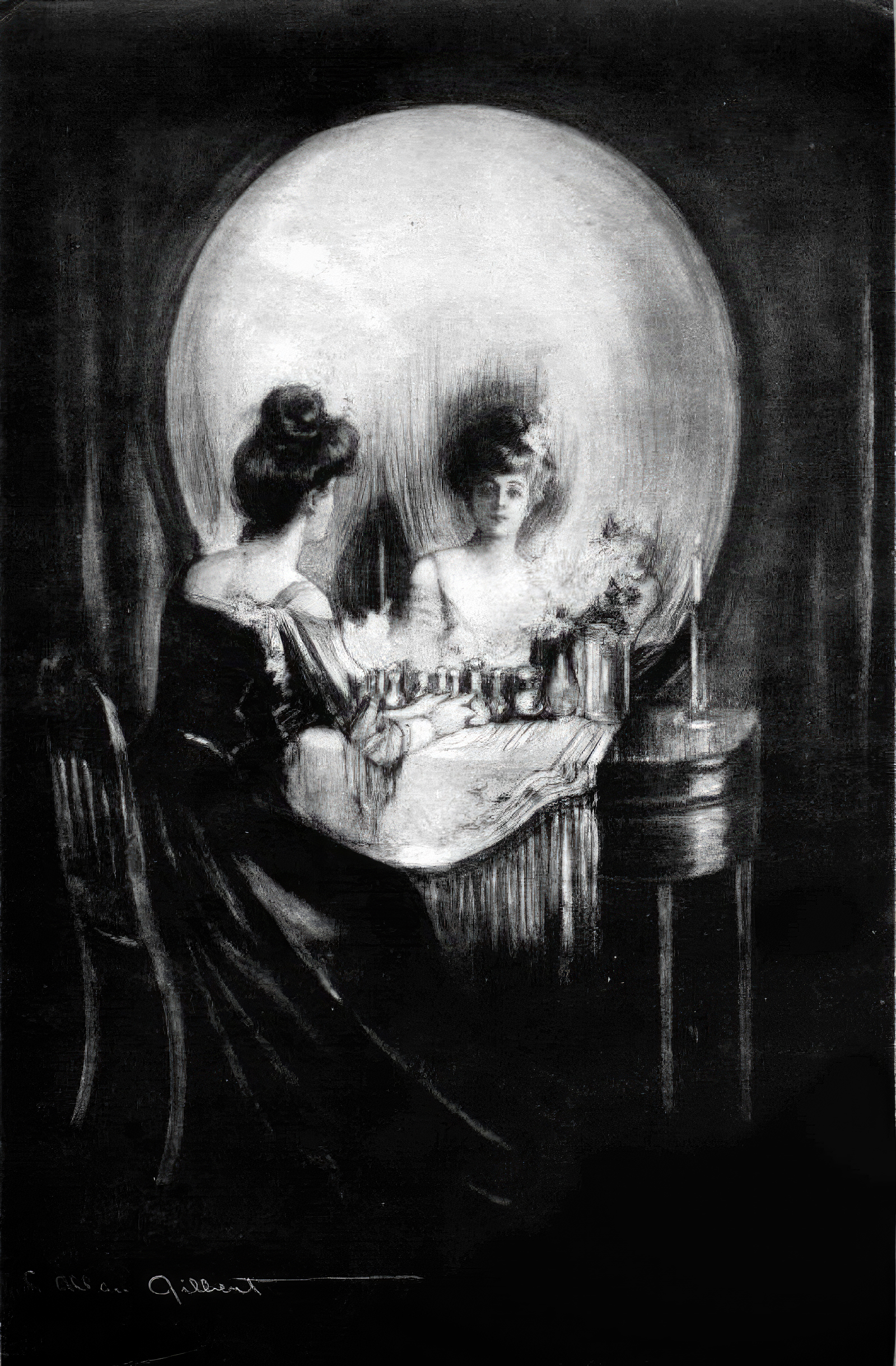
All is Vanity – Charles Allan Gilbert
Marisol Tublé was 107 years old, and so it felt like something of an affront to wake up in a strange and extravagant hotel room with a headache and no recollection of how she had come to be there. Headaches were the ailment of the young and lazy, Marisol thought, for people who drank too much or did not want to listen to tiresome piano-playing relatives. At 107 one ought to have graduated to more noble illnesses.
She lay in the bed, her wrist against her forehead, staring up through the semi-gloom at a ceiling of painted panels and trying to recall what she had to do to today. There had been such a lot of traveling the past few weeks. She remembered that much. She was a singer—the Great Warbler Marisol—and she was on a tour. Her final tour. A sudden throb passed through her head and she had a brief impression of concerts, one after the next, the hustle and bustle behind stage, the murmur of the audience as they settled into their cradle of anticipation, the flare of the stage lights, the swell of the orchestra, and the swell of her heart the beat before she began to sing, Budapest, Rome, Darmstadt. . . But where was she today?
She rolled over and squinted at the silver clock on the nightstand. She couldn’t see its numbers. It was a blurry, ticking moon, too far away. She dragged herself closer and stared at its blank face. Her old, old eyes flickered over the spiny hands. Then she let out a small squeak and sat straight up, her frail frame like a pole in the dark.
Nine o’ clock. It was nine o’ clock in the morning, and faint, butter-colored light was slipping through the slit in the drapes, and she could hear the distant calls of birds and people. Marisol remembered: she had been on the final leg of her tour, almost done, and then there had been some unpleasant incidents, and she had been invited to visit one of those small, dusty countries that no one really knows exists, and to perform a concert there, as well as a brief conference to speak to the local press. That was it. She was staying at a hotel on the Rue de Marmiet, and her contact, a man named Mr. Devereux was to pick her up at 9 thirty from the lobby to take her to her interviews. Which left her with only thirty minutes to prepare herself and take her breakfast.
Ah well. The stage waits for no man. Or was it ‘Death waits for no man?’ There was no great difference.
She began to struggle out from among the sheets, heavy, scratchy, frilled things that smelled of must and rose-petals. She kicked them all onto the floor, slid off the bed, hurried for her dressing gown. . . .
It was odd that she had forgotten where she was. She could remember things from her childhood, clear as a glass of water, could remember stumbling on a curb on a hot summer day and losing an ice-cream cone to the muck of a gutter. She could remember her mother, playing piano, teaching Marisol to sing. But she could not remember where her performances were one day to the next. She frowned and began taking the curlers from her hair and rowing them up on the top of her vanity.
She felt very tired still, and the headache hadn’t left her. She hoped the interviews would go quickly and that the journalists would be pleasant. She began shuffling through the contents of an alligator-skin cosmetics case, bottles of tincture and clasps of powder clinking together softly beneath her fingers. She brought out an elaborate perfume-diffuser and poof’d a cloud of violet-smelling mist onto her neck. One time, twice, again and again. Yes, she hoped very much the journalists were pleasant.
* * *
It took Marisol about twenty minutes to prepare herself, and that was in a great rush, without the attention to detail she usually gave herself. She painted her paper-thin skin very carefully, white as porcelain, with lead and bone-powder. She dabbed her lips and rouged her cheeks. She put on strings of pearls and a small hat, and when she was all finished she raised her head and smiled at herself in the mirror. Her face was a thousand hatches and cross-hatches, and she had not so much crow’s feet around her eyes, as octopus feet. But when she smiled, even in the silence and of the dim hotel room, her face turned glowing. Her eyes flashed, piercing and charming and witty and warm all at once, and had anyone been watching at that moment, her gaze would have struck home like a bolt of lightning.
The look faded as quickly as it had come. Marisol’s eyes dulled a little. She began puttering about.
Interviews. Interviews, and then a concert. And then she was almost done.
She adjusted her hat put on a pair of gloves, and then she let herself out of the room and went downstairs to the breakfast room. It was already 9 thirty by then, but it was not good to be early to anything, especially when meeting people one didn’t know.
Marisol had four bites of toast and three cups of black coffee in the breakfast room. It was a very shabby breakfast room. And empty. It might have been grand once, but it was difficult to tell because it was so dim, and there were great, many-ruffled drapes over the windows. The only person in the room was an attendant standing by the buffet, still as a statue. Marisol watched him as she nibbled at her bread, and drank the last of her coffee. Then she set down her napkin and hobbled out of the room. She found Mr. Deveraux waiting for her in the lobby.
“Mr. Deveraux,” she said, coming up to him and smiling again, that brilliant, flashing smile. “I hope all the preparations have been made in my dressing room for this evening?”
Marisol always asked that there be a bottle of Mr. Thymus’s Throat Soothing Syrup, as well as six pink roses and a piece of chocolate waiting for her after every concert. She didn’t really like chocolate, or pink roses for that matter, but if she didn’t ask anything people tended to get lazy.
Mr. Deveraux looked at her curiously when she spoke. Then he nodded and gestured for her to follow. He was a small man, and he seemed rather nervous. Marisol thought that was just as well. Nervous people were much easier to handle than confident people. He did look vaguely familiar, though. She watched him as she followed him through the glass doors and into the street. Perhaps it was just another old memory, a snippet of someone long dead. Perhaps it was not even that.
Mr. Deveraux escorted her along the street, through the sticky morning air. It was not a hot day, but it was one of those uncomfortable mornings where the heat was just enough to make one scratchy and sweaty simply by existing. The street was deserted. Quite as empty as the hotel’s breakfast room had been. It was lined with shops, shuttered and closed, a city hall, a cathedral and several cafes. Marisol could not hear the birds anymore, or the call of the people. It was utterly silent here.
Mr. Deveraux led her into the shadows of a promenade, past a beetle-black automobile and some dying palm trees, down a stretch of cobbles, waiting every few steps for Marisol to catch up.
Marisol didn’t hurry. She never hurried anywhere, not anymore. She looked around her with great interest, and whenever Mr. Deveraux looked at her with those questioning eyes of his, she smiled at him and continued to feign enjoyment of the scenery. They arrived, at last, at a tall, terracotta-colored building, and Marisol followed Mr. Deveraux up a flight of steep steps, ever-so-slowly, down a short hallway, and into a room furnished with two hard wooden chairs, a table, a vase of dead flowers, and nothing else.
Marisol frowned. This was a sad country indeed if this the best they could do. Why had the journalists not simply met her in the hotel? But again, ah well. One must be understanding of other people’s customs. Marisol stepped into the room and sat down on one of the chairs.
“I suppose we’d better get on with it then,” she said, and breathed deeply as though steeling herself for a great trial. “Please show them in one at a time, Mr. Deveraux.” Then she smiled one more time at him, and said began fanning herself with a small feathery fan.
“Y- yes,” said Mr. Deveraux, and peered at her again, and darted out. What an odd man, Marisol thought, turning her attention to a small window in the wall. It could be that Mr. Deveraux never seen an opera star before. Or perhaps her make-up was slipping. The heat was just enough to do that. She began quickly touching about her eyes and hair, and then the door opened and she dropped her hands into her lap.
Mr. Deveraux poked his head in. “Erm- ” he said.
“Yes?” said Marisol. She was beginning to feel somewhat annoyed. It was not a good day to be sitting in an ugly, stuffy room. She needed to begin practicing her scales. And why was everything so empty and desolate here? She still could not hear the sounds of a town through the window, and the birds were silent, too.
“Yes, erm . . . The journalist is here.”
Marisol clicked her tongue. “Yes, show them in. Quickly, please. I’d like to get back to the hotel as soon as I possibly can.”
Mr. Deveraux nodded, but he did not leave. He adjusted his collar. Finally he said: “There is only one to see you today, Marisol.”
Marisol paused her fanning, eying him. “Only one journalist?”
Mr. Deveraux nodded.
Marisol stared. That couldn’t be. Was there only one newspaper in this country? Granted, she was not in her prime any more, but that there should be so few interested in the Viennese Nightingale, the Star of Copenhagen, the Great Warbler? That was very nearly insulting.
“Yes, yes, all right,” she said, a bit testily. “Who needs a lot of journalists anyway? The sooner we’re finished the better. Show him in.”
Mr. Deveraux ducked his head and hurried out of the room. A few seconds later he returned, bringing with him a man. Or at least, something vaguely human-shaped.
The man who came in was not very much like a man at all really, or even much like a journalist, and the sight of him made Marisol flinch in her chair so hard that it creaked.
The man-thing was very stooped. He had a great, warty mushroom going out of the side of his head, his eyes were rheumy, and his skin was sagging in all the wrong places, so that it looked like a wet bag draped across his skull. His coat was covered in moss and barnacles, rooted in deep blue cloth. He came in, clumping over the floor, and settled himself heavily opposite her.
Marisol leaned forward, squinting. “You- you are the journalist?” she asked quizzically, and then looked to Mr. Deveraux. But Mr. Deveraux had already fled.
The man-thing watched her for several seconds, his eyes blunt and heavy. Marisol watched him back. She paid careful attention to the mushroom growing from his face, which seemed to be changing colors slowly from russet to deep-green.
“Please ask me questions, then,” Marisol said. “I haven’t got all day. If you’re the only one here, I’d like to be finished very soon. How long do you think you will need?”
Here the man-thing cleared his throat wetly and said, “I will ask the questions,” and took out an old pad of paper and a lead and began scribbling away at it. Marisol gasped. I will ask the questions? Did he mean that simply as a preamble to his question-asking, or was he telling her that he would be the only one asking questions, and therefore would not answer hers?
In which case he was being very rude. “I beg your pardon?” she said angrily, and hammered one heel on the floor.
“You have a concert tonight, then?” asked the man-thing, ignoring her question. “You are going to sing for a great audience?”
The man-thing spoke very quickly and only looked at her briefly, and all the while he scribbled in a notepad in his hands, though Marisol had not yet answered with a single word.
Marisol stared at him, her hands clasped tight in her lap. What in all earth? “Mr.- Mr. whoever you are, I am a singer, and you are a reporter, and it is your business to ask me questions that are not stupid. Proceed.”
The man-thing looked up at her quickly, then down. “Are you a good singer? Have you been singing a long time? Perhaps as a job?”
Oh, thought Marisol. She knew what game he was playing. It was one she had come across many times before. The envious, faintly aggressive sort, who made a point of being ignorant of everything his subject had ever done, in order to make his subject feel small and insignificant. Well, Marisol was beyond that. She had met all the varieties of writers and journalists in her interviews throughout the years—sorts who smiled very wide and then wrote articles all of black slashes and bits of hate, sorts who were cold and aloof, sorts who were callow and eager, and asked far too many questions, so that she had to flap them away like flies. This was just another kind, this envious creature. Perhaps the man-thing was a singer, too, and was deemed too ugly for the stage. There was the saying that if you could not do, you taught. Equally true might be: if you could not live, you wrote.
“You are clearly new at this job,” said Marisol sharply, at which the man-thing looked up with some irritation. “I suggest you research journalism and proper etiquette and how to remove fungi from your face, and then perhaps we can speak again after my concert this evening.” She stood, swaying a little on her feet.
“What do you remember about yesterday?” asked the man-thing, not moving at all.
Marisol ignored him, making her way slowly toward the door.
“Fine then, what do you remember from last week? Were you happy last week? Or were you sad. Perhaps you were sad. A bit depressed, even.”
What a perfectly foolish question for a newspaper article. But then newspapers weren’t what they used to be. People didn’t want information. They wanted stories. Exciting stories. Tragic stories. Funny stories. False stories.
Marisol reached the door and tried to open it. It wouldn’t budge. It was locked. She wheeled around on the man-thing, who still hunched over his pad, back toward her, scribbling.
“Do you like it here?” he went on. “Or would you rather be somewhere else?”
Marisol was trembling now, part with rage and part with fear. How dare he? Why had she even come? What was this wretched city and its wretched hotel? “It is ghastly here,” she spat, not even thinking. “You are ghastly. The hotel is ghastly. I hate it. I hate all of it. I am leaving the moment my concert is done, and you can be sure I will have nothing pleasant to say of you when I am home again. Now, I demand you let me out.”
The man-thing did not move a muscle. Scritch-scratch-scratch went the nib of his pen, and the ink splattered.
“Mr. Deveraux!” screeched Marisol, and it almost killed her to do it because screeching was not good for the vocal chords. “Mr. Deveraux?”
The man-thing didn’t look up. “What time is your concert tonight?”
“I am not a signpost! Go and find a flyer and look it up.” Marisol began pounding against the wood, her thin hands cracking painfully on the frame.
“What are you singing?”
“The Arias from Tosca!” she screamed. “From Puccini! Let me out!”
“Do you know what happens in that opera, Mrs. Marisol? In Tosca?”
“Of course I know! I’ve sung the role a thousand times! Do you know?”
“I do. I do know. It is about a great and desperate lady, who at the end of Act 2, takes a knife and- Marisol, it’s about a person who murders another person, and then runs away.”
Marisol stopped pounding the door. She turned on the man-thing, and the man-thing turned, too, in his chair and looked at her with his mournful eyes and hideous face. Marisol’s gaze was very sharp just then, and so lucid, that even the man-thing stared. And then Marisol smiled. Her last resort. Her final tactic with reticent journalists. It was a desperate, terrible smile.
“It’s all very sad, isn’t it. But the music. The music!”
The man-thing closed his pad. “Marisol,” he said gently, and he no longer seemed so dreadful. “Marisol, I am not a journalist. I am doctor. Do you remember? Do you remember anything?” Suddenly he looked rather sad, or perhaps pitying.
Marisol continued to stare at him, her smile fixed, her powdered skin cracking into tiny filigree beneath her eyes.
The man rose from his chair. He didn’t look quite so strange anymore, not even to Marisol. He didn’t even have mushroom growing out of his face. And his coat was the blue of a uniform, wasn’t it. No moss or barnacles. A blue uniform with a red cross above the heart.
“You’re lost, Marisol. It has been forty years since you were last on stage. It’s been forty years since you were anywhere but here, since you took up that knife and- ”
“It’s wonderful, isn’t it,” she said, pointedly ignoring that statement. “Everyone knowing you. You know, I always thought you’d really made it when you don’t have to tell people things about you anymore and they just know.”
“Do you have any memories of your family? Who they were? Perhaps if you remembered that, we could trace someone, find someone to- ”
“There is no one,” said Marisol, and the smile dropped from her face like a stone. “There is no one left. People die. They forget. But the audience doesn’t. I’ll always have them. The audience loves me.” Her words were ferocious there, wild and sharp . . . and then her face softened again, and she looked simply tired and frail and rather annoyed, waiting to leave so that she could go and warm up her voice.
* * *
Mr. Deveraux came back to collect her after the doctor had gone. “How was the interview?” he asked, helping her from her chair.
“Odious,” said Marisol. “The journalist was a boor. I think he disliked me from the start. I don’t even want to know what the article will be like.” She began to warm up her voice even as she walked, her notes high and reedy, like a cracked whistle. She broke off a second later and began fanning herself vehemently. “He was clearly just a bitter pudding. That’s what my mother would say. A bitter, bitter pudding, all nasty and rancid. You know, I’m glad there aren’t any more reporters in this wretched town. I don’t think I could bear to speak with them. I will sing for the audience, yes, but then I’m done. I’m flying straight back to Paris. Mr. Deveraux, you may arrange the car to pick me up first thing in the morning.”
Mr. Deveraux nodded patiently.
And as they walked down the street and into the hotel, the world seemed to drift around them, disintegrating. The floral wallpaper faded to white plaster, the chandeliers wilted into iron lamps, and the drapes fell to nothing over bare and glaring windows, barred on the outside. Marisol was no longer dressed in velvet and pearls. She limped along in thin slippers over the green floor. Her clothing was a white shift. But as Mr. Deveraux brought her back to her cell on the third floor of the Belvoir Institute and guided her gently through the door, she turned and smiled at him, and there were those eyes again, diamond-bright, and her face enough to light a stage, and it made Mr. Deveraux pause for a second in awe.
“I’m ready to sing for them,” said Marisol, and her eyes flashed one more time. Then she vanished into her cell, and Mr. Deveraux closed the door behind her and locked it.
As he went away down the corridor he heard the sound of music drifting after him, the beginning notes from one of Puccini’s arias, rising, rising in a small, broken arpeggio, and for an instant he thought he heard the rustling of an audience, the breath of excitement as the stage-lights flared and the curtain began to rise. . . .
China
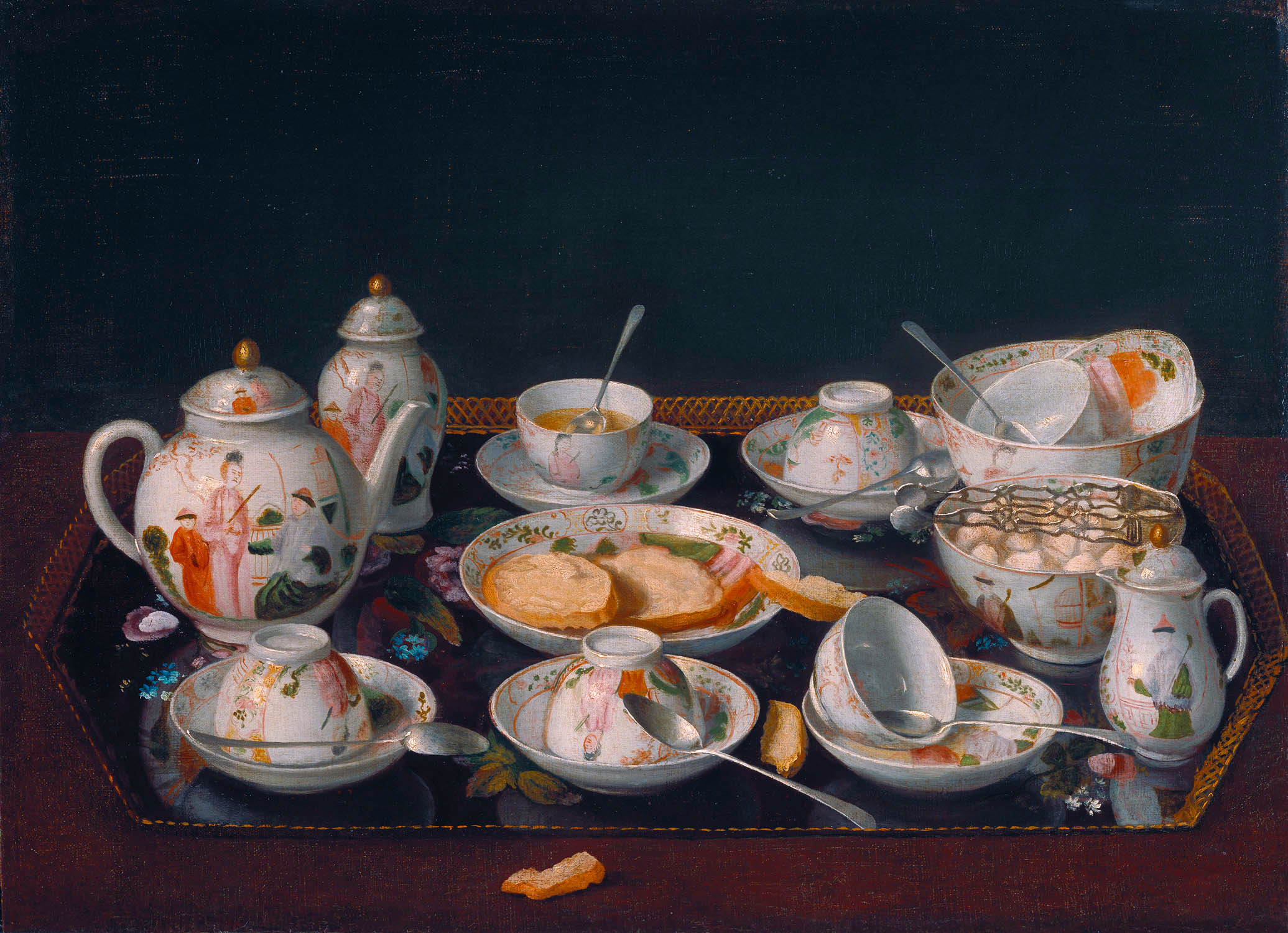
This story begins the way most things begin, which is to say that this story begins in a rather dull way: a milkmaid is getting ready to take her tea. She is a very poor milkmaid, and her cottage is bare as an egg. It has a three-legged iron stove in one corner, and a rug that’s gone threadbare and grey in the spot where the milkmaid stands to churn the butter. There are cobwebs in some places, and dust in others, and in one corner there is a photograph of two smiling people who are perhaps the milkmaid’s parents, but they are dead now. The only thing of any interest in the cottage is a set of china tea-things, sitting atop the sideboard like a veritable shrine.
It is a splendid tea-set, though upon closer inspection one can see that the china is a lacework of cracks, and very old. There are two dainty cups with tiny orange flowers painted around the edges, a creamer and a sugar-bowl with a pair of pewter tongs to fish out the lumps. There is the loveliest, loveliest teapot you can possibly imagine. And on the bottom of three of the pieces are symbols, sharp black lines and crosses, a language the milkmaid has never been able to read.
The milkmaid drinks tea from her tea-set exactly once per week, and she takes great care to make the occasion special. She sweeps the floor with a twig broom, opens all the windows to exchange the air, boils the water, measures out the precious leaves, arranges her tea-things precisely, sits down at her table. . . .
*
Should you have come by the milkmaid’s dwelling just then and peered through her bottle-glass window, the scene that would meet your eyes would most likely strike you as ridiculous—a stout milkmaid, no longer quite young, alone at a wobbly table, trying to be prim, simpering with the sugar bowl, buttering slips of bread and nibbling at them prettily. You would think her silly.
But the milkmaid does not know that you are watching, and so she doesn’t mind. She is very happy when she drinks from her tea-set. It was her inheritance from the smiling people in the photograph, and when she uses it, when she even looks at it, she feels she is a child again. She feels her parents are right there with her, and she feels they will always be her parents as long as she has the tea-set. It is her favorite thing in the whole world.
Until one day. Until today.
*
For just in the moment when the milkmaid is lifting the teacup to her lips, the teacup moves. Only a little bit. Only one tiny, tiny shiver, like a bird about to hatch. But it moves.
The milkmaid looks at it quizzically. Then she raises her eyebrows and brings the cup back to her lips. The cup shivers again, this time so severely that flecks of tea spatter the milkmaid’s nose. The milkmaid, in an attempt to calm the teacup, lays it back hastily on its saucer. But it does not stop. It continues to shiver, rattling and spilling tea over the rim, harder and harder, and now suddenly there is a voice, cold and pure as porcelain, saying: “Break it. Break it. Split its back and shatter its bones.”
The milkmaid jerks away in terror, but the teacup continues to speak, hollow and dark, louder and louder. And then the milkmaid picks up the cup in a fright and throws it down with all her might against the tabletop. The teacup explodes into a dozen small white pieces . . . And what should come out of it but a very long, skinny creature, brown and red and green, and flat as paper. It might be a dragon, but it is very furry, and it has horns. It turns a circle on the tabletop, joints clicking, looking rather stiff, and then, noticing the milkmaid’s wide-eyed stare, squints up at her and says in a silky, hissing voice:
One wish now
Quick and careful
Then have your tea
And be quite cheerful.
The milkmaid screams and hits the creature with a heavy fist, and its legs squeeze out on either side. But then it turns to smoke and blows out from under her fingers, and comes to rest on the corner of the table.
“Come now, quickly, what would you like?” it says, in a slightly less sinister voice. The milkmaid screams again.
The creature peers at the milkmaid askance. “I do not understand your wish,” it says.
The milkmaid lets out one last strangled cry and then puts her head between her knees, trying to calm herself. She has heard tales like this one. Be careful what you wish for. Be careful, be careful. She raises her head. The creature is still there. She watches it carefully, and it watches her back.
“Shouldn’t you give me three?” the milkmaid squeaks. “Three wishes?”
“One wish!” says the creature imperiously. “And you can’t wish for more wishes, now hurry.”
The milkmaid thinks and thinks, so long that the creature wonders if perhaps it got a bad apple and it will have to wait all night. The milkmaid thinks of the tales she has heard, and she tries to makes sure her wishes will not backfire too badly, and then she says: “I would like a great lovely house, furnished and weather-tight, right here where this house is.”
And the next instant the cottage is gone and it is replaced by the strangest, most marvelous building the milkmaid has ever seen. The walls are lacquered wood, and the floors are strewn with pillows, and the windows are large and wide. The rooms are a bit too colorful for the milkmaid’s tastes, and she is not enamored with the artwork, but it is too late to change anything, because the creature has dissolved into a purple plume that is making its way up the chimney.
*
The milkmaid is so pleased with her new house. She wanders through it and admires the many rooms and the many windows and fire-pits. She finds the remaining pieces of her tea things sitting on a low, glimmering table, and her heart hurts for a moment, for the broken teacup, but then she thinks the china looks even more lovely now, like it belongs here. She thinks she will be very happy now.
But the next day, a tax-collector, coming along the road down from the town, sees the great mansion and he comes up the path and knocks at the door, wondering where this wonderful new house has come from and whether it has been properly taxed. Of course, it hasn’t. The milkmaid is very afraid when she opens the door. She tells the tax-collector that the house is only just built, and she will be paying the taxes the very next day, and then she closes the door quickly and locks it, and hurries through the house wringing her hands and wondering what to do. She doesn’t want to sell the house, or anything in it, and she doesn’t have time to, really. She comes to stand in front of the magnificent tea-set, sitting on its table. She stares at it. And now she is taking another teacup, and her heart is pounding so dreadfully. She is lifting it and smashing it on the floor. She winces as it breaks. Please, she thinks. Please be another strange, small creature.
And indeed out slips another one, this one like a spider, emerald-green, with long and spiny legs. It says:
In such a house
All red and gold,
What could there still be
You wish to hold?
And the milkmaid says, “Quickly, please, I must pay all the taxes on my house and I haven’t any money! Give me all the money I will ever need.”
The next instant the house is full to bursting with gold and jewels. There is enough to pay all the taxes for the rest of the milkmaid’s life, and she nearly dies of relief.
*
It is not long after the tax-collector had come and gone, that people begin to notice the beautiful house with its many gables and colored walls, and begin to think the milkmaid far more interesting than they had before. They come from far and wide to knock on the milkmaid’s door and speak with her, and she revels in the attention. No one ever visited her before. No one spoke to her, except to tell her the cows were in the wrong field, or the milk was late. Now they compliment her lovely house and the gape over all her gold and jewels. But as time passes, the milkmaid notices that while they talk to her a great deal they never really say anything. It is so strange; the milkmaid is sure she had had better conversations with the tea-set in her lonely cottage than with these people, who paw over her furniture and drink great quantities of her tea.
The milkmaid doesn’t know why this is. She wonders long and hard, and she decides it is because she is still a great clumsy milkmaid, and though she is kind and unassuming, she feels she is not as fine as all the wonderful people who visit her. Perhaps, she thinks, if she were like them, they would be her friends. They would tell her secrets and invite her to their own homes, and not just come to hers. And so, without another thought, she goes to her tea-things and takes up the sugar bowl and smashes it on the floor, and out comes another odd creature, this one like a black worm, all glistening and wet.
A third wish then?
Again, again?
You want a lot,
You silly hen.
The milkmaid says, “I would like to be someone else. Someone beautiful. Someone more beautiful than anyone in the entire country, in the entire world!”
And the next instant she is just that, and the worm has split into a thousand smaller worms that wriggle and creep into the floorboards.
The milkmaid goes to the mirror. She can hardly breathe when she sees herself. She has glimmering crow-black hair, and her face is so beautiful it is like the sun and the moon and all the stars put together, and her old, work hardened hands have become long and fine as any china.
*
But when the milkmaid again receives visitors to her mansion on the hill, they are somewhat quieter around her, somewhat more cautious, and then one of them asks her what has become of the silly, ugly milkmaid who had lived here before. It breaks the milkmaid’s heart to hear them. She sends them all away. She stops letting anyone in when they knock. She becomes lonely, lonelier than she ever had been before, and though she tries to sweep her great house and lay out the tea-things and feel happy again, she has only the teapot now and the creamer, and it feels desolate somehow, and not the same.
At last, she is so unhappy that she goes to her teapot and clutches it to her. She does not want to break it. But then she thinks of the picture in the frame that had vanished with her old cottage, of the smiling faces, and she thinks of drinking tea and buttering scones in the quiet of her shabby home, with only her own thoughts and memories, and all her tea-things gathered around her, and suddenly she knows what she wants, she knows exactly.
She lifts the china teapot to her chest, after a long, fond gaze, lets it slip from her hands. There is a great crashing. The china blooms across the floor like a sharp flower. . . . But there is nothing inside the walls of the teapot. No dragon or spider or worm, and nothing to grant the milkmaid’s last, most desperate wish.
*
Now, if you came upon the milkmaid’s mansion and pressed your face to a crystalline window, and glimpsed through the gap in the velvet curtains, the scene you would meet your eyes would be very different from before: a beautiful room, and a beautiful woman kneeling in the midst of it, crying her eyes out, and spread all around her the remains of a lovely china tea-set, smashed all to bits. And perhaps you would wonder what such a beautiful woman could have to cry about, and you would see her gold and jewels and think she really has no reason to cry; she could simply buy a new tea-set. And you would go on your way, and think how foolish are the rich and vain. But the milkmaid would not know your thoughts, and she would weep and weep and weep. . . .
*
So as you see, this story ends differently than most things end, which is with a sunset, or a wedding, or a bloodied axe. But it is an ending, and the milkmaid has come to realize something very cruel about the world: that you can have a great many things from life, but not for nothing, and perhaps the things you gave away are what you wanted most.
The Carolers
(Dear readers: Curator Bachmann froze off three of his fingers this month while in pursuit of a deadly sort of child who pulls winter around itself like a cloak and wanders the deep forests of Kazakhstan. He therefor opted to give you a poem instead. He is not a poet, but he hopes you will forgive him this deficit. And now, all of us at the Cabinet wish you very happy and curious holidays.)

Do you hear them in the moonlight—
Hear their footsteps in the dark?
Seven voices deep as thunder,
Seven faces split like bark.
They wear cloaks as red as berries,
And their eyes are black as night,
They have bells upon their fingertips
That glimmer cold and bright.
They have come to sing a carol,
Sing it right into your ear,
In their misty, twisty voices,
Deep as thunder, dark as fear.
It will start quite soft, like velvet,
‘T’will be cold as any snow.
It will whisper up the staircase
And slip underneath your door.
And then all at once they’ll shriek it,
And you’ll hear it in your dreams.
And you’ll have a little heart-attack;
You’ll wake up with a scream. . . .
For their song, it sounds of stealing,
And of empty living rooms,
And of broken, torn-up presents,
And of trees, like twiggy brooms.
*
They are singing on the street now.
They are gliding down the way.
Silent footsteps in the moonlight,
Sending snow up in a spray.
They are floating at your window;
See their hands against the glass.
They are coming! They are coming!
Pull the covers, pull them fast!
*
But wait, fear not, they won’t come in.
They’re not allowed, you see:
For there’s a little mistletoe
To guard the room for me.
The carolers will glimpse it,
And will hiss and swoop away.
They’ll find another child to haunt,
Another place to stay.
For where houses glow with kindness,
And with laughter and with light,
There the presents will stay lovely,
Through the long and wintry night.
But where houses drip with sadness
Brim with anger and regret,
There the carolers come singing,
And turn everything a wreck.
All the fancy little baubles
And the wind-up type-machine
Will be corkscrews and be coal-dust
By the sun’s next golden beam.
*
So then when you hear the tinkle
Of their gleaming finger-bells,
And the carolers are near you,
Though no one ever tells. . . .
You can smile a little secret
And curl up into a ball,
And can sleep ’til Christmas morning
And you need not wake at all.
The Crimson Porter

The violins looked like the bodies of small, curly-tailed animals, hanging there in the darkened shop window, and they were in a way—dead—because no one played them.
Henty eyed them through the smudged glass. He felt the two heavy coins rasping together in his pocket. He decided he wouldn’t be sorry. Then he hurried into the grimy alley around the corner of the shop and knelt down.
The air was cold. Across the rooftops, the bells of St. Winnifred-in-the-Oak were ringing nine o’ clock, and the gables glistened with wet and moonlight. He began laying out his sweep-things quickly: a bristly black brush, a filthy oil cloth, an array of shovels and scrapers. He wasn’t a chimney sweep. Crimson Porters didn’t do that. But boys on the streets after dark where almost expected to be doing something illegal, and this way if he were caught he could tell whoever it was that he had gotten stuck in a chimney.
The bells were still ringing. In the distance he heard a rag-and-bone man pushing his cart, shouting as he moved between the buildings, shouting into the dark. Right now everything was green and black. Green moss, black wet, black stone, green chimneys. It wouldn’t be for much longer.
Henty took off his ratty gloves, rubbed his hands together and breathed on them. He tried to concentrate. He would prefer, of course, to be back in the Unders, warming up by a smoldering fire and eating whatever there was to be eaten. But Effie had sent him up into the city, and she would kill him if he came back without doing the job. Now he just had to make sure everything worked out as planned.
The bells rang one last time.
Henty placed his palms against the wall of Mr. Muckpearl’s Marvelous Music Shop and exhaled.
At first nothing happened. Henty shuffled his feet. He swallowed. He closed his eyes.
His breath began to come quickly, though he wasn’t moving. He squeezed his eyes closed. It was starting to hurt a bit, but it always did.
He opened his eyes. The wall where his hands were spread was beginning to smoke. The stone was turning black as coal. And then, from between Henty’s splayed fingers, came a rush of sound, and suddenly the stones beneath his hands were smoldering a deep, dark red like cooling lava. The stones cracked a little. Fire erupted, devoured the moss, ran right up the cracks and seams in the wall, right up to the roof. . . .
Henty watched it. It was always a sight. A river of red was coming from his hands now, pouring up the stone. The flames caught on the roof beams. Soon the roof was a bonfire, crimson sparks rising into the night sky. The entire alley was awash in a violent, ruddy light.
And then: “Hey!”
A deep yell, too close for comfort. Henty didn’t move his hands, but his head snapped around. A man was coming toward him. A huge man in a bulky black greatcoat.
Uh-oh. . .
“It’s on fire!” Henty shouted. “The shop’s burning, I’m trying- ”
It was a stupid thing to say, but Henty had long ago realized that stupid things seem sensible to stupid people, and so he kept up the charade until the man was only ten steps away. When the man still showed no sign of slowing, Henty began to think about running. But the building wasn’t down yet, and the stone was wet. Burnt to the ground. No foundations. That was the job. If the water-belchers came soon it might still be salvaged.
Keeping one hand pressed to the wall, Henty threw the other one out, sending a spray of red sparks spinning toward the approaching thug. It was only supposed to frighten him. Usually it was enough.
Not this time. The man kept coming. He was bald, his pate glimmering in the firelight, and he had a tattoo of something snaking up his neck. He looked slightly insane.
Henty let go of the wall.
“Mister, you don’t wanna do that,” he started. “You don’t wanna- ”
The fist caught him in the mouth and he reeled back, almost falling onto his sweep things.
Oh, now you did it. Henty was up in an instant. His hands were up. He flicked his fingers toward the blazing wall and a jet of red flew from it and whirled in his palm.
“Give you one more chance,” Henty said, spitting blood onto the cobbles.
The man punched him again, this time in the stomach. The flames in Henty’s hand almost went out. Then he tensed his fingers and let loose, sending a burst of heat strong enough to melt iron swirling around the man.
Normally a blow like that would turn a body to cinders in seconds. But not this time. The blaze surrounded the man, his black coat and his tattooed neck. . . and it didn’t do a thing. The man smiled through the flames, all rotting teeth and cold eyes. He came at Henty again.
Henty’s heart dropped. This was new.
“Whada you want! What d’you-” He barely dodged a fist, only to be caught in the back by another one, and when he leaped back out of range, something long and black detached from the man’s neck and slithered toward him.
Oh.
The man was another one. One like Henty. But grown-up. And apparently immune to heat. This was getting worse by the second.
“Give me the cut,” the man growled. “The pay for the job. I know what you do, give it here- ”
Henty threw out the two silver coins, fast and hard against the wall at the end of the alley. Then he turned tail and ran, leaving his brushes, leaving his gloves.
By time the first men arrived, clanging buckets and shouting, Henty was gone. So was the instrument shop. And so was Henty’s money.
Everything was going precisely according to plan.
*
Henty half-hobbled, half-ran back to the docklands. It had begun to rain lightly, a cold, disgusting rain that coated his skin. He wiped away the drops and hurried under an archway. In the distance he could still hear the rush of flames. His crow-black hair was much too long and it stuck to his face as he ran, making his sharp, pale face even paler. People used to call him baekir, little devil-boy. In the workhouse the cook would throw pans at him and cross herself when he watched her from around the door-frame. Henty was fairly certain that was exactly what he was, and he had no qualms.
He came to an old leaning house right up along the quays, in earshot of the river and certainly in nose-shot. Music and raucous voices were pouring out of the house, but Henty didn’t go to the door. He went around the back, into a little court where some damp, bone-thin chickens were scratching in the rain. Then he shimmied up a drainpipe, leaped onto a beam, swung once, and he was on the roof, running along the slick slates toward the tip of the gable. Quick as a shadow, he leaped out over an alley. He came down lightly on the roof on the other side and began to climb the peak. This roof belonged to an empty house, a ruin, gutted all the way through. Henty stopped three slates below the great blackened chimney. There was a moldering tile there that someone had scratched with an “X”, and on this he knocked, three times.
Sharp knock. Soft knock. Sharp knock.
Somewhere far below there was a clack, a squeak of turning wheels and racing pulleys. Then the slates beneath Henty boots flipped down and he dropped like a stone, so quick his hair flew up behind him.
He was falling through the gutted house. He saw its empty windows rush past. But instead of hitting the floor, he fell through a hole and kept falling, down, down. He bounced on a stretched sheet, fell another ten feet, bounced again, and landed with a thud in a pile of sacks and damp feather beds and old musty mattresses. He was far underground now. Surely fifty feet from the slate he had knocked on to here. He was in a great cavernous space that was part of the sewer system. There were lanterns lit all up the walls, lining a spiral metal staircase, glowing in the upper archways. Smoke and the smell of cooking meat wafted about and mixed with the stench of the water in the canals. And everywhere there were boys and girls, some in rags, some in what may once have been splendid clothes. They were going here and there, writing, speaking, pondering, sitting sadly.
Henty pulled himself out of the pile of mattresses and bedding and hurried along the edge of one of the canals. Pipes poked out of the walls above, dripping green liquid into black waterways. It was noxious and most likely poisonous, and Henty had once woken to a wart sprouting from his hand where it had slipped into the water. They would all die down here, living the way they were. But they would die either way, and this was a better place to die than elsewhere.
He turned onto a bridge. Halfway across he started climbing a chain, switched onto some pegs that had been driven into the wall, and then leaped out into nothing, over an abyss that went even further down, hundreds of feet into the depths. A greenish waterfall poured into darkness. Nets and lamps reached down a little way and then extinguished. Henty fell for perhaps a second, slid along a rope, and then collapsed with a grunt into a great hanging net a few dozen feet from the edge of the abyss. The net was occupied by a girl and a tiny, frightened-looking boy, and Henty landed so hard that they jolted, and all the little boxes and lanterns leaped an inch into the air.
“Took you long enough,” the girl said, straightening an abacus and ledger, and fixing Henty with a frosty look. “Split the cut, and you can go eat- ”
She must have noticed his bloody lip and the long purplish bruise growing along his cheekbone, because she broke off then. Henty pretended not to notice.
“What happened?” Her voice was sharp. “You better not tell me you’re useless self went brawling and skipped out on the job, or I’ll- ”
Effie was the only person, ever, Henty reminded himself, who would dare talk to him liked that. She was the undisputed mistress of the Unders, the boss, the swanbolly, the leader of these orphans and outcasts. All of fifteen years old, she was grubby and disheveled, and she had a heart of stone. And she was a Blue Pusher. If Henty tried any funny business—setting her braids on fire, or burning her stockings—he would be doused with black water from the canals quicker than you could say Jack Willard. He knew, because he had tried once, way back when he was just a nipper and didn’t know the order of things. He hadn’t tried again.
“I didn’t skip the job,” Henty said.
Effie waited for him to say more. To the left of him, he heard the other boy in the net lean forward.
“Then what happened?” Effie demanded. “Did someone see you?”
Henty took a deep breath. This would be the hard part. “No one saw me,” he said, but Effie wasn’t stupid. She didn’t have any mind gifts, like the Worms or the Teases, but she had Persnickety—that little boy with his great, disturbingly limpid eyes. Effie always kept him close. When you run a sewer full of children who can kill you easier than tie their own shoe a boy like Persnickity comes in very handy.
As if in response Persnickety’s eyes twitched and he smiled at Henty. Henty glared at him.
“Well, then, Henty. . .” said Effie, noting the exchange. “If nothing happened where’s my cut?”
Henty paused. He looked up toward the lanterns and the ropes. He thought about making a break for it. He had reported in and now maybe he could run off and Effie would forget about the money. But no. Effie wouldn’t forget. Effie would trap him in a bubble of water until he drowned. He started shuffling in his pockets, pretending he’d lost something.
“It’s right- Oh, look at that. I’m sure it was here- ”
“Henty.” Effie’s voice was like nail. Persnickety had crept a little closer. “If you’re thinking of keeping cuts from me, I won’t have it. I’ll- ”
All right, thought Henty. This is it.
“I lost it,” he said, and Persnickety’s eyes went wide. Henty thought of the huge thug, the red heat swirling around him, not even singing him. He pushed the image away quickly. “I tripped in the alley on the way back from Eastbourne and the coins slipped right out o’ my hand. But the house is gone. The job’s done. No one’s going to come asking.”
Effie watched him for a moment. Then she crooked her finger at Persnickety and he came over on all fours. Effie leaned down.
Henty couldn’t be sure if Persnickety ever opened his mouth, but he could swear there was a sudden flurry of whispers in the air, there for an instant, then gone.
Effie looked at Henty again. Her mouth twisted. “The great Henty, tripping over his own toes. My, my. . . Can’t handle your own feet on the streets, what? Double duty tomorrow, and don’t let it happen again or I may be needing a different Crimson Porter.”
She gave him one last look and started clacking beads again and scratching at her ledger with the nib of her pen. Persnickety continued to watch Henty.
Henty bared his teeth at the boy. Then he was off the net, swinging back up toward the lights.
Talk all you want, Effie. You don’t know half as much as you think.
Effie didn’t know, for instance, that there was another Worm down here, an eight-year-old from South Kensington who had run away after making his governess leap from the second story window. Effie didn’t know that that eight year old was fond of chocolate and toy-soldiers, and Effie didn’t know that Henty had struck a little deal with the Kensington Worm. Chocolate and two tin soldiers for a little lessons in protection from probing minds.
Oh, yes, Henty had his own allies. Effie made a point to call every new arrival up to her net for Persnickety to read them. There were few secrets, few terrible pasts and horrid memories that Effie didn’t know. And she thought she knew Henty’s. But she didn’t. There were things in Henty’s mind that had a cage around them, a black spiny cage that the Kensington Worm had set up for him, and everything Henty didn’t want Effie to know, he put inside that cage. Sometimes he felt Persnickty’s fingers, poking at it, but even he couldn’t get in. One of the things in the cage was a box, hidden behind a brick in the south wall of the sewer. A box he wanted to fill with coins. That is where Henty went and that is where he lay down on a pile of straw, looking into a red flame in the palm of his hand and thinking.
*
“Crimson Porter!” the shout went up, flying from mouth to mouth, echoing through the cavernous sewer. “Crimson Porter to the galley net!”
Henty groaned. There were dozens of Crimson Porters in the Unders, but even though Effie threatened, Henty knew he was still the best of the lot. If she were calling a Porter it was him.
He propped himself up on his elbows, straightened his cap, and then set off at a quick clip. Effie ran a tight business. He had wondered how long it would take her to call him back about last night.
As Henty ran, he saw a girl lifting a wind and blowing it through her hair, swaying, her eyes closed, as if she were imagining herself somewhere else. Another boy had set himself a pathetic fire in his hand and was warming himself by it. By the way the fire flickered and limped Henty knew the boy was no threat to him. There were all sorts of gifted children down here. Ones who could control iron, pull the bolts from a moving carriage wheel, open the locks on near any door. Ones who could control glass, who could slip their hands through a jeweler’s window like it was water and make vases shatter into a a million razor-sharp bullets. There were those who could control water, like Effie, and heat, like him, and wind and trees. And there were ones like Persnickety. Worms they were called, because they got into your mind and wriggled about there, and they were nasty. They were always watching other people, looking for things, things you didn’t want anyone else to see.
Henty had a million of those.
He came to the precipice and swung down into the dark.
“What,” he snapped, when he arrived on the net. “It’s ruddy early in the morning.”
“It’s seven thirty,” Effie snapped back. She was dressed in her cleanest, nicest blue dress, which was still a sorry excuse for a dress, Henty thought. “And don’t give me any of your lip. You were seen yesterday.”
“Was not.”
“You were.”
“By who?” Henty puffed out his chest, but a flicker of fear passed through him.
“Don’t know. Persnickety ‘s only getting a shadow. But someone saw. And if they followed you here, you know what’s going to happen.”
Henty did know. It wouldn’t be the first time. There was a perimeter of Pokers all around the sewer, in the outer passages, children who could sense a living thing from a hundred yards away, from a heartbeat or a breath. Normally all they got were rats and perhaps a poor lost bird, but when a person came there were no exceptions. When a person came those children had orders.
Henty had seen the aftermath. A splatter of blood on the wall where all of it had been pulled from the trespasser’s veins at the same instant. The bloodless corpses would float out into the Thames and the gifted children would be blamed, but no one would be any wiser.
“But he didn’t follow me, did he,” Henty said smartly. “No one can follow me.”
“He?” Effie looked up.
“Well,” Henty started hurriedly, but it was no use.
“Persnickety says you’re lying, Henty. Lying about losing the coins. Persnickety says you might be keeping the cut.”
Henty turned to the little boy. Persnickety looked back, twitching, and suddenly Henty was filled with a loathing for the Worm and his huge, watchful eyes. Persnickety’s twig arms were wrapped around him. His fingers were digging into his shoulders. When he caught sight of Henty scowling at him, he rolled back his lips and smiled.
Henty turned back to Effie. “He doesn’t know a thing.”
“He knows everything. You’re lying.”
“I’m not, Effie, I swear!”
Persnickety began to bounce up and down, making the net judder. Effie put her ear close. Again Henty heard nothing, but Effie’s expression changed.
“There was a man,” she said, slowly.
“No!”
“There was. A man in a black greatcoat with a tattoo up his neck. He attacked you.”
“No!” shouted Henty again. “No one could have- ”
“You listen here, and you listen careful.” All at once Effie had cleared the space between them and there was knife in her hand, right against his ear. “I can handle it if you get robbed, if you get beat up, if you get the cut taken from you. But if you lie to me again just so I think you’re a tough lad, you’re out. I’ll throw your body to the Clowns myself. He stole from you, didn’t he? He stole the cut, and you didn’t have the guts to tell me.”
Henty didn’t say a word. Effie flicked the knife and a bit of his hair went floating through the ropes of the net and down toward the water. “Didn’t he, Henty.”
“All right!” Henty ducked under the knife. “He stole it. Happy? There’s no money either way.”
Effie folded the knife away with disgust. “Go on, then, pansy. Go on.”
She gave him a push, and he pretended to stumble on the netting. In the last instant he caught himself and leaped off, did a swan dive and grabbed hold of a rope, swinging above the water nearly thirty feet below.
*
It took him almost an hour to climb back up to the Unders. When he arrived, sweaty and tired, he went to a fire pit to grab a bite of bacon and a roast apple for his breakfast. Then, when he had eaten, he walk back toward the precipice and buried his hand in his pocket. He felt two heavy coins there, rasping together. The money from the job. The cut. He glanced out over the edge, toward the net hovering in the darkness like a little glowing island.
He could see Persnickety on it, shaking back and forth. He could see Effie, hunched up over her ledgers.
As far as she was concerned, Henty was a liar and weakling. And she could think that for all Henty cared. But he had just made twice as much he normally would and it wouldn’t be the last time.
Henty tossed the coins up into the air, caught them again. There had been no thug in a black greatcoat, no tattoo, and no flying fists. Henty had done his job and split his lip with the back of his hand. Then he had gone back to Mr. Muckpearl’s burnt down shop, picked up the sweep things and returned to the Unders.
No firestorms. No fights in alleys. No stolen money. All there was was a figure in a spiny cage in Henty’s mind, a figure in a black greatcoat and a tattoo up his neck, a figure who did not really exist unless Henty thought of him.
There were other things in that spiny cage, and as Henty shoved the man inside again, he saw them briefly. Dark things. Sad things. A little boy with crow-black hair and a pale sharp face standing barefoot in a rainy street. A little boy burning, and a little boy crying, and a little boy running. But Henty closed all that away. He felt the coins in his pocket, and he smiled.