Author Archive
The Trouble with the Ghoul
It is late July, and Nanny and Jane and Paris and I, though I am very small, are taking the steamer from Belmont, across a chugging blue sea, to a little white town on the coast. This is my first time going. Well, it isn’t really, but I don’t remember the other times; this is my first time going where I am clever enough to know about it, so I’m quite excited.
The steamer whistles and shears ahead, through water that picks at the sun and sparkles badly. I wave at Mama and Father on the shore, and so does Paris, and Jane and Nanny take out handkerchiefs and wave those.
I’m afraid I’ve mostly forgotten about the other summers I went. I only remember bits and pieces of them, like everything inside my head is a glass and I dropped it. I remember the great glossy mango leaves, and dripping lemonade pitchers, and sitting on a step and digging my toes into the hot, dry dust. I remember someone being scolded. But it is all rather indistinct. It doesn’t matter. Last year, quite without me noticing, I shot up like a little plant, and now I am very clever. I can do additions, and I can speak long sentences and not become confused. This summer, when I go to the white town on the coast, I am determined to remember everything.
* * *
We are staying with a Mistress Frobisher, who owns a pretty house a small ways outside of the white town, about a mile from the sea. We had to take a wagon to get there and Nanny’s trunk opened when the farmer loaded it up, and all her clothes fell into the road. It made everyone laugh, except Nanny. The house, I noted when we arrived, had a red roof and white-washed walls and blue, sun-baked shutters. We have only one neighbor, though there are other, similar white cottages scattered along the road leading toward the town.
Mistress Frobisher is a very proper, buttoned-up sort of lady. She is a friend of Mama’s, I think, though she is not a friend of ours. I don’t know why she is Mother’s friend. Perhaps because she has such a nice house. When we arrived, she straightaway gave us a list of rules:
Don’t be too long in the sun, or you’ll bake.
Don’t touch scorpions or bees or anything with teeth.
Don’t track dust into the house.
Don’t scream, or speak too loudly.
And certainly don’t wander by yourself. Not in the tall grass, or in the road. Not anywhere.
I noticed Jane and Paris glancing at each other at that, and smirking, and I glanced and smirked, too, but they didn’t look at me.
* * *
I met Jintzy on my third day after arriving at the white town by the sea.
I had decided to wander by myself, which of course was number five on the list of things I was not allowed to do. We were in a hot part of the country, and Nanny had warned us that there were snakes in the brush, and large spiders, and possibly lions. But I was tired of sitting about on the front step and waiting for Paris and Jane to do something interesting, and since I am six now, I went off behind the house when no one was looking and hurried away into the canopy of green and leaves that edges the back garden.
I wandered for quite a while. I passed a sad little gurgle of a brook, climbed over great boulders, went ever deeper into the green woods. The air buzzed with insects, and the leaves were huge as giants’ faces. The trunks of the trees did not only have bark on them like they did back home, but were also wrapped with snaking vines and clumped with mushrooms. I saw a lizard, and it saw me and blinked. And then I came to a field. There was a cottage in the field. It was a plain, stone cottage with plants climbing the crooked walls. A woman was out front, tending to a patch of a garden. She was dressed in bright, flow-y clothes and she had a cloth wrapped around her head, like a turban. Her stockings were very colorful, red and orange and purple braid, with plenty of frills and bobbins. The woman was far too old to be showing stockings. She was surely twenty, or forty-three. But I didn’t mind. I thought she looked wonderful. She was singing to herself, very prettily, in a high, piercing voice:
Rosa, Rosa, lived by the sea
Alone in a cottage built for three.
She never sang and she never danced.
She wouldn’t said why, and I know she can’t.
Rosa, Rosa sat in the dark
And gnashed her teeth and broke her heart.
She never ate, and when she did
It was air and shadows and things she hid.
Rosa, Rosa, come away quick
They’ll catch you, they’ll catch you and beat you with sticks.
Live in the shadows or die in the sun.
Eat seventy pastries, it’s better than none.
But Rosa, Rosa stayed by the sea
And they came, and they caught her; they broke her knees. . . .
Now Rosa lives in a new house by the sea.
It’s white and it’s lovely, ‘s’got forty-three keys.
It has so many toys, and it’s so much fun.
But the cottage is built just for one.
I suppose whoever wrote the words to that song was quite silly, but I liked the sound of it. The melody was sad, and it curled in the air like silver silk.
I wandered closer.
The woman did not see me. She worked away, plucking beans from soft green tendrils and poking about in the dirt with her stick, and all in such a lively happy way, like everything was her friend. She continued to sing, now something about a cloud and a sailboat and cockroaches. And then, all at once, a large, hairy animal rounded the corner of the cottage. It spotted me, standing in the field. It was a dog, and it began to bark.
I had such a fright. My heart leaped right into my throat and I turned tail fast as I could and fled back to the trees. I did not stop until I was sure the dog was not following me. Then I crept back to the edge of the woods and peered through the leaves at the cottage.
The colorful woman was still working in her patch, picking beans, poking with her stick. . . But although she was very far away I was almost sure she was smiling to herself, a small, secret smile.
* * *
I got a little bit lost on the way home. I walked through those hot green leaves, on and on until I came to a river. It was not the gurgling brook I had encountered on the way there. It was very wide, and I had to cross it on some strange, knuckly sort of logs that moved and shifted under my weight. I found the road again shortly afterward. All would have been well, except Mistress Frobisher was cross when I got back. She had been fretting. So had Nanny. They thought I might have been eaten by crocodiles, the sillies. They both seem to be quite unaware of my developments.
I told Nanny and Mistress Frobisher about the cottage and the lovely, colorful woman, tending the garden patch.
I didn’t think anything of telling them; I supposed I thought if Nanny and Mistress Frobisher knew I had been near people and houses they would not be so frightened, but it was not so. Nanny and Mistress Frobisher exchanged hard, quick glances, and then Mistress Frobisher took hold of my arm very cruelly and said, “You must never go there again. Wicked child.”
I began to cry when she said it, though I didn’t want to. I tried to twist away. “Why not?” I asked.
“It’s Jintzy’s place. You must never go there.”
And then Nanny asked the same question I had, but this time Mistress Frobisher had a better answer:
“Much speculation over that woman,” said Mistress Frobisher, wagging her finger. “By the townsfolk. Much speculation. One time, as I was walking that way collecting- well, collecting things, I saw a goat in the window of her house! A goat, looking right at me, saucy as you like!”
I did not tell Nanny or Mistress Frobisher that the only window I had seen was on the left side of the house, half-hidden behind a twisted, bushy tree, and that Mistress Frobisher would practically have had to press herself to the wall to see in. I said nothing at all.
* * *
Today, Mistress Frobisher took Paris and me to the town to see a collection of performers throw things about in the dusty square. Jane and Nanny stayed behind at the cottage because Jane was complaining of dizziness and nervousness.
We set off just after tea. Paris had run ahead a little way. I was with Mistress Frobisher and she was holding my hand. She thinks I am still a baby, I know it.
We were about halfway to the town, walking under the arching boughs of some trees when we met Jintzy on the road. She was coming from the opposite direction, and it was the first time I had seen her up close. From a distance she had already looked tall and lovely, but up close she was simply magical.
She was like a fairy queen, or a princess out of a storybook. She had a strange, beautiful face, and her eyes were slanted and very bright, as if there were bits of stars in them. Her hair was tied up in a scarf, and as she came up the road toward us, her colored sashes swished in the summer breeze.
“Hello, Mistress Frobisher!” Jintzy called out. She smiled at Mistress Frobisher and then at me, and I thought she smiled at me best.
“Hello,” said Mistress Frobisher stiffly. We paused.
And then Jintzy fixed her flashing eyes on me and clapped her hands together and exclaimed, “Who have we here? What a darling little person!”
“I’m actually six,” I corrected her gravely.
“Of course you are.” Jintzy’s eyes crinkled at the corners. “Silly me.” And then she dropped down in the road in front of me and whispered in my ear, “In fact, I shouldn’t wonder if your cow is a bit jealous of you, what with such a wonderful age as six. You must be very careful not to let her know.”
“My cow?” I said, pulling away, aghast and giggling both at once. “What d’you- ?”
“Shh.” Jintzy put her fingers to her lips. Her eyes were laughing, and I was laughing, too, but when I looked up at Mistress Frobisher, her mouth was like an iron pincer, shut tight.
I stopped laughing. For a moment there was only the chirp of birds. Then Mistress Frobisher said, “Come along, child,” sharp as a pin, and pulled me away from Jintzy. But Mistress Frobisher didn’t begin walking. She simply clutched at me, and we stood in the road, very still.
“Well,” Jintzy said, standing and brushing the dirt from her green and purple knees. “Good day to you, Mistress Frobisher. And you.” Jintzy smiled at me. Then she went on down the road, soft-foot in the puddles and the moss, stockings flashing in the sunlight.
Mistress Frobisher and I stood there a while longer. I looked up at her, confused. She was squeezing my hand very hard.
Finally she gasped, “Those stockings!” and tut-tutted, and pulled me on down the road, so sharply that I protested.
* * *
Today there is a carousel by the sea and we each have a little stub of ticket to go. I’m practically bursting with anticipation for it all. I have never been on a carousel before. Well, I have, but I was a baby then.
Jane, Paris and I all set off in a giggling, skipping gaggle, like a bunch of geese. We are the color of geese, too, in our white linens and stockings, starched and stiff as new paper.
We ran away up the dusty road, far ahead of Nanny and Mistress Frobisher.
“You’ll never catch me!” shouted Paris. “I’m the fastest.”
“No, you’re simply the loudest,” laughed Jane. And then they put their heads together and began whispering to each other and laughing.
I watched, a few steps behind. And then, because I did not know what they were saying and wanted to be a part of it by saying something scandalous, I said, “Jintzy called Mistress Frobisher a cow.”
I said it loudly, because I wanted to be sure they heard the first time, but I did not realize that Mistress Frobisher and Nanny had caught up quite a lot. I did not realize that Mistress Frobisher was standing directly behind me. I realized it very quickly, however, and turned. I looked up at her face and then down at my shoes.
Mistress Frobisher said nothing. She stared at me, her mouth like the iron pincers again. Then she said, “On with you. Get to the sea,” and we children went running up the road as quick as we could. When we rounded a bend, out of sight of Nanny and Frobisher, Paris cuffed me for saying nonsense in front of grown-ups.
* * *
The carousel was grand. For several minutes after the incident with Mistress Frobisher, and after Paris cuffed me, I felt sure the day would be spoilt and that I should be forced to pout for the rest of it. But then Paris, who is such a jolly-jolly, laughed and pinched my arm, and said,”Oh, come now, she is a cow, you just mustn’t say it so loudly or she’ll begin to suspect,” and I laughed and joined Jane and Paris and rode the carousel four times around, which made me quite proud.
One of the little boys fell off. That made me even prouder. I didn’t fall off, and he was just a baby. I held on very tightly.
* * *
On the way home from the carousel, something dreadful happened. Nanny had taken off her shoes to sit with her feet in the sea and she had not buttoned them up all the way for the journey home. And then, as she was walking, she twisted her ankle in the rut on the side of the road and because her boots were very loose, she broke it, the ankle, with a sound like a snapping twig. She screamed very loudly. We children stopped, startled, and were very concerned for her. Mistress Frobisher soothed her and tutted and ran to the nearest house to ask for a buggy and a donkey or a mule of some sort.
She came back with Mr. Brock.
He leaped down into the ditch and tried to help Nanny up, and that was when I saw there was blood on Nanny’s shoe and on her stocking.
I stepped a little closer to Paris.
“What the bl- “ started Mr. Brock, and Mistress Frobisher gave him a warning scowl and jerked her head in our direction, because she did not want him to curse in front of us.
“Look at it,” he grumbled, into his beard. “Look what she stepped in. It’s a small cage!”
And it was. Nanny’s foot had slipped down the side of the root and gotten caught in a little cage, and the wires had caught on her skin.
We were still trying to grasp this, and what it meant, when I saw Jintzy, ambling up the road. She was wearing green stockings today, with little brass bells jingling up their sides, and she had a ring of flowers in her hair, and a basket on her arm.
“Oh dear!” she said, when she saw Nanny crying and screaming in the ditch. Jintzy dropped her basket and ran toward our little group.
We children made way for her right away. But Mistress Frobisher hissed like a cat, and Mr. Brock growled, and said, “We don’t want your help here, keep going.” And so Jintzy did. She gave us children a quick, sad smile, like she was sorry Mr. Brock was such an oaf, and gathered up her basket and all the things that had fallen out of it, and went on down the road without a word.
* * *
“Too much strangeness,” Mistress Frobisher said to our neighbor over the fence that evening. The light was golden and hazy. Nanny was in the kitchen, her foot up and a cold cloth on her forehead. Paris and Jane were writing letters home. I was playing in the acacia tree and I don’t think Mistress Frobisher knew I was there.
“That wicked woman,” she was saying. “It’s her doing, no doubt about it.”
I wondered what wicked woman they were talking about. Wicked people were very interesting.
“I heard she catches little animals with those cages. And what does she do with them, I wonder. It’s anyone’s guess. Imagine if a child should fall in. Living in that cottage all by herself. With a goat. There’s something wrong with that one.”
“Aye,” the neighbor agreed.
“First Jane and then Nanny and then your wife, only days afterward, falling down a hole and skewering her hands.”
“She fell down the hole in Barmsalid- ” the neighbor began, but Mistress Frobisher just said, “It simply can’t be coincidence. It’s too much!”
I watched them both very closely through the knobby branches, and I listened very sharply. But then they started talking of children and the price of coffee and it became rather dull.
I shrugged and left the acacia bush and went and played in the back.
* * *
At dinner, Jintzy was brought up again, this time by Jane. She said, “Jintzy was in our yard today. I was out reading by the orange tree and she passed me and said it was shortcut to the road and she hoped I didn’t mind. I said of course I didn’t.”
I scowled at Jane. I would have preferred it if I had been in the garden then, and that Jintzy had asked me. But I had hardly any time to think about it, because Mistress Frobisher sat straight up in her chair and screeched, “Good heavens, child, you didn’t! Strangers on our property? What were you thinking?”
Then I was glad Jane had met her instead of me.
“Jintzy’s practically our neighbor,” Paris said reasonably, trying to help out Jane, who was beginning to fumble. “She’s not exactly a stranger.”
But Mistress Frobisher would have none of it. “No! She is a dreadful creature, and everyone agrees. The neighbors and half the town. Laila Ishkeri said Jintzy might well be throwing curses at folk, making people ill and making them hurt.” She nodded at Nanny’s foot, which was still very swollen. “Of course, she doesn’t do it directly. Not in plain in sight. She’s far too clever for that. But Mirka said there was shadow on her window one night, and there’s been talk of creeping things in the town.” Mistress Frobisher narrowed her eyes and when she spoke the next words her mouth was red and wet, like a wound: “If she comes again tell her to put on some reasonable shoes and to take the road like everyone else. It simply doesn’t do to be nice to certain people.”
I thought that very interesting. After a while of silence, I said, “I like Jintzy.”
“No, you don’t!” screamed Mrs. Frobisher. “You’re just a child. You haven’t learnt anything yet, and you don’t know how the world works.”
I thought this very insulting. I was six. I knew about a lot of things, like additions and carousels, and I wasn’t like that baby who had fallen off. I don’t know what Mistress Frobisher was talking about, ‘hadn’t learned’.
* * *
It was Saturday when the most startling part of the summer happened. I had not expected anything startling. I had expected lemonade and peppermint leaves and dust, but I had not expected this.
I was helping Nanny shell peas in the kitchen when I heard it. Her ankle was up on the chair. “A ghoul!” came the shout through the window, faint and dull, but coming closer. “A ghoul in the town hall!”
I sat up so fast Nanny startled and winced, because I may have bumped her ankle.
“What?” I demanded. I hurried quick to the window.
People were in the road, running toward the town. The neighbor woman was stumbling out of her house, tying down her bonnet, and others in the road wore no bonnets at all, and looked quite disheveled and in a great hurry. It was a bright, hot day. Someone, I couldn’t see who, kept screaming, “Ghoul! Ghoul! Ghoul in the town hall!”
I did not know what a ghoul was, though I had heard them mentioned in vague terms in stories. In a flash, I had unlatched the window and was leaning out on my tip-toes.
“A what?” I screamed at the passing people. “What’s a ghoul?” But just then I saw Mistress Frobisher in the crowd, her face gray and determined, like a soldier off to war. When she saw me, she said, “Stay with Nanny, child! Inside with you!” And then she passed by and went along with everyone else.
“Nanny, what is a ghoul?” I asked, hurrying back to her side. I couldn’t stand not knowing. “What is it?”
Nanny was distracted. She kept glancing at the window, and picking at the same pea-pod over and over. “It’s a dreadful, terrible thing,” she said, her eyes darting. “Oh, dear, it’s born of shadows and witchcraft. It eats the dead, I heard, eats their bones and eats their eyes.”
Immediately I thought of the conversation I had overheard in the acacia tree, of the shadows in the town and the creeping things. I thought of Jintzy, and what Mistress Frobisher had been saying about her being a witch. I hoped it wasn’t Jintzy’s ghoul. I hoped she was all right in her little cottage behind the woods.
But even if it was Jintzy’s ghoul, I had to see it for myself. I was six.
I waited until Nanny was very distracted and then fled right out of the kitchen and out the front door. Then I was off, my little feet kicking up scuds of dust from the road.
I came to the town quickly. The houses looked bare and shut-up. No one was out. I raced into the square. It was there I found the townsfolk, crowds of them, jostling and screaming in front of the government hall.
“What is it?” I screamed, worming under arms and around legs. “Where’s the ghoul?”
I saw Paris, standing a bit to the side. “Have you seen it?” I shouted, running up. “Have you seen the ghoul?”
“Yes!” Paris exclaimed, turning to see me. “At least, I think I did. Oh, it’s dreadful. You can’t even imagine. It has so many arms and legs, and they have too many joints, and it has three heads. One’s lovely, and one’s sleeping, and one’s squished like cabbage, and the skin is green and rotting and has so many teeth!”
Paris would have said more, but just then the crowd surged forward and we were separated. I was bounced about until my head felt quite numb. I kept hearing, “How dreadful! Oh, I do hope they kill it! Oh, look!” And while I tried to look, everyone else was much taller, and so I only heard. Dreadful shrieks were coming from the town hall, through the open door. The sound was echoing and bouncing up the white fronts of the buildings and into the bells in the church tower.
Someone shouted, “Be gone! Be gone, evil creature!”
And then I heard a gasp, and everyone—all the tall people—went stock-still.
“The ghoul has been transformed!” the shouting voice said. “The ghoul has taken on the form of one of the townsfolk!” It took me several seconds to realize the voice was Mistress Frobisher’s.
“Who?” whispered the crowd. “Who did it change into?”
“That woman!” came the answer. “That Jintzy from behind the woods!”
And that was when pandemonium broke out for sure and certain. The crowd pushed me right into the hall, and I saw Jintzy, or what looked like Jintzy, for a split second, only her hair was disheveled and there was blood on her lip. I saw her bright stockings flashing. I did not see her eyes. They were closed, perhaps in pain. And then one of the ladies caught me and dragged me outside, saying, “Away with you. The ghoul might enchant you straight out of your senses.”
I was brought back to the cottage. Everything seemed dry as a husk. The sun beat down, unbearably hot now. The screams died away.
Later that evening Mistress Frobisher said that the ghoul had been subdued and had been buried with iron and salt and a stake through its wicked heart, that it would not disturb these parts again. And what a vile creature it was, taking on the form of a citizen.
Everyone breathed a great sigh of relief as we sat down to our peas and pheasant stew. But I couldn’t eat, and I still thought it was too hot, and my collar scratched, and all I wanted to do was go to my room and lie on my bed, though I couldn’t say why.
Just before she brought us to the kitchen for ours baths, Nanny turned to Mistress Frobisher and said, “Rosa, hand me the lamp, won’t you?”
* * *
I never saw Jintzy after that. The times I slipped away from Nanny and Mistress Frobisher and went to her cottage it looked quite bare and desolate, and the garden grew wild, and the half-hidden window disappeared entirely behind the twisted, bushy tree. I wondered often if Jintzy had moved away due to the trouble with the ghoul.
Mabel Mavelia

There were six things Mabel Mavelia could not abide. The first was toast, the second was tea, the third was parakeets, all sorts, the fourth was her father, the fifth was her mother, and the sixth was the great, tall house on Curliblue Street, in which they had made her live. She hated that one most of all. By way of rebellion she had locked herself in the attic.
She had been fighting with her mother. The fight had begun in the dining room, escalated in the stairwell, and had exploded into a frightful burst of screaming in the third story hallway.
“Why can’t we go back!” Mabel had screeched. “I don’t like it here! I don’t want to live here, and why do we only do what you and father want? What about me?”
“Oh, oh,” Mabel’s mother had said, coming after her, great silk bustles dragging. She was rather breathless, and she kept wringing her hands and reaching out toward Mabel, as if she could not decide which gesture might be more useful. “Don’t cry, please don’t cry. I know the city isn’t what you’re used to, but- Well, if you would only give it some time- “
“No. I want to leave.”
Then Mabel had dashed up the attic stairs and had come upon a little door. Mabel had never seen the door before—the Mavelias had only just moved into the house on Curliblue Street—but there was a key already in the lock, and so Mabel had snatched it, waited until her mother was only steps away, and then had screamed and slammed the door with great gusto and twisted the key twice ’round.
“I’m not coming down, and I’m not opening the door, ever.” she shouted at the door. “Also, I hate you.”
Mabel was a strange child. She was sickly and pale, like salt, but a bit sharper, and her gray eyes were so huge in her thin little face that she looked to be in a perpetual state of bewilderment. She was not a bewildered child, though. No. Mabel knew exactly what she wanted, or thought she did, and she knew exactly what she hated, or thought she did. She hated her parents and she hated the house on Curliblue Street.
She stared about the attic, her hands clenched at her sides. It was an ugly room, squeezed under the eaves. There was a window with four frosty panes in the roof, a desk, and a wooden chair without a cushion. The wallpaper was yellow.
Mabel went to the chair and sat down. She listened for a sound from the other side of the door, but there wasn’t one. Her mother had already left, tutting and smoothing her curls.
Mabel scowled out the window. The City. Chimneys and gables as far as the eye could see, hills and valley and forests of rooftops, rolling on forever. The sky was a gray swirl overhead, like a windstorm about to descend. Mabel hoped a windstorm would descend. She hoped it would sweep the City up and fling into a dustbin and the dustbin would go to an incinerator and. . . and that Mabel would escape suddenly and miraculously and everyone else would become victims of the conflagration.
Give it time, Mabel thought bitterly. She didn’t want to give it time. She didn’t know anyone in Curliblue Street. The people were all tall and gaunt and gray-faced to her, and the city was vast and anonymous, and her new school was full of starched, sallow-faced children who stared at her like cows. Or like her dolls. She always put her dolls in the corner when they looked at her like that, but it was not allowed to put other children in corners.
Far, far below, in the nice part of the house with its red drapes and bric-a-brac, Mabel thought she she heard sounds––the clink of silverware, laughter and conversation. Dinner, going on without her. The sounds made her sad. And then angry. They shouldn’t be talking and eating without her. It wasn’t fair. They should be sad, too, sad about living in this horrid city, sad about living on Curliblue Street. She rapped her knuckles on the desk.
The sound echoed in the room like a pistol-crack. Mabel jerked a little in her chair. She peered over her shoulder. It was perhaps not a very good place to be, she realized. The room was very small. The yellow wallpaper was very hideous. And there was no light, and evening was creeping across the city outside. It was becoming quite gloomy.
Mabel looked about, huge eyes darting. She wasn’t going to be afraid. She was going to stay up here until her parents begged her to come down again. “We’ll bring you back to Heretofore, darling! Whatever you want, only please, please come down.”
But her parents didn’t come up, and so Mabel hated them so much she could practically feel the hate dripping off her skin.
After a while, it began to get very dark in the attic. Almost pitch-black. The only light came from the four small panes in the roof.
Mabel got up to pace. She wasn’t about to leave. But it was getting so very dark. And the door was locked.
She circled the room. She felt the wind tickling across the roof-tiles, like spider’s legs.
She ran her hand over the yellow wallpaper. It was rough and old and rather nasty. She tugged at a rip in it. A long strip of it came away in her hand. And then she saw that there was no wall behind it. No boards or plaster. There was nothing. Emptiness.
Or not.
Behind the thin layer of yellow wallpaper, was another room. A conservatory of sorts, made of glass and full of foliage and flowers. The flowers were very odd to look at. Some were brightly colored, others were gray like rotting meat. They stretched on for what seemed like forever. There were little contraptions, too, like mechanics. Little hands to pat the soil, and little glass tubes to measure the fertilizer, and little chicken-footed watering cans to water the roots. A puff of warm air flew into Mabel’s face and blew back her hair. It was thick air, heavy with damp and earthy smells.
Mabel slipped through the gash in the wallpaper and wandered forward.
She hadn’t known there was a conservatory in the house on Curliblue Street. It wouldn’t have made anything better, but at least her parents could have told her about it. It was just like them, not telling her the good parts.
She stooped in front of a flower shaped like begging hands and sniffed it. She thought it smelled like laziness. She went on to the next one, a rose with an eye at the middle.
And then, all at once, a boy with golden hair stepped from behind a particularly large potted fern and stared at her.
Mabel’s heart leaped. She stared back at him, like a rabbit. Her face twitched a little bit. She didn’t like the look of that boy. He was younger than she was, and yet he had a tiresomely clever, self-satisfied face and golden curls that would take Mabel hours to put up. Mabel thought the boy looked rather haughty.
She regained her composure and lifted her chin. “What’s your name?” she demanded.
The boy said nothing for a second. Then he moved away suddenly, darting among the plants. “Mr. Pittance,” he called, and laughed.
“You’re not old enough to be a Mr. Anything,” Mabel snapped. She really could not abide children who made a show of themselves. She would have to add that to her list.
“Am I not?” the boy asked. And just before he disappeared behind the thick trunk of a tree, he looked at her, an odd sparkle in his eye.
Mabel watched the boy carefully, every move, every swing of his darting hands. When he passed close by again, Mabel made a move to catch him. “What is this place?” she asked, running after him. “Tell me at once. Am I in the next house over? Did I cross the partition wall by accident?”
“No. It is still your house.”
Oh, good, Mabel thought. “Well, what are you doing in our attic then? Are you a thief? Does my mother know you’re in our greenhouse?”
“Your greenhouse?” The boy popped up from behind a pot and peered at her. “It isn’t yours.”
“Yes, it is. It’s in my attic.”
“It’s my skin garden.”
“No, it isn’t, it’s- ” Mabel stopped short. “Your what?”
“My skin garden,” the boy repeated. He stood and lifted a silver watering can labeled “Pity” and laid its spout gently against the roots of a plant. Purple liquid dribbled out and the dirt drank it thirstily.
“What- ?” Mabel cleared her throat. “What’s a skin garden?” It would have been nicer to continue quarreling, but curiosity had gotten the best of her and there was nothing she could do about that.
“It is where I plant things.” the boy said.
“What do you plant?” Mabel glanced around her, at the leaves and up at the ceiling. The night pressed against the glass above. She wondered if her parents would come looking for her now.
“Oh, I plant everything,” the boy said. “Kisses, and faces, and words, and sorrows, and bits of fingernails, and flakes of skin. Drops of tears, and blots of ink, and horrid mistakes and mortifying secrets.”
Mabel squinted at him. It seemed very fanciful.
“It’s my job,” the boy went on. “I make them grow.”
“You’re not old enough to have a job. And no one wants their mortifying secret to grow anyway. What a stupid sort of job.” She hoped that would wipe the haughtiness from the little boy’s face. She was suddenly glad her father had a dull, respectable place at a bank. Perhaps she could throw that at the boy shortly.
“But surely they do,” the boy said, wandering away. “Why would they keep them if they did not want them to grow?”
“Keep what? No one keeps their bits of fingernails.”
“But they grow, don’t they?”
Mabel frowned at the boy’s back. “I don’t know what you’re talking about. Does fath- does Mr. Mavelia pay you?”
“No.”
“So you steal these things?”
“You said no one keeps their fingernails anyway.”
Mabel chased after him. She’d had quite enough now. Everything the boy said made a tiny, flitting bit of sense, and then she didn’t understand it at all. Well, Mabel decided to be just as annoying to the little boy as he was to her.
“I bet you don’t make much money. What happens once they’ve grown? The plants. What’s the point?”
“Well,” the boy said. “Everyone has a flower, and- “
“Everyone in the world? Here? In my attic?”
“Don’t interrupt. Everyone has a flower and I simply make the flower grow the way they want it to.”
“Oh.” Mabel thought for a second. Then, “What would happen if you cut them? What would happen if you took those scissors there. . .” She stabbed a finger at a pair of silver shears. “. . .and snipped them all down and made them into a bouquet?”
“What odd thoughts children have,” the boy said quietly, but he did not answer her question, which made Mabel even more curious and more angry.
“Here,” he said, and opened a little box. “I see you don’t understand at all. You may watch me.”
From the box he took three small objects. One appeared to be a handful of words, like printer’s blocks. Another was a few ribbons of musical notes. And the last was a pearl, black as a dead man’s heart.
“See here? I have three things from this house. Your mother read a book, and I do believe it will stay with her many years. And here is the song your father heard the other day on Fangdiddy Street,. There was a gypsy boy with a three string violin, and the sound of it touched your father’s heart like a knife. And here are the words you told your parents, yesterday over breakfast.”
Mabel saw the blob of black, like a spider, wriggling, trying to escape across the boy’s hand.
“You’re going to plant that?” she asked. She didn’t know which words they were, but they probably weren’t very good ones.
“Yes.”
“Why? No, don’t. I don’t want you to.”
“Too late.”
The boy went to a flower and dropped the blob into its roots. It sank in slowly, but then all at once, and was gone, and the flower drooped such a little bit.
“Was that my flower?” Mabel flew to his side. “Was that me?” She felt a bit panic-stricken, though she couldn’t say why.
The flower was frayed and gloomy around the edges. Mabel’s first thought was to be insulted. But then she saw the center of the flower. It was red—a lovely, rich red. It made Mabel happy to see it. She stood there in her white dress and smiled a little bit. “It’s very nice,” she said softly.
“Hmm,” the boy said. “It’s not much to look at. The petals need work.” He turned away. It was a simple motion, perhaps not even intended as a slight, but it stung Mabel. She frowned at his back. He was such a short thing. She wanted to clobber him.
“Do you have a flower?” she asked suddenly.
“Of course!” The boy’s face lit up. “Come, let me show you.”
He took Mabel by the hand and drew her toward the far end of the skin garden, to a glass dome veined with spider-web wires. Under it was a single marble pot, and in the pot was the most magnificent flower Mabel had ever seen.
“That’s yours,” she stated, and she said in a flat way because the instant she saw it she was overcome with a deep, wriggling envy. The boy’s flower was far prettier than hers. Its petals were blue, speckled with gold, and its leaves were such a dark green that they were almost black, glossy and smooth as eels. At the flower’s center was a glittering poof of golden pollen, like a brooch pinning a marvelous bow.
The boy walked around it proudly.
Mabel stared at him, and then at the flower. She looked sullen. She was not being sullen, though. Mabel Mavelia’s mind was clicking like a typewriter. She couldn’t stand that boy just then. His nose was in the air, and he had such a perfect know-it-all face, and she hated his careful garden, and she hated that he had a job even though he was just a baby, and she hated everything.
Before she knew what she was doing, Mabel took up the shears on the little chair and charged toward the great flower. The boy’s eyes widened. Mabel’s mouth was pressed into a thin line. She came to the flower and snipped it right through the center. It was like cutting a snake in half. The skin was thick, and as soon as the blades sheared through it a wash of red liquid oozed out, dark and slow.
Mabel turned, breathless, smiling in triumph.
But the boy was just standing there, a look of abject terror on his pale face. He raised a hand, as if to grasp Mabel, as if to stop her. But then the flower fell, its petals tickling Mabel’s neck, and the boy fell, too. He had been cut clean in half.
Mabel’s glee faded a little bit. And then it turned to fear. The boy didn’t have bones and blood inside him. He had many little birds and little music notes and little hopes and dreams, glimmering like stars. And when he fell they all dissipated, flying into the skin garden and vanishing among the leaves.
Mabel dropped the shears. They clattered to the floor. She spun, as if she were afraid someone might have seen her. The flower continued to ooze. And then she heard noises, voices calling her, and something inside her snapped. She picked up the two empty halves of the boy and dragged them to the dirt and laid him in the soft earth. The flower’s ooze was all over her, on her hands and face. She scrabbled and dug. Then she patted the dirt over the boy’s eyes and fled through the garden, under the glass mullioned roofs, past plant after plant that seemed to grasp at her as she went. She came to the wallpaper, slashed through it. She fled the attic and went down the stairs.
Her mother spotted her in the hallway, her little sash disappearing into her bedroom.
“Mabel, dear?” her mother called, but Mabel didn’t stop. She was too busy trying to wipe the plant’s blood from the front of her white pinafore, but it wouldn’t go, and she couldn’t hide it.
* * *
Upstairs, behind the little door, behind the yellow wallpaper, Mabel’s flower stretched its roots into the dirt toward a pale hand buried there. The hand had begun to grow roots, too, from its fingertips and from under its nails. The finger-roots met the flower-roots. Slowly, it began to wrap itself around them.
* * *
The next morning Mabel woke with a start. She’d had such a terrible dream. Her heart was still heavy with it, heavy as a stone. She got up and walked about her room. It was regular, hideous, she thought, with its silly paintings and its silly fireplace. And then she remembered the boy and the dirt closing over his staring eyes. She hurried upstairs and peered into the little attic. It looked quite harmless. The yellow wallpaper was slashed, but there were only boards behind it.
“Mr. Pittance,” she called. “Mr. Pittance?” And then, quietly. “I suppose I’m sorry. I did not want to, but I was so angry with you! Please don’t be dead!”
But if there was a skin garden on the other side of the wall, it did not show itself. Mabel didn’t know whether to be relieved or terrified. If there was a skin garden there was also a beautiful flower with gold-speckled leaves lying on the floor, and a chopped stem, and a little boy with golden hair, buried in the earth together with a pair of shears. And if there wasn’t. . .
Mabel shuddered. She looked out the window. She went to it and sat down and thought.
It was all just a dream. It had to be. She watched the milkmen and the ice-men and the automobiles clogging the streets, and watched the smoke rise from the chimney forests, and it was all so deliciously normal that it convinced her she had done nothing wrong. She had only dreamed it.
She went downstairs and had breakfast with her parents.
* * *
Dinner time in the Mavelia household was salad. Mr. Mavelia had become taken by a new craze, which was to eat only salads and drink prune juice for as long as was humanly possible. Mabel’s mother approved of this craze. Mabel did not.
Dinner was served by the maid. She brought in the tureens, three silver dishes with silver domes. She laid them on the table, one for Father, one for Mother. . .
Mabel got hers, a specially sized little dome with a glass of water, and a glass of prune juice, black as gutter water.
The maid lifted Mabel’s dome with a flourish. And for an instant, Mabel thought there was hand on the bed of salad inside, a pale hand reaching out of the puff of lettuce and onions. Mabel gagged. She tipped from her chair, about to be sick.
“Mabel!” her mother exclaimed and rushed her upstairs, and so Mabel was sick upstairs instead of downstairs.
* * *
Mabel woke that night, ice-cold. She had heard a sound, and it was not a good sound. Slowly, her eyes adjusted to the darkness.
Something was hovering over her bed. A monstrous plant, its long, thorny arms coiling and snaking, black in the night. It had come in through the doorway, and Mabel could see its hide glistening in the hall and all the way up the attic stair. And in the plant, skewered on its thorns, was the boy, Mr. Pittance.
“Go away!” Mabel shrieked. “Leave me alone! I did not mean to! I did not want to!”
“Oh, you did want to,” the boy said, and his angelic face was no longer kind. “You planted me in the skin garden, well, come and pick the fruit that grew.” And here he held out his hand, and in it was what looked like an apple, only it wasn’t an apple, it was a bloody, beating heart.
Mabel leaped from her bed. She took up the lamp and lit it with trembling fingers and hurled it at the boy and the writhing vines. They burst into flames. So did the drapes. The smoke came fast and thick, and then the screams, and Mabel was bundled out into the freezing street, coughing and crying.
* * *
The house on Curliblue Street burned to the ground. Mabel’s parents took her to see a series of doctors. They thought it necessary. Because whenever Mabel looked up or down or anywhere at all, she saw plants climbing the walls of her schoolroom, or filling the streets and choking the City, and the flowers in Pimlico Park always had little mouths with little red tongues, and Mabel could not eat vegetables or fruits because they turned to golden hair in her mouth. She became ill. And then, when she had been like this for several years and her parents had sent her to an insane asylum, she found a little room under the roof, with a little window looking onto the moors. The wallpaper was yellow, ripped and clawed.
“Mr. Pittance!” she shrieked, at the wallpaper. “I’m so sorry, Mr. Pittance! I’m so terribly, terribly sorry!”
Mr. Pittance came out of the wall then. He was just as young as he had been years ago. His hair was golden, and his face was pale and knowing and smug. The only difference was that he had great big stitches across his midsection, and a knotted, gnarled wound.
“Mr. Pittance,” Mabel sobbed, dropping to his feet. “I am sorry.”
The boy wandered into the room and smiled. It was neither a kind smile nor a cruel one. “Oh, but I never doubted you were sorry,” he said. “It was simply too late then. Too late to pull up the roots.”
And he took her tears and he took her scars and planted them in the skin garden. They grew into a pretty, velvety flower, not as tall as her old one, but much hardier, a gray flower with a purple heart. Mabel got better. In fact she became quite merry after that, and whenever new, sad inmates would came to the asylum Mabel would know just how to cheer them up. But when her parents came to visit her they did not let her out. They never let her out.
Plum Boy and the Dead Man
A black tree leans over the rocky road from Harrypatch to Winthrop—a monstrous tree, thick and warped like a rotting blood vessel. Its branches whirl into the sky, strands of ink in frozen water. The countryside all about is bare, and the fields stretch for miles, and this tree is the only one in sight, as if it has frightened all the other trees away. A length of rope is knotted through its crown, back and forth and crisscrossing, and one bit of the rope hangs down, and from it hangs a man—a thief, they say, and a murderer—and now look! a little boy is coming up the road. He is rich as a too-ripe plum, and round like one, too, and he has little toothpick legs and a jaunty green cap.
He stalks along, the pompous goose, swinging a half-sized walking stick made just for him. He does not see the dead man in the tree. He walks, walks, staring at the darkening sky with large watery eyes. He sees the tree. He wrinkles his nose and peers at it. He does not understand what is hanging in it. He realizes it is not a branch or a particularly large and hideous bird. And then, when he is directly below it, he sees that it is a man, and the man is dead.
Plum Boy startles. His knees knock together and he clutches at his hat.
Slowly, very slowly, he begins to edge around the ugly tree, pressing himself to the far side of the road, his eyes round as saucers. And now he is past it and hurrying on.
And this is when the dead man calls out:
“You,” he cries, very softly from his dead, dry throat. “You? Come here a moment?”
The boy lets out a shriek and breaks into a proper run. But he is clumsy and he trips, and wriggling onto his back, he stares at the tree and the hanged man in terror.
“Don’t run,” the dead man says, very gently. He is hanging with his back toward Plum Boy, but there is no one else in the fields and no one on the road, and Plum Boy is sure it is the dead man who had spoken.
“Who are you?” Plum Boy squeaks. And then, because he does not want to sound afraid, he says, “Why are you hanging in a tree? You know, you might startle someone. Come down at once.” Because you see, Plum Boy thinks the dead man is playing a game. And perhaps the dead man is. . .
“I wish I could,” the dead man says, turning slowly on the end of his rope. “But I’m afraid I am quite put out.”
Plum Boy stands quickly and brushes the dust from his velvet breeches. He eyes the corpse suspiciously. Live men should not have such oddly turned necks, he thinks. Live men should not gave such badly blackened feet.
“It is a magic trick,” says Plum Boy stoutly, but his voice shakes. “Come- come down!” He stamps his foot.
The dead man has turned a full circle. He is facing Plum Boy now. His head is cricked over the noose, his eyes empty. He is smiling, like a puppet on a string, because there is nothing else he can do; he has no lips anymore.
“Alas, I cannot,” the dead man says. He sounds unbearably sad. “But come and sit down a while at the bottom of my tree. . . Come and speak with me.”
Plum Boy gapes at him. The dead man sounded kind, but there were maggots on his cheeks.
“No,” says Plum Boy. “You are a thief and a murderer. I’ll be on my way now.”
“Oh, don’t! Don’t leave! It is so lonely here.”
It is lonely, Plum Boy sees. The fields are nothing but bare, wretched humps all the way to the horizon. Night is coming. Perhaps, Plum Boy thinks, if he makes the dead man very desperate. . . Plum Boy stuffs his fingers in his pockets and hunches his shoulders.
“No,” he says. “You are a recalcitrant criminal. If you were hanged you deserve to be lonely, that’s my opinion.”
The dead man continues to smile. His teeth are very white. In life they must have never grown yellow with cane sugar and tobacco and ale like those of Plum Boy’s parents and indeed of Plum Boy himself. He begins to turn away from Plum Boy again, the rope doing another slow, creaking turn.
“You seem to think a very great deal of your opinion,” the dead man says.
“And why shouldn’t I? My father says everyone ought to have opinions or they’ll be wobbly as marrow pudding.”
“But what if your opinion is not true?”
Plum Boy thinks that is a very odd idea.
The dead man ventures on. “And even if I am nothing but a thief and a murderer, must you hate me? Must you be cruel?”
“Yes.”
“Why?”
“Because you are very wicked.”
“And you are not? You are perfect?”
“Quite,” says Plum Boy. “And now I’m going.”
Plum Boy spins and begins to walk again, for good this time. At least, he pretends as if it is for good, but he simply wants the dead man to beg. It pleases Plum Boy when people are desperate for him to speak with them, because they aren’t very often. Plum Boy cannot imagine why.
“No, please!” the dead man cries after him. “Just tell me a few little things. What is your name? What is happening in the world these days? Is the tree still blooming in the square in Harrypatch? Tell me anything, so that I can think on it while I hang here.”
The dead man cannot move, but it is as if he is struggling to twist back toward Plum Boy. He is like a very slow top, Plum Boy decides, a very dull, broken top that has gotten stuck in a tree.
Plum Boy sighs. He shakes his head slowly, as if he is pondering some great sacrifice he must make. Then he returns to the tree and pulls out a very large, very flowery handkerchief that been soaked in lavender water and covers his entire face with it.
“All right,” he says. “I will be charitable today. But I don’t want to look at you, because you are far to ugly. I live in Winthrope, in a big house that is nicer than all the other houses, and I have a mother and father and four sisters and three brothers and we own the bakery and the pie shop and the coffee house, too.”
“How grand,” the dead man says. “And what month is it? And what is the weather like? And what is your name? And what are in your pockets?”
Plum Boy realizes the dead man must be very nearly blind.
“It is April. Spring,” says Plum Boy. He begins digging in his pockets, almost eagerly. A jackknife comes out, a bit of string and some sticky, nasty, yellow toffees. He lists them to the dead man. “I have a wind-up horse, too,” says Plum Boy, “but I forgot to bring it.”
And then Plum Boy straightens suddenly. The handkerchief slips from his face, but he does not catch it. “You asked me my name twice.”
The dead man hangs from his rope, unmoving.
“I’m sick of your questions,” Plum Boy says. “Why did they hang you? What did you do?”
“Oh,” says the dead man, softly. “That is a very long, sad story.”
“Well, you can leave out all the boring bits and the sad bits and only tell me the horrible crimes.”
“But those are the most important parts,” the dead man says. “The boring bits and the sad bits. . .”
“I don’t want to know them. Who died? Was it very gruesome?”
“Yes,” the dead man says. “It was very gruesome. Seven people from the farms, seven people on the forest floor, and they had no eyes and no teeth, but I did not do it. I was an herb-brewer then, and the potion-witcher, but the magistrate said I was the murderer, and everyone was certain they agreed with him. They made their opinions so quick, in an instant, and yet their opinions were strong as stone. And so they hung me here. Who is the magistrate these days? Is it still the same one? Still old Master Penniman? And, boy, what is your name?”
Plum Boy stares up at the tree. The sun is going down. It is an odd picture, a round boy and an ugly tree and a strange dead person, all stamped in black against the bloody red sun.
“Who is the magistrate?” the dead man asks again. His voice sounds precisely the same as it had the first time he had asked the question, kind and a tiny bit wheedling, as if he does not realize he is asking it again. As if he does not care. “Who is the magistrate?”
Plum Boy peers up curiously. The handkerchief is blowing away up the road. He does not notice.
“It is still Master Penniman,” Plum Boy says. “And he’s my father.”
“And what is your name?”
“William Penniman, if you- if you really want to know.”
“Ah.” The dead man stares down at Plum Boy, still grinning, and the red glint of the setting sun is in his cold, blank eyes. For the first time Plum Boy notices that the dead man has iron at his wrists and at his ankles and making an X across his ribs. He is caged in it. But it cannot stop him anymore.
“William Penniman,” the dead man whispers.
There is an odd brush of wind that flies around Plum Boy’s ankles and pulls at his cap. And then Plum Boy feels very strange, very light. . . and very unconscious.
* * *
Plum Boy’s eyes are dim as old wicks. He feels dull and heavy, like a sack in the rain. He is watching a little figure walking away up the road, as if through haze.
At first Plum Boy thinks he has been robbed. His jacket! The fat little imbecile in the road is wearing my jacket and holding my half-sized walking stick and my lovely green cap!
And then the figure turns to face him. . .
With a slither of fear, Plum Boy realizes that he is high up, staring down, and below him is his own smug face and watery blue eyes.
He tries to shout, but all he can do is smile.
The boy in the road smiles back. There is a jackknife in his pocket, and he lifts it out and swings it between thumb and forefinger, back and forth, back and forth.
Then, with a little laugh, the new Plum Boy wheels and skips away down the road, and the night wind flies around the old Plum Boy and his old, black tree, and turns him on the gibbet, and he must look to the North, though he doesn’t want to look that way.
He decides in an instant: he does not like the sight at all.
Johnny Knockers
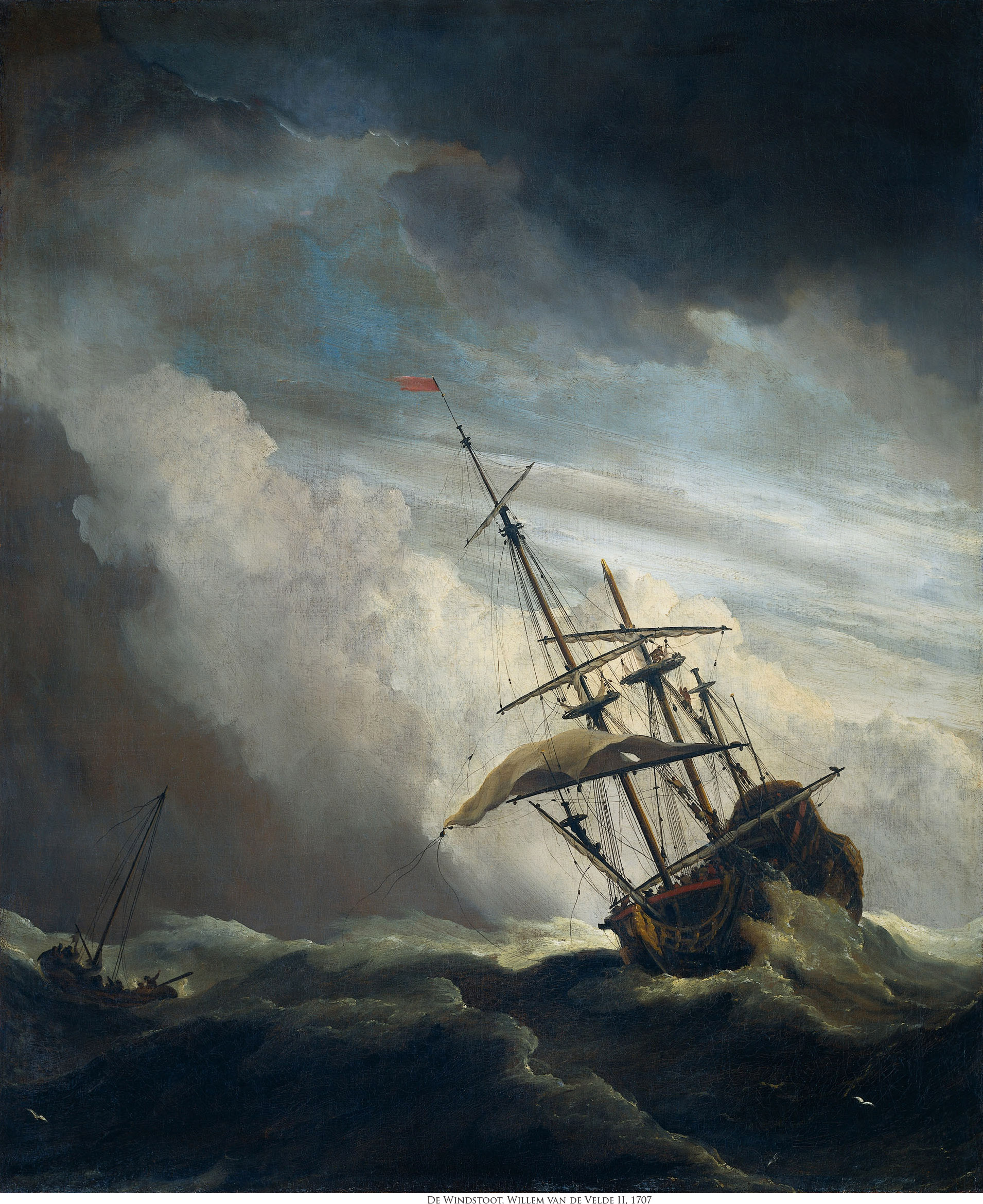
The crew dragged up the long black whale, sliced it open head to fluke, and then there he was, lying among the red, red ropes and glistening offal of the creature’s belly.
He was little more than bones. His skin had been bleached white by the stomach liquids, and all his hair had fallen out. He lay still as could be, staring up through the bloody cleft. Every few seconds he breathed, a quick, shallow breath.
Hooks and paring blades clattered to the deck. The whalers jerked back, growling into their beards, wiping the blood off on their rough woolen sweaters.
“He’s been swallowed,” one of them hissed. “Swallowed alive, like in ’em old stories.”
“Is he breathing? Oh, crikey, he’s breathing. . .”
“Let’s throw ‘im back,” Eli, the cabin boy, suggested, but they were a thousand leagues from the nearest lighthouse, a hundred fathoms above the nearest ship. It would have been murder. Murder was unlucky.
So they kept him.
He had forgotten how to walk, but they lifted him from the whale’s carcass and brought him below-deck. He was slippery as a fish, all knobby, slimy elbows and legs.
They propped him up by the iron cook-stove and fed him broth with arsenic and whiskey. At first the broth dribbled down his chin. Then he swallowed, and all the sailors that had gathered around him let up a shout.
They tried to teach him how to stand and how to speak. They asked him tricky questions to see if he might be a whaler like them. None of it worked.
“Well, we suppose we’ll call you Johnny Knockers,” they said. “Because those knees knock like a drum.” And then they all laughed.
That night, the clouds heaped against a stiff wind. Below deck, an air of anticipation had settled in the narrow galleys. Was Johnny Knockers a gift from the sea? Or a curse. . . The whalers went to their bunks and left him on a bucket next to the cold, gone-out stove.
***
Whaling was good the next day. The water chopped, deep and dark, and a fat whale was caught in the first hour of the watch, which was a rare thing and a lucky one. The men rolled up their chains and stowed the harpoons, and even the look-out was allowed to come in and sit the rest of the day out of the wind. Everyone was given an extra beaker of ale. Everyone except Eli. He was barely fourteen, and not a proper whaler, and so he was given the job of feeding Johnny Knockers.
Eli went over to the stove, scowling. He sat down on a bucket next to Johnny Knockers and began shoveling stew into the pale man’s mouth so hard that the spoon clanked against his teeth. Johnny Knockers didn’t protest, but he looked very sad.
Eli stopped. He was such a piteous looking thing, Johnny Knockers was, so bony and haunted-looking.
Eli spooned slower. “All right,” he said, “I didn’t mean it about throwing you back, yeh? We was afraid is all. You’re a right frightening chap to look at.”
Johnny Knockers said nothing. But every time he swallowed, his throat clicked like a bird’s, like there was a marble in his gullet.
Eli spooned the broth in silence. Then he said, “I don’t suppose you’d tell where you came from? Where your home’s at? D’you even remember?”
The whalers had tried to find out the first day. They had searched his garment (a shred of bleached cloth, stiff with salt) but all they had found was a long tooth on a leather cord, hanging around his neck, and black scribbles on one arm in some foreign writing. “What language is that?” they had asked, but he hadn’t told them.
And he did not tell Eli. He did not look up. His pale blue eyes were fixed on the floor-planks, worn smooth and glimmering.
Eli listened to the whalers, merry in loud in the next room.
“I’m from Suffolk,” Eli said. “Suffolk by the Sea.”
Spoon, swallow, spoon, swallow.
“Have you been there? Don’t worry if you haven’t. It’s a gloomy place. A nasty place, right up next to the water. Not as bad as this, though.”
Eli felt that Johnny Knockers agreed with him.
***
That night, a storm struck––a vicious, screaming storm, all lightning and waves and a white wind that rushed in the sails. A rope snapped. A barrel of whale blubber was lost, a part of a harpoon station went into the sea. But the men were fresh off the victory of the morning’s catch, and so it was shrugged off as nothing.
***
Eli got the job of feeding Johnny Knockers again the next day. He grumbled in front of the whalers, which confused the cook, because that morning Eli had waited for everyone to leave and had begged him for the job.
Eli took the bowl of stew from the brig and sat down by Johnny Knockers.
Again he spooned for a while in silence. Then he said stoutly, “I’m not always going to be a whaler.In fact, not sure I like it much. Hauling all day, cutting and slicing, and shoveling. It’s right horrid.” Then, with a furtive glance through into the dank brig, he said, “One day I want to be a shoemaker.”
Johnny Knockers said nothing, and Eli didn’t mind. “I’m going back to Suffolk when I’m older and have got enough money. There’s a girl there named Lizzie. I gave Liz a tin of taffy before I went, three years ago, and she gave me a ribbon.” His fingers unlooped a slip of cloth from one of his buttonholes. The weather had faded the blue to gray.
“What, d’you think o’ that, Johnny Knockers? Sound like a plan? Sound like a good thing?”
Eli would have gone on, but then feet hammered the deck above. Shouts split the air. “Well, back to work,” he said, and left the remainder of the stew next to Johnny Knockers’ feet. Eli did not see, but Johnny’s eyes moved a bit as he turned to go, just a flick, and it made a sound inside his skull like a fingernail snagging.
***
Whaling had never been better, but no one spoke that night as they clambered into their bunks. Rations were going bad. Only twenty-four days at sea, and already food was spoiling.
That morning, a great big beast had been spotted going north, and all the whalers wanted the Misselkree to press on, despite there being nothing but rancid stew and tack to eat, and no fresh anything. They were becoming grumbly and lead-footed. The cook had found spiny crabs like spiders swarming the larder. But the whaling was so good, and so the whalers were convinced they were still on a streak of luck.
Still, they weren’t sure of Johnny Knockers, and since no one would go near the bony figure by the stove, Eli had to feed him permanently. Which was all right with Eli.
He liked talking he had noticed. He liked telling someone things, whether he got any answer or not. In fact, it was almost better not getting answers.
And so Eli talked. Even after the cook had gone to his hammock and the whalers were snoring in their bunks Eli murmured to Johnny Knockers in the dark, told him of Lizzie and how she was very poor and so was Eli, and how neither of them minded. He told of the house on the heath that he wanted to buy in a year or ten. Just a short jaunt from the town, Eli said, a short jaunt that a buggy and an old horse could manage nicely. And no more of the sea. No more fear of drowning, black waters creeping over pale faces, filling your nose, your lungs. You didn’t drown on a dirt road. You didn’t drown in a buggy.
***
The crabs had begun snapping at the men’s toes as they slept. Barnacles were found on the inside of barrels, which was unheard of. But whales continued to be bountiful. They came steadily, one a day, at least, and they were becoming ever larger. Soon the Misselkree would be too full. It was a large whaler, and they had room for many barrels of blubber, but there was only so much space, only so many barrels.
“Perhaps it’s him,” Crickets said one night to the other whalers, as he scraped a strange green fungus off his tack. “Johnny Knockers. Perhaps he’s like a lure to them. To the whales.”
No one agreed at first, but slowly they came to realize: Johnny Knockers was very good luck indeed and whatever was happening around them had to be due to unfortunate weather and bad planning and a no-good blarsted tack-and-flour merchant back in Liverpool. Because yes, indeed, whaling had never been this good, whales never so foolish. And Johnny Knockers was a lure.
So they made him into one.
At the crack of dawn they took him from his place by the stove and dragged him onto the deck. A coil of rope was brought.
“Stop!” Eli yelled, when he saw what they were doing, but the whalers pushed him back.
“Shut yer trap, boy. It’s more blubber in the barrel, for you too.”
“I don’t want any blubber, stop it!” he screamed, but they only clouted him and shoved him away from Johnny Knockers. Then they tied Johnny to the mast, tight so that he wouldn’t flop about.
A whale came very soon. Its tale slid up out of the water. Then its head dipped up, very close to the ship. Johnny Knockers saw it. His eyes took on a sickly, desperate glaze. He began to strain, pushing against the ropes.
“Stop!” Eli cried again, but no one listened.
The whale approached. The pale man began to make croaking sounds, louder and louder, and then the first harpoon struck the whale in the water and the shriek that came from Johnny’s throat was so ghastly that the sailors very nearly lost their grip on the whale. The beast began to struggle, suddenly, where before it had been calm. It thrashed and Johnny Knockers’s did, too, his voice screeching up and up. The harpoons rained over the edge of the ship. For an instant the water was stained red.
When the whale was at last dead and they were scooping the pearly fat from under its ink-blue skin, Johnny Knockers stopped screaming. He went limp again. They dragged him below-deck, and Eli sat next to him, trying to feed him, because it was the only thing he knew to do, but Johnny didn’t eat. He sat staring out into nothing, and Eli felt sure his eyes were full of hate.
***
The whalers went to their bunks, but not Eli. He stayed with Johnny.
The hours crept past. Eli began to doze. And then a hand crept forward and gripped Eli’s arm. Johnny had not been in the water for days, but somehow his skin was still wet, slippery, as if the water were inside him, seeping out of his pores. The grip was so hard. Johnny’s eyes were wide.
The cook woke at one point to empty the chamber pot and saw them silhouetted by the stove, the boy and the bone-thin Johnny Knockers. Later, when asked, he couldn’t for the life of him remember later if it had been Eli whispering. . . or Johnny Knockers.
***
It was middle of the day, bright as a bell, when Eli came up on deck and wrapped his arms in chains and plunged into the sea. He sank like a stone before anyone could reach him, before anyone could even shout.
The whalers held a burial-at-sea. Ashes to ashes, brine to brine. The captain mumbled from the ship’s damp and battered Bible. They had to shorten it a bit because a humpback had been sighted, so close by, floating calm as you like toward the Misselkree.
***
The hold was filled to bursting, barrel upon barrel of blubber, but there was still one corner left. One last corner with space for a few more barrels. The food was rotting, the men were sick, but it would only take one more whale.
They tied Johnny Knockers to the mast again, to speed things up. One last whale and they would turn keel to the sun and return home. Back to port, and ale-houses, and enough money to live at least until Christmas for those who drank, fairly well until June for those who didn’t. The Misselkree’s hold was very, very full indeed.
That day, a tiny whale came. Johnny Knockers did not thrash or scream this time. He looked at the whale, though. And just before it came within range of the men’s harpoons, it turned and folded back into the ocean. The men cursed and shouted after it. They had been looking forward to the journey back. They dragged Johnny Knockers below and threw him to the floor.
A whale came not too long afterward. They killed it and filled their last barrels. They felt very pleased with themselves, very pleased as they vomited over the side of the ship.
That night, a whaler named Smithy died of dysentery. Several others were too sick even to move. But they were headed home now, headed to port and a year of comfort.
“What an expedition,” said Crickets. “What a lucky expedition.” And everyone agreed.
***
The whales came in the night. Thirteen, fourteen, fifteen, surrounding the ship. The night was black, the air still and cold, and the men barely stirred as the waves from the whale’s fins began to pummel the ship. It started gently, became stronger. Then the whales struck, head-first on all sides of the ship, like hammers. Leaks sprang. A porthole burst, splashing Crickets in the face.
The men staggered from their bunks with weak shouts. They hobbled on deck in their nightclothes, lanterns swinging, tiny fireflies in a great black ocean. The whales struck again, again. The hull buckled. Men were thrown from their feet. And then the Misselkree split, right down the middle, with a deafening crack. She sank quickly––ten seconds and then she was gone––and all the little fireflies winked out.
But just before the last of it slipped under the waves, Johnny Knockers stepped off into the gurgling water. He did not sink. He did not swim. A whale’s head rose up, a black monolith, blacker than the night. A deep, hollow sound echoed out of its belly. The whale opened its mouth and Johnny Knockers flopped in, curling into the dark and the red like a child into a womb.
***
Far away, a boy struggled up a rocky shore, dragging himself over the stones. He was paler than he had been, just bones. His hair was not as thick as a fortnight ago, and his eyes were somewhat sunken. A ribbon was looped through his buttonhole. Only the faintest threads showed that it had been blue once.
But he would live, years yet, forty, fifty, and he would find roads and travel them, to Lizzie and shoe-shops and houses on heaths.
Not the men on the Misselkree. They lay at the bottom of the sea in a boat full of blubber, and not all the luck in the world could have saved them.
Neither had the whales.
March is the Month of Luck
 It’s a new month in the shadowy corners of the Cabinet (and perhaps in the sunny world outside, too, who’s to say), and that means four new stories, four new nightmares that will frighten you or disgust you, and preferably do both. This month, if you poke your head in our door, you will find the stories are about luck.
Not necessarily good luck.
Perhaps one story will be about wishing wells, and one about troll bridges, and one about falling off of a boat and drowning. We don’t know yet. We won’t tell yet. But the stories will without a doubt feature dastardly deeds and frightening occurrences of the sort we’re sure you’ve never seen before.
Last month we wrote of love. The month before we dreamed up dreadful things about cake. Now, just in time for St. Patrick’s day, we bring you tales of fortune, serendipity, and chance. We hope you like it.
May March be luckier for you than it will be for our characters.
The Curators