Author Archive
The Queen of Tarts
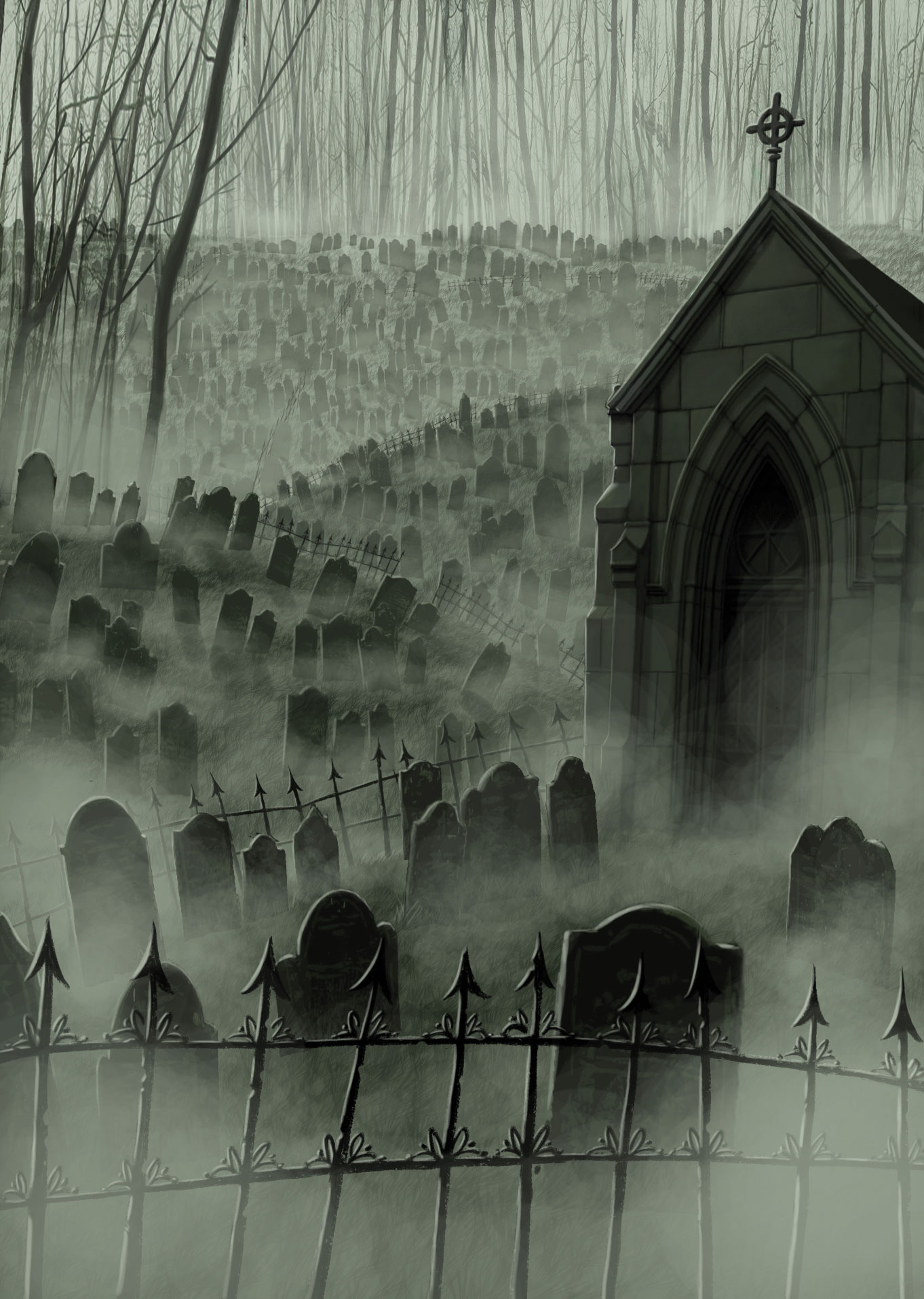
Every Wednesday, shortly before midnight, Jedediah Blacktop went to the graveyard in the north of the town to empty the coffins. He was not a grave-robber. He would not have been pleased had you called him one. In fact, he would have punched out all your teeth and sold them. No, Jedidiah considered himself a recycler.
Wednesday would arrive without fail, and would tick steadily past, and midnight would approach, and then, as if it were part of Wednesday’s inner workings, Jedidiah would open his door and stump down out of his attic like some sort of bedraggled bird from a cuckoo-clock. He would drag his cart out from under the stairs and pull it, softly creaking, through the cobbled lanes and dirt ruts toward the north. He would go to Fenningham Street, where the houses were built with their backs pressed against the bend of the river, and where there was an old church and a graveyard. He would pull his cart into the graveyard, past the good graves in the front where the rich folk were buried. He would slink along in the deep shadows of the church wall and reemerge on the other side. He would find the freshest, newest graves, where the wooden crosses were still oozing sap and the ground was freshly turned. And he would proceed to dig them up.
He always started with a stick to measure how deep the coffin had been laid (never more than three feet for a poor grave). Then he would graduate to a spade and dig, careful not to scratch the coffin’s top very badly. The body inside would be laid out, and Jedidiah would go on like this until there was a neat row of corpses, all pale and cold in the grass. The coffins would then be stacked on the cart. When Jedidiah had a full load, he would throw the bodies over the graveyard wall into the river and take all the coffins to the coffin-shop.
Twice-used coffins went for barely a penny, thrice-used not even a groat, so Jedidiah didn’t get very much, but he always received his handful of coins and returned to his attic quite satisfied.
It was an unpleasant occupation, and Jedidiah was an unpleasant person, so it suited him well.
* * *
This particular Wednesday was a bleak, black night in Fenningham Street. The clouds were thick and the moon hung low in the sky like a candle-flame, and Jedidiah sauntered into the graveyard, sucking his long thin cigarette. It was the only spot of color, that glowing tip. Everything else was ink-blue and cat-black and a deep, unsettling sort of green that comes when shadows have been soaked in the leaves of trees.
Jedidiah pulled his cart past the good graves up front, where the rich people had been buried. He went along the church wall and then began poking about in the pauper’s lots with his stick.
It would be a good week, he suspected. There had been an outbreak of the influenza in the north part of town and that meant the graveyard had likely been blessed with many new arrivals.
Sure enough, Jedidiah excavated a long row of bodies, some tall, some short, bare feet poking out from under their shrouds. He found a few charms around the necks, and some of the more elderly bodies had coins over their eyes, which of course he pocketed. The coins were put there to pay Death, because it was said he would not take you across the river Styx and on to greener pastures otherwise, but the coins really only payed Jedidiah and he didn’t take the dead people across any rivers; he simply threw them in.
By two in the morning, Jedidiah had come to the last grave. There had been eighteen that night, a very great number. Jedidiah was already looking forward to the road home, a good rattling handful of coins, enough for tobacco and bread. He started to dig, the spade biting into the earth, tossing the dirt. He uncovered the coffin. It was a small one. A child’s coffin, very fine. Child’s coffins were more expensive than the adult coffins, so Jedidiah was pleased, whistling through his crooked teeth when he saw it. He pried it out of the wet, damp earth, laid the coffin down on the grass, and hooked his iron bar under the lid. He popped it off. And then he started, and his cigarette dropped out of his mouth . . . Inside the coffin, nestled in a bed of linen and lace, was a child, bald and paper-pale, its eyes closed as if in sleep. And clutched in the baby’s little hands, tight against its chest, was a long, iron knife.
Jedidiah stared, unmoving. His breath stopped clouding in the cold night air.
The knife was butcher’s knife. It was wickedly sharp, and curved for slicing hams, and it glinted softly in the moonlight. The child’s hands were so tight around it, clenching it, a tiny knight in snowy dress.
Jedidiah blew out a puff of breath. He contemplated putting the lid back on the coffin, shoving the whole thing back into the earth and hurrying off. But if he did that he would have dug it up for nothing. He would get only 10d 6 shillings, instead of 10d 7shillings, and he still had rent to pay, and so he would have to go without cigarettes and ale and it would be dreadful. But the same time, he did not want to disturb the child. Something in Jedidiah’s cold, squelching heart quailed at the sight of it, so calm and cold in its little bed.
And the knife. Who would bury a child with a knife? If the coins were for Death, who was the knife for?
Jedidiah put the lid back on and stood back, chewing his cigarette and contemplating. He could ask the priest. Or the undertaker. Of course they would want to know why he was digging up coffins, and he would go to jail perhaps, and the coffin-seller with him.
In the end Jedidiah took the coffin back home with him and left it in the cart under the stairs, its contents still intact.
That was where it stayed for five days. When Jedidiah opened it again he expected to find rot and decay and stench, and the snow-white linens soaked with fluids. But he didn’t, because the child was gone, and there were little scratch marks along the edges of the coffin, and splinters, as if little fingers had torn it up. The knife was gone, too.
* * *
“Marsh?” Jedidiah asked, in the coffin-makers shop. “Marsh, who ordered that child’s coffin you sent out, on the first of last week?”
Marsh spat tobacco onto the floor. “Eech. I’d have to look in the books. Why?”
“Look, then.” Jedidiah turned a circle, glancing around.
Marsh went around the back of his work-table and found a great dusty ledger, and began paging through it. Then he set it down with a snap.
“A family in Winterton.”
“Winterton? What’s a family in Winterton doing at your shop?”
“I beg your pardon?” demanded Marsh, indignant.
Jedidiah left and went to Winterton.
* * *
“We did order a coffin,” said the maid, whispering, half-hidden behind the flapping clothes-line. “For Miss Jenny, the baby. And yes, she had a knife in her hands when she was buried.”
“Why? Oh, go on,” said Jedidiah, pulling at his cigarette and glancing around, which is what he did often in the company of other people.
“The mistress wanted it,” the maid said. “She said kept saying, ‘Why, why?’ and cried and screamed, and said, ‘Why did Death take Jenny, when it could have a taken another little girl or another little boy, or no one at all?’ And in the end she gave the baby a knife, and whispered to her the whole night long, though Baby was already dead and cold by then.”
“That’s the daftest thing. What was the child supposed to do with the knife?”
“I don’t know!” said the maid, clipping and un-clipping clothes-pins for no reason at all. And then she said: “Well, little Jenny was not the first to die. There was the influenza. Her brother went, only two days before. And then, as Mistress was sitting down by the river, crying into it, he came back. He floated up to her in the water, and his eyes were open and milky, and he was dead, but he wasn’t. He stared at her and his mouth was opening and closing and Mistress leaped up and screamed, but the boy floated right against the shore. And when the Master came back with a rifle the boy seemed to be trying to flop up the bank, and his eyes were rolling, and his tongue was black. I didn’t see it, but I heard, and it sounded dreadful.”
“That’s the daftest thing,” said Jedidiah again.
“I don’t know,” replied the maid softly, her eyes wide. “All I know is that Death isn’t the end right now. The dead, they’re not staying dead. It’s as if they don’t know, as if they’re lost.”
Jedidiah left in a huff, rolling himself another cigarette and scowling. He went up the streets to his attic. Tomorrow was Wednesday. He wondered if it would be a good one, or poor.
* * *
Midnight struck. Jedidiah left his attic He dragged out his cart. He pulled it through the lanes, wheels creaking, just as he always did. He was a bit slower at everything that night, though, deep in thought. The words of the maid still rang in his head, loud as a church-bell: “It’s as if they’re lost.”
He came to the pauper’s lots and began poking about with the stick. Then he began to dig.
The first body was that of an old woman. He laid her out on the grass and went to the next new grave. He dug that one up, too. And when he came back with the second body, the old woman was gone.
Jedidiah dropped his corpse. He stared at the grave and at the ground. The grass was trampled. There were sliding marks in the mud . . . but no body.
Jedidiah spun. The graveyard was dark and silent. His hands tightened around the handle of his spade.
“If this is a joke, it ain’t any one of the funny ones,” he snapped. He wondered if perhaps it was a watchman interfering, or a local mourner who, disapproving of his line of work, had decided to get revenge. Jedidiah walked a few steps across the graveyard. And then he spotted something out of the corner of his eye. The old-woman-body was on the wall, the graveyard wall, and she was trying to scramble over it with reckless haste.
Jedidiah’s heart leaped. She was not making it over. She seemed strong enough, but she was desperately uncoordinated. He went to her. He stared up.
She did not see him, or if she did, she did not care. She struggled, scraping her hands on the stone, staring frantically forward into the dark, as if her whole life and fortune were lying wait on the other side of the wall.
“I want to go home,” she was whispering. “I want to go home. Markist! Markist! Wait for me, Markist!”
Jedidiah pulled her, struggling, from the wall and put her back in the coffin and slammed the lid down and buried it again.
Then he dragged his empty cart back to his house and stayed up very late, smoking and wondering what to do.
* * *
Jedidiah did not return to the graveyard for three Wednesdays. He ran out of bread, but he still didn’t go. Then he ran out of cigarettes. He went.
He took his cart out, pulled it to Fenningham Street. The graveyard would be full, he knew, from the influenza. But would it? There were reports now, newspaper articles. People were glimpsing their deceased relatives at the windows, staring in, relatives who had been dead a day, a week, pressing cold eyes to the glass and staring at the firelight and the life. The news was printed everywhere, headlines all over the country and in large cities:
The Dead Walk!
Death is on Holiday! Corpses Not Staying Dead
Rising Panic as Loved Ones Come Home
But Jedidiah needed to bring a load of coffins in or he would starve, and so he decided not to care.
He began digging quickly in the churchyard, and instead of laying the bodies on the grass so they could wriggle away, he tipped them straight over the wall into the river. They could be the river’s problem. They could be the problem of whomever lived downstream.
He did the rich graves, too. He threw a great big opera singer over the wall after taking all her jewels. He could still hear her singing Puccini, gurgling and weak as she bobbed away down the river. He threw the mayor over. The mayor was still giving orders under his cold dead breath:
I forbid it. I allow it. I forbid it. Yes. No. They mustn’t. Because I said so.
And then, when Jedidiah was almost finished, someone stepped from around the gravestone and stared at him. At first, Jedidiah thought it was a corpse again. He thought he would have to tackle it if it came any closer and hurl it into the river the way he had done with the rest. But it was not a corpse. It was a woman, and she was bizarre. She wore wide, lacy bloomers and red shoes, and she had orange hair in tight curls. Little baubles – birds and cages and mice – hung from it. Under her frizz of hair, a pasty face looked out, and a red mouth and blue-striped gloves, and a puffy coat like for a ballgown. When the woman saw Jedidiah she said: “Oh, well then,” in a very low, lazy, slightly scratchy voice.
“Who are you?” Jedidiah barked, and though it sounded very rough he was in awe. She was so out of place in the graveyard, like a great colourful bird in a well.
“I don’t know,” replied the woman, her voice still very deep, and she began to wander toward him, inspecting him superciliously and then moving on to do the same to a nearby tree. “I ask myself it often, but I never get an answer. It’s rude, really. Someone should do something about it.”
Jedidiah stared.
“Rude,” she said again. “You, too. Everyone’s rude.”
She was most likely a dreadful person from the slums, thought Jedidiah. They went mad from diseases sometimes.
“Well?” said the woman. “If we can’t find out who I am, perhaps we can discover where I am. Where am I?”
Jedidiah regained a bit of his composure. “Look, what’s a tart like you doing around so late in a graveyard?” He glared at her. “Off you go, back to wherever you came from.”
“Tart!” exclaimed the woman, and began to laugh very boisterously. And then she became very serious, and said: “Gooseberries.”
“What?” asked Jedidiah.
“Gooseberry tarts. They’re the cat’s pajamas, quite.”
Jedidiah shook his head. “Go away. I have work to do.”
“Oh, that makes two of us. We should form a company.” She picked up a bit of flower from a grave and tossed it back.
“What work have you got? Nothing honest by the looks of them spotless gloves.”
“Oh, surely not as honest as your work,” she said drily. “But . . . Well, I believe I’ve forgotten. I’m certain it was something.”
Jedidiah peered at her. “You don’t hold with the police, do you?” His eyes went sharp, glittering, then faded to their usual, glum grey. “I suppose not. Fine then. I’ll ignore you and go about my business.” He began to dig again. “Good night.”
“Is it?” asked the woman and peered skeptically up at the pitch-black sky. “I seem to recall the last few nights being dismal and horrid, but everyone said good night anyway.”
Jedidiah dug in silence.
The woman began to wander across the yard, looking at things, picking little bits of mortar from the gravestones and crumbling them between her fingers.
“Have you remembered?” asked Jedidiah after a while. “Your business here?”
The woman sat down on a tree stump. “No. I’ve forgotten entirely. I suppose something went very wrong.”
“You’re likely mad, is how I suppose it.”
“Well, perhaps if you told me what I had forgotten I would remember,” the woman snapped, and it was a ridiculous thing to say, but she snapped it with such conviction that it made Jedidiah a little bit ashamed of himself. He kept digging, becoming flustered. Then he paused. He lifted a coffin out and dumped its contents on the grass.
“Well,” he said slowly. “If you hang about in these parts, perhaps you know why the corpses are all strange. Perhaps- ”
“Corpses?” said the woman and licked her lips. “Where are corpses?”
And then she saw it. On the ground, the blue-grey face and swollen hands.
“Oh,” she said. And then again, “Ooh,” very deep and scratchy, like from the belly of a cat.
And when Jedidiah looked over his shoulder at her he nearly dropped his spade. The air around her was shifting, snapping, like it couldn’t decide whether it was town-air, or the air of some vast, dead country of flame and ash, and with every snap, the lady, for a brief second, seemed to become someone else entirely.
Jedidiah caught a glimpse of inky feathers, a great black cape. A pale face, no, not pale, a face with no skin at all. A face that was a grinning skull, and a bony hand gripping a scythe.
“Yes,” said the woman, and her voice was a dry clack now. “I’ve remembered now.”
Jedidiah stood transfixed. His mouth opened and closed over his coffee-colored teeth. “But-” he said. “But it isn’t! No, it isn’t!”
“It is,” said the tart, who was in fact the queen of all tarts, Death herself. “I’ve been confused. Several weeks ago I went to a tavern because it looked bright and cheery, and I thought I’d kill some people there, but it seems I was waylaid. Too much to drink, I’d say. Goodness, what a headache.”
She put a bony hand to her skinless head. “Ah well. A pleasant diversion. But now to business.”
And she took the scythe and swung it at Jedidiah. It did not touch him, but Jedidiah clutched his jacket over his chest. His eyes went wide. He began to cough. He coughed so loudly it sounded as if his lungs where ripping themselves from his chest. Death swung the scythe again, this time at the corpse on the ground, which had begun to wriggle and croak. It fell still.
Jedidiah coughed and coughed until his lungs heaved. And then he toppled, sideways, like a tree.
“You know, it’s funny: people think themselves soooo clever.” Death moved languidly toward Jedidiah, whose eyes were rolling up into his head. “But you don’t know a thing about me. And you never will, not until it’s too late.”
The air around her had stopped crackling. She was the tart again, frilly bloomers and dangles clinking in her orange hair. She stepped over Jedidiah’s prostrate body, glancing down at him. The glowing end of his cigarette was still fizzling weakly in the grass and she put it out with the toe of her shoe.
Then she tucked her scythe under her arm and placed her hands in the pockets of her bloomers. She went away down Fenningham Street, and though she paused for a moment to peer in at the window of the tavern, she did not go inside.
The Booksellers

They came and went from a hole below a tavern in Daggenford Street, in a grimy, moldering part of the town where there were no streetlamps. No one ever caught more than a glimpse of them. Sometimes, a watchful eye or a bloodshot gaze pressed to a window would catch the slither of black cloaks, the gleam of a metal mask, or the flicker of a white finger . . . But nothing more.
Many wished to see them. Over the years, many came to that part of the town, from across the sea, and from far across the country—rich men in crimson waistcoats and poor men in tattered hats, and fine ladies and barefoot children. They all craved to see one, to look behind its mask and learn its secrets. Edgart Viviender was the latest. Bored and clever and rich as Italian damask. He would not be the last.
*
There were no books in Edgart Viviender’s country. Perhaps there were none in the whole world. There were no books because there were no trees, and no paper, and very little leather, and hardly any brains to string words together and make sense of them. Edgart’s house had a room called a library, but no one remembered what it was for; the shelves were empty and they were too narrow for shirtwaists and too wide for china-ware.
And the problem was, Edgart knew how to read. He had practiced the street-signs and the medicine bottles, and he had read all the words stamped on the soles of his shoes, and his options had become rather limited. He wanted more. He wanted deeper. That was when he had begun to gad about, and ask questions, and go on journeys. And that was how he came to Daggenford Street.
That was how anyone came, trickling into the shadowy confines, adventurers and fortune-seekers, and the curious, and the bored. They came to that town based on rumors: that there were suppliers there, purveyors of wondrous things, marvelous things, sparks and flames and rolling shadows. Things to prod the mind and poke the soul. And so Edgart came, and took lodgings in some upstairs rooms in Belheim, and set off every night to search for the booksellers.
*
On this particular night, the foghorns from the docks were moaning and the air was opaque, as if a curtain of oil hung in the atmosphere. The cobbles were slick. The taverns were full. Not loud, but full.
Seven were there, sitting at Edgart’s table, and one of them was a local, speaking in a hushed and grating voice.
“There’s Crow-face and Moon-face and Iron-teeth and Tar,” the old man whispered over the guttering flame of a candle, and the others stared, and Edgart stared hardest of all. He sat between a woman named Mary the Bonneter and a man named Merry the Hangman and they both wanted to find the booksellers, too. Mary the Bonneter leaned over, pulling her headscarf low.
“Where? Where are they?” she said, and her voice was soft and musical, and it made everyone wonder why she was here, and why any of them were here.
The old man answered: “You won’t find them if you look. They’ll come to you. And if they do, they will ask a price. It is not free, the things they give.”
Edgart thought: Well, I am very wealthy. . .
“Have you ever seen one,” Mary the Bonneter asked. “Ever at all? I hear they wear masks- ”
“They do,” said the old man. “And I have. Oh, I wish I never do again.” He shivered, violently, and the candle shivered with him. “I was twelve then. I did not see the face, but the figure reared up before me seven feet tall, wrapped in a black cloak, and his round, silver mask shimmering. . . That was Moon-face. I still see him sometimes, in the far reaches of the night, after I close my eyes.”
Edgart left the table hurriedly. The booksellers would not find him here. Edgart would not learn their secrets by talking to superstitious old boggarts. He went to every tavern in that part of town where there are no streetlamps, and he waited on corners, and he shuffled through gutters, and he slept in the day and walked in the night, and waited.
*
In the end, the booksellers found Edgart. He was stumbling back to his lodgings after a long, cold night, his joints stiff, his waistcoat and cravat a little wilted.
The booksellers were in a group, hunched and moving swiftly down the street, four figures returning from some errand, some shadowy journey through the night.
Edgart was in the middle of the street, and they were coming straight toward him.
He was paralyzed for a moment, frozen in a mixture of fear and anticipation. Then he slipped into a doorway, waited for them to pass, and followed quietly behind.
Moon-face was in the middle. Edgart recognized the round, round mask, mirror-bright, with slits for eyes and a grinning mouth. Then there was Crow-face, who was a woman, and Iron-teeth who was short and stocky, like a boulder, and Tar, which was so tall and thin it was impossible to tell what it was.
They moved with incredible speed, darting and gliding, and yet they did not seem in any hurry. They turned into a narrow lane, scrabbled close along the house-walls. It was difficult for Edgart to keep them in sight. And then they arrived at a tavern with a wordless sign hanging broken above the door—an empty tavern, long deserted.
There was hole under it, a fallen bit of wall where the gutter flowed in.
Crow-face slipped into the hole, a small cackle echoing from behind her mask. Tar and Iron-teeth went next.
And then, just as Moon-face paused, and turned and looked over his shoulder, and was about to dive into the blackness as well, Edgart Viviender stepped into the street.
He didn’t say anything. He simply stood there, and when Moon-face looked at him, all sound seemed to stop. There was no distant clatter of docks and drinking. No dripping gutters. Only a shimmering, silvery ringing, piercing the air.
Slowly, Moon-face straightened.
Edgart stood stock-still, his hands clenched around his trouser-legs.
Moon-face glided toward him.
“Show me,” said Edgart. “Show me, please! Take off your mask!”
Moon-face froze. He did not come closer.
“Do you want something?” Edgart’s voice rose. He took a few steps forward. “Something in return? I will give it to you. Anything you ask.”
Moon-face watched him. The ringing continued, seemed to swell and weave, hypnotic and strangely sickening. And then Moon-face reached up and opened his mask.
Every drop of blood in Edgart’s body turned to fire. He could no longer speak, or move, and his muscles wound tight and his bones locked. The face behind the mask was pale and smooth, the skin so clear and glass-like, as if it had never felt a strong wind or the scratch of a branch. And there were words there. Scrawled on the eyelids, on the cheeks, across the forehead in blood-red ink. So many words, flying at Edgart and pounding him, a thousand words and a thousand stories.
Every happy family is alike-Anna? Anna, where are you going-no one noticed the soldier-and suddenly Edgart was so heavy and full that he reeled back and fell into a doorway and collapsed.
Moon-face stayed perfectly still. Then he reached up slowly and closed his mask over his face, and its hinge creaked like a door. More seconds passed. Somewhere in the distance a cat shrieked.
Moon-face turned and melted into the dark.
*
Edgart lay in the street, shaking and freezing, his eyes open, and when he had recovered enough, he dragged himself back to his lodgings in Belheim. He did not leave them again. He locked himself in, and the landlady heard odd voices from the rooms, as if there was not one, but many different people there. She heard loud thumps, and the casements banged open on windy, stormy nights, and water dripped through the floors. And at some point, when no one had seen Edgart for many, many days, the constable came to break down the door.
They found the rooms in a disarray, and Edgart lying on the floor, laughing, or possibly crying, it was difficult to say. He had gone mad. He had scrawled on the walls with ink and fingernails and worse things, and though very few people knew how to read it, it was a masterpiece.
It began: Why, oh why do the little ones go, laughing and talking, into the snow. . .
*
One week later, in Daggenford Street, Moon-face crept from under the tavern, and found Mary the Bonneter. She was waiting for him, her face alive and bright, and her eyes quivering. Moon-face paused before her, and she promised to pay the price. He creaked opened his mask.
Why, oh why do the little ones go, she read on his eyelids and on his face. . .
A Brief Blip in the Scheme of Things
Hello, dear reader. This is not a story. The title would perhaps suggest a story, something deep and meaningful about a Blip, who is brief, and becomes lost in some sort of Scheme-ery of Things. . . But in that case the title would be misleading. This is to tell you that Stefan Bachmann’s tale has been slightly delayed due to the publication of his new book The Whatnot, and he is unfortunately drowning in things to do. When the last of these things have been extracted from his lungs, he will post a story, likely within the next two days. He thanks you very much for your patience.
Knives

“Yabba, where’re my boots?”
The girl stood in the dark of the hovel and raged. She was tiny. Her knees stuck out like knobby fists, and her nose ran, and her fingers were cracked with dirt and cold. Not even the wind—when it came howling through the chinks in the hovel’s door—could stir the nest of hair on her head, so thick were the knots and tangles. “Where are they?”
Yabba sat in the corner and scowled. He was whittling furiously at a piece of wood.
“Where are they?” the girl snapped again. “What’d you do with them?”
Yabba nicked his finger and hissed, sucking the blood. He looked at the girl. Then his lips curled back. “I sold ’em. Needed the coin.”
The girl let out a screech and flew at him. She’d scratched him halfway across his face before he could even shout.
“You sold ’em?” she screamed. “You sold my boots?”
Yabba regained his balance and threw the girl across the hovel. She crashed into the wall and fell, a heap of rags.
“To the tinker,” he said, wiping his face. “Out back of Olga’s.” He set back to whittling the wood, breathing hard. “Go get ’em if you want ’em.”
The girl sat up. There was blood on her head, but she didn’t seem to notice it. “Those were my boots,” she said, quieter now. “Mam gave them to me ‘fore she left. They were mine, Yabba.” Her eyes were beginning to quiver, glistening in the light of a little cook-fire.
“Well, now they’re the tinker’s,” said Yabba. “And you can just shut up about Mam. She weren’t your Mam any more ‘n she was mine. Go to sleep, and tomorrow you get something valuable, you hear? Something we can use, so that I don’t have go out and sell your grotty boots. Lace, or red berries, or something fancy. I’m going to need it.”
* * *
The girl came back the next day with a bundle of twigs, green and uneven, torn from the shrubs beyond the river-fork.
“That don’t look like lace to me,” Yabba said when he saw it. “What else?”
“Nothing,” said the girl. Her teeth were gritted, but she was not as wild as usual. She had gone rather quiet. “Twigs was all I found. That’s all there was today.”
For a moment Yabba stared at her, as if he couldn’t understand. Then he said, “And what d’you expect me to do with twigs?” His black hair was in his face, sticking to his forehead.
“You could sell ’em,” the girl said. “I don’t know. It’s all I got this time.” The girl wouldn’t look at him.
Yabba threw her out the door and she slept that night under the drooping thatch, her feet in the cold rain. When morning came, she ran away up the hill on the other side of the town and got a knife from under the tree that grew there.
* * *
The girl brought the knife back to the hovel. It was a very fine knife. It had a manticore in red carnelian on its hilt and a sheath of finest leather.
“Yabba!” she shouted, and pounded on the door. “Yabba, I have something! Lemme in! Lemme in, or you can’t have it.”
Yabba opened the door. He took the knife and looked it over. “Should do,” he said. “No more of this twig stuff, now, or you’ll be staying outside permanent-like.” Then he left, and he didn’t come back for a whole day and night.
* * *
Yabba came back with a black eye and two yellow teeth in the palm of his hand.
“They didn’t want it!” he screamed. “They didn’t want your stupid knife. ‘Where’d you get a knife like that?’ they said. ‘Ain’t no place we can sell that knife without getting hanged,’ they said. I want coin! Silver and gold, or I’ll throw you out!” He hurled the knife into the dirt at the girl’s feet. Then he stormed away, slamming the door so hard the whole hut shivered.
The girl picked up the knife and folded it gently into the shreds of her dress.
* * *
Yabba didn’t come back to the hovel for a week. When he did, he wanted coin again. The girl hadn’t got anything. She hadn’t left the house, though she didn’t tell Yabba that. She offered Yabba the knife again, but Yabba just spat. He was afraid, then angry, turning circles and growling like a cornered dog.
“What now? What do I do now? You always get something. A pair of gloves or some honey or lard or something. Now what am I ‘spected to do?”
“I want my boots back, Yabba,” the girl said. Her eyes were on the watery broth she was stirring.
Yabba shouted, going hoarse about the money he needed to pay off some people. The girl kept stirring. Her hand was tight around the wooden spoon.
“Those were my boots,” she kept saying. “Those were my boots, Yabba, and Mam gave them to me and I want them back. I asked at Olga’s. The tinker you sold them to, he’s not there no more.”
“Course he’s not there!” Yabba shouted, before he got really mad. “It’s been a fortnight. He’ll be halfway to the moon by now.”
* * *
The girl knelt on a hill under a solitary tree. A heap of knives lay against its roots. The lower ones were black, gnawed-upon by damp, but the ones close to the top still glinted. They were all very fine, with elaborate sigils in the likenesses of dragons and hens and manticores.
“I got another one for you, Mam. You listenin’? I got another one.”
The girl laid a knife on the top of the pile. It had a bit of dirt on its tip. Then the girl rested her head on her knees and stayed that way until long after the sun had gone down and the wind blew sharp and cold over the back of the hill.
* * *
It was morning when the girl made her way through the town toward the hovel. It had rained during the night, and the day was cold and drizzling. Halfway down the street, in front of the church, she came upon some townspeople, huddled together. They were very silent, looking at something on the ground.
“What is it?” the girl asked, edging up to an old woman who was standing a little apart from the others. The woman looked at her a moment, but said nothing. The girl walked around to the other side of the huddle.
Something was lying on the ground. All she could see of it were the bare feet, white and swollen against the black mud.
“Who is it?” she whispered. “Who’s that on the ground?”
“A tinker,” one of the men said, before going back to staring.
“From up North,” said another.
“No great loss,” said a third. “But for the way it was done. Dreadful. Like some sort of beast, only bigger. Not like anything around here. Not like wolves.”
The girl didn’t wait with the townsfolk. She ran back to the hovel, feet sliding in the mud.
* * *
A woman hurries about the hovel, rushing from corner to corner, wrapping a heel of bread, lighting a lantern. She tries to be quiet, but she is not quiet enough. A girl wakes from the straw in the corner.
“Mam?” she asks. Her voice is scratchy with sleep. “What you doin’, Mam?”
The woman goes very still, her back to the girl. She closes her eyes. Her face is worn and thin.
“I have to leave for a while,” she says. Her hand closes around the warm glass of the lantern, trying to block out the light, but the girl is already standing up in her little bed, shaking.
“Why you going, Mam? Why you taking all those things?”
The woman’s skin is like leather, hardened from winters and summers and falls. She turns and reaches out a finger, brushing it over the child’s face.“Now, deary. No crying. You’ll see Mam again. You’ll see me one day.”
“Don’t leave, Mam. Don’t leave me with Yabba, I don’t like Yabba!”
But the woman is already turning. She’s at the door, heaving her sack. “I have to,” she whispers. “I’m ten kinds of dead if I stay.”
“Why?” the girl cries, and it’s a piercing sound, like a whistle. She looks as if she wants to follow the woman, but she’s still rooted to the bed of straw.
“He’s after me,” the woman says. She pulls up her shawl, black and crimson, shadowing her face. “He’s after me and he won’t ever stop. I stole something from him, see. Years ago. I thought it would be good and help me, but it wasn’t good, and he knows my scent. He’s been chasing and chasing me all these years, and he’s close now. So close. But he won’t have those boots. He won’t have them back. You keep them, all right? You keep them and you use them.”
“Mam!” the girl says, shifting from foot to foot on the bed. “I’ll help you, Mam! He won’t catch you, I’ll take care of you!”
The woman half turns in the doorway, a dark shape against the blue night. The girl can’t see her expression—a sad smile on cracked lips. “Oh, deary. Nothing can save me now. Nothing but a good sharp knife.”
* * *
That night the girl woke in a sweat. “Mam?“ she called.
“Shut up.” Yabba turned over in the thick blackness. “Go to sleep.”
The girl eased up onto his elbows. Her shoulders were trembling. “Yabba?” she said, after several minutes. The word stuck in the dark like a tuft of wool. “Yabba, why’d Mam go?”
“I said, shut up.”
“Why’d she leave, Yabba?”
Yabba lurched up and dragged the younger girl over by the scruff of her neck.
“She weren’t our Mam! She weren’t nothing but a witch, you hear? A good-for-nothing witch. The townsfolk say she was troll’s wife ‘for she ran, and only witches make troll wives. Now shut up about it! I can’t take this no more. I can’t take your stupid talk. Tomorrow you get me something good like you used to, or I’ll burn this place down and run away and you can go house to house and see how they like you there.”
* * *
They found her the next day, face-down in the mud, a half-mile out of town. Something had attacked her on the road, torn her throat out. A lantern lay by her side, cracked open, oil dripping into the wagon ruts. It mingled with the blood, black and crimson.
There was no funeral. A group of townsfolk carried the body up the hill and dug a grave under the yew tree. No one came to mourn. Only a young girl was there, watching as the dirt rustled onto the white, white face.
* * *
Two days later, a constable stood at the door of the hovel, black boots in a mirror puddle, cape billowing in the drizzle.
“No use hiding in there, girl. There’s a town-full of witnesses seen you break into the Strevlov’s house yesterday.”
Yabba stood in the back, cowering. He shoved the girl forward. The girl looked up, her eyes huge.
“Why’d you do it?” the constable asked. “I know why you took the money, but why all those knives? You must have known you wouldn’t get away with selling them here.”
The girl picked herself up, and not looking at the constable. “I couldn’t get ’em no other way,” she said. Her voice was soft. “I had to get something, and I can’t walk far no more.”
“She’s crazy,” Yabba growled, stepping forward and then back again. “Go lock ‘er up. I can’t stand it.”
“You shut your mouth,” the constable barked. He didn’t take his eyes from the girl. His eyes were hard, but not all the way to the bottom. “You’re in a heap of trouble, my girl. Come. You’ll not be staying here.”
* * *
The girl lay in a dank cell. Wind whistled through the cracks in the gray daub-and-mottle walls. Water dripped from the ceiling. An iron bucket caught it with little plinks.
After a day or so, a key ground in the lock. The constable was there, boots freshly blacked.
“We found your stash, child. Up on the hill by old Sheema’s grave.”
The girl said nothing.
“How’d you get all those knives? From halfway ‘cross the country, some of them. And the one on top––from Lord Naryeshkin’s own larder. His castle’s seven leagues from here!”
The girl looked up at the man, then through him as if he were made of glass. She was seeing the tree, and Mam, and Mam was smiling at her, waving her on.
“It weren’t so far,” she said quietly. “I had boots then.”
Wayward Sons and Windblown Daughters
Mr. Farringdale and Mr. Blake stood in Pemberton Street, hunched against the coal smoke and a driving green rain, peering at each other gravely.
“It was found with the gentleman?” Mr. Farringdale inquired. He was holding a small bundle of envelopes—tied with a red ribbon—and he was holding it very delicately, as if it were valuable, or a severed hand.
“It was,” said Mr. Blake. “And it is very odd. The writings, I mean. Fanciful and not particularly helpful. But perhaps they will shed some light on the matter for you. I thought you might read them and give me your opinion by tomorrow.”
Mr. Farringdale nodded and tucked the letters into his coat. Pemberton Street traffic drifted around the two men, strangely silent in the rain. Shadow-clouds rolled overhead. Behind Mr. Blake, in the police station, a grate clanged, echoing.
“I shall read them this evening,” said Mr Farringdale. “Though if they shed no light on the matter for you, I fear they will do very little for me. Good day.”
Mr. Farringdale touched his hat and hurried away up the street. The rain flew at his face, and it smelled of rust and chemicals.
* * *
Mr. Farringdale went to his lodgings in Aberlyne. His rooms were situated at the top of a steep, dim staircase in one of those old, narrow, complicated sorts of city-houses. Mr. Farringdale was only renting.
He lived in London officially, in a scrubbed brick three-story with a wife and two children. He was not there often, however. He was not here often either. He was wherever he had to be, for however long he was needed, and then he was elsewhere. His landlady did not call out to him as he climbed the stairs to his rooms.
He found the stove already lit upon undoing his door. He stamped the rain off. He filled himself a pot of tea and took off his overshoes, then his under-shoes. He hung up his coat.
The bundle of letters sat on a chair, the red ribbon glimmering softly in the stove-light.
Mr. Farringdale took his supper on a wobbly table, watching the rain dribble and worm down the windowpanes. He drank his tea.
Then he settled himself into a large threadbare chair and began to read . . .
* * *
February 15th, 1862
Dear Papa,
We are beginning to suspect we are not real people. I often feel I am made of wind and bits of ash, and that I cannot stand upright or all my bones will snap. Harry thinks he might be made from wax. He told me the other night that when he was standing too close to the candle in Mistress Hannicky’s study he thought his skin was going runny. He thought it all might drip away. Do you think we are not real people? Do you think we are changelings, perhaps?
Please write back.
It is very lonely here, and it is always raining. Harry is the only person I talk to, but he is very quiet. Some days I think Harry is lost. He tells me he is in a deep forest, even when he is directly beside me. I would call him silly, but then some days I feel as though the wind is singing to me and calling me away. What do you think, Papa? Do you ever suppose you do not belong in the place you are? Do you ever think you are not like all the people around you and that perhaps you should be somewhere else?
It is beginning to storm and thunder outside. I feel the rain all day long. Sometimes I feel like I am in the rafters, staring down at myself. I need to go before the others come in.
Do you think I might come home soon?
Your affectionate daughter,
Pellinora Quitts
P.S. Could you send me a stick of peppermint? I told the other girls you owned a factory that made peppermint sticks. They do not believe me, but perhaps if they did we would be friends. (?)
* * *
Mr. Farringdale frowned and set the letter aside. He picked up the next envelope. A reply. London address. Thick, creamy stock and monogrammed stationary. It was written very differently from the first letter. Where that one was spelled out in the jerking, uneven hand of a child, this one was all sharp points and swift lines, thin bits of ink, controlled.
* * *
March 6th, 1862
Pellinora,
I was displeased to hear that school is not to your liking. It is, however, one of the finest in the country, and very expensive, and if you are sad I think it may well be because you are not trying to be happy. Have you spoken to the other children? Perhaps if you made an effort to become acquainted with the other little girls there, things would appear brighter.
Furthermore, your gloominess is little wonder when all you do is associate with Harry Snails. He is not a good sort. His own parents say so. He is mean and petty and you will do well to remember the reasons he was sent away. You would do well to choose a better friend.
I must be going now. I have no more to write. We shall see you at Christmas, and you shall have a rocking horse.
Regards,
Your father
* * *
Mr. Farringdale read the letter again because it didn’t really seem like a reply. He wondered if perhaps the letters were out of order. But no, this was the reply, dated three weeks after the first letter from Pellinora. Mr. Farringdale took a sip of tea. He opened the next envelope and slid out its contents.
* * *
June 16th, 1862
Dear Papa,
The other children were beastly today, especially to Harry. They were throwing rocks at him. I told them not to. I told them Harry didn’t mean to be horrid. I know he can be. He can be dreadfully mean, but he has had such a hard life, what with going to India and being sick and alone for so long. I understand him, don’t you, Papa? He told the other children he didn’t want to go near the warm food or it would melt him from the inside out, and then when they didn’t believe him he began to call them names. When we were sent outside to take the air, that was when they started throwing the rocks. One cut Harry right over the eye and he bled a lot. They were throwing rocks at me, too, I don’t know why. I pulled Harry away then and we ran out onto the moor. They are very wild, these moors. Mistress Hannicky says we are never to go wandering there, but Papa, I was afraid they would hurt Harry to death! So we ran and ran over the moor. The ground is soft and strange there, Papa, like wet, mossy skin. We ran so long and then we came to the loveliest little pond, just sitting there in the middle of nowhere, lovely as you like. We couldn’t run anymore then. The other children weren’t following us and so Harry and I just sat down and cried.
The wind made me feel better after a while, but Harry is still angry.
I’m back now in school but I wish I didn’t have to be. Will you come and take me away? And Harry, too? It is so cold all the time. It is dreadfully cold, and they never build fires. The headmistress is very cruel. I don’t know why she will not build a fire.
Your affectionate daughter,
Pellinora Quitts
P.S. I think perhaps you forgot to read the post script on my last letter. Could you please send me a stick of peppermint? The other girls don’t believe me that you are rich. They think perhaps you’ve left me here, and that I’ll never leave again, but of course I’m coming home for Christmas. And Harry, too?
* * *
The next letter was from the father again. It had been sent only three days later.
* * *
October 15th, 1862
Pellinora,
You will stay at Carrybruck until the term is out. You will attend to yourself, and what happens to Harry Snail is none of your concern. I hope you are not being a trial to the other children. We will discuss your further education in December when you are home.
Regards,
You father
* * *
Cold, thought Mr. Farringdale. He sipped his tea.
* * *
October 30th, 1862
Dear Papa,
We have a friend now, Papa! Here at school! He is a bit strange and quiet, but oh! a friend! He walks and talks with us. He says he saw us out on the moor that day, crying by the pond, and he followed us back, do you believe it? I think perhaps he is from one of the farms, but he is very interesting. He knows so much. He asked us what the trouble was, why we had been crying. So nice. We told him. We told him everything and how the other children were dreadful. We told him we thought we were perhaps ashes and wax and ought to be somewhere else. Do you know what he said? He said, it is not the children who are dreadful.
I only wish he would come inside sometimes. He always stays out. Perhaps it’s for the best, but I do feel sorry for him. He is always quite drenched from the rain. He did give us a new game to play, though. Up in the rafters. Harry and I will walk the beams, two at a time, heel-to-toe, one after another and try not to look down. If we look down we’ll fall. Jack (that’s the name of our new friend) watches from the windows.
Your affectionate daughter,
Pellinora Quitts
* * *
Again there was no reply from the father. Odd. The child wrote and wrote and no one answered. Mr. Farringdale thought of his own two children at home. Tousled heads and starched collars. He peered into the stove.
Then he sat up.
Tea. The next envelope.
* * *
November 5th, 1862
Dear Papa,
Jack (remember from my last letter? Our new friend?) says the funniest things. Sometimes I think he is a child, but sometimes I think he is someone else, too. Someone old. Just like us, Papa, just like me and Harry!
The other day we were talking with Jack late at night. He was outside and we were inside and we were whispering so as not to wake the other children.
“Aren’t people stupid?” Harry said, and Jack said, “Oh, yes! People are insufferable. When you become acquainted with them one by one they can be tolerated, but taken together one wants to slap them!”
Isn’t that funny? I’m not sure what it means, but I thought it was clever.
Jack sings, too, did I tell you? I don’t think I did. He doesn’t have a nice voice, but we don’t tell him because he can become quite cross and moody. He slaps Harry sometimes. So hard Harry falls. He pushes him. He pushes both of us and the other children, too. But he’s better than no one! He’s a good friend!
We are going to the moors tomorrow again, after the others have gone to sleep. Jack showed us a way out. A lose panel in the scullery girl’s pantry. We will go and dance on the moors, jack says.
Your affectionate daughter,
Pellinora Quitts
* * *
November 12th, 1862
Dear Papa,
I can see right through my hand. I wish you could be here. I’m quite sure I’m a fairy child. When the wind is very strong I feel it right through me, stirring my heart as if it all only little whirling particles. I feel I could fly away!
We don’t eat anymore, Harry and I. Jack says it’s silly to eat, so we don’t, and we’re not hungry anyway. No one notices. I thought we might get in trouble from the headmistress, but she doesn’t know.
Your affectionate daughter,
Pellinora Quitts
* * *
Papa,
They found the panel in the scullery girl’s pantry. They nailed it closed. We can’t go out that way anymore. They found our soaked clothing, too. They don’t know they’re ours, but they will guess soon, I think. We will be in trouble.
Oh Daddy, take us away before we get in trouble! Please!
Pellinora
* * *
Mr. Farringdale unfolded the letters faster now, envelope by envelope. He could see Pellinora in his mind’s eye, scribbling away in the blue shadows of a somber country school, the tumbling rain outside and the wind howling over the sharp corners of the house. Mr. Farringdale wondered. He wondered who Harry Snails was, and why the mean and petty boy had been sent to the country. He wondered if this new friend Pellinora spoke of was imaginary or one of the farmhands, and he wondered if it made any difference.
Mr. Farringdale sipped his tea.
He slit open the next envelope.
* * *
Pellinora,
(Ah, thought Mr. Farringdale. Another one from the father.)
I am most distressed by your letters. I found myself in Yorkshire yesterday on business and spoke to your headmistress. There is no one named Jack at your school. Not even a neighbor boy. And she is most disturbed by your and Harry’s habits,and the negative influence you are exerting on the other school children. She says you are often distant and rude and that you care very little for the cleanliness of your garments and your skin. You often ignore the other children, and she says you and Harry speak to each other as if there were the only souls in the world. Why must you be such a toil, so selfish?
You are leaving Carrybruck at Christmas and will not be going back. What Harry’s family do with him is none of my concern.
Regards,
Your father
* * *
The next letter was very crumpled. It was blotched, too, great splatters over the ink, rain or perhaps tears. Mr. Farringdale frowned when he saw this and rose to tighten the window against a sudden draft of air from the street.
The dates were approaching the present. The night of the death, six days ago.
* * *
November 30th, 1862
Dear Papa,
You spoke to the headmistress? Why didn’t you tell me you were here? Did you not wish to speak to me? Are you very cross? We are not wicked children, Papa, I promise! If you saw, you would understand. I can barely hold this pen, so flimsy have my fingers become. In a day or two they will be little flakes and threads of bone. If you would only come and visit us! We are sorry we caused you distress. Christmas seems very far away.
Your affectionate daughter,
Pellinora
* * *
With shaking fingers, Mr. Farringdale undid the final envelope and slid out the paper. It was limp and wrinkled, showing all the signs of having been drenched in water or dropped in a puddle. The ink was faded in places, so much it was difficult to read. There was no address on it. No stamp or postmark.
* * *
December 24th, 1862
Dear Papa,
We are going to the pond. We are tired of the school and Jack agrees it will be best. You said in your last letter that Mistress Hannicky didn’t know of Jack. She doesn’t of course, and that is because Jack lives on the moors like I told you. He said Mistress Hannicky wouldn’t know him either way. He says he would frighten her. He is very pale, you see, and he has black spots on his cheeks like an old cracked mirror. I think it is perhaps from some terrible country disease that they do not have in the cities.
I must write quickly now. Jack says he will take care of everything. He will take care of you, too, he said, isn’t that nice? He has told us about it, and all will be well. We’re going out soon, into the night. There’s another way, a loose lock into the herb-garden behind the kitchens that the headmistress doesn’t know about. We’ll go out onto the moors and we’ll take off our shoes and in we’ll go for a little swim, Jack says! It won’t bother me, and Harry is made of wax. Wax is waterproof, isn’t it? Isn’t it what they seal bottles with?
Oh, Jack is calling now. Farewell, Papa! He is tapping at the window. Farewell!
Pellinora
* * *
Mr. Farringdale dropped the letter. He glanced about.
Then he put all the letters back in a heap and hurried to a cupboard. He rifled through newspapers, records, old correspondence. He came upon a file. He snapped it open briskly and took out a piece of paper.
Mr. Quitts: found dead on the morning of December 25th, 1862 in London.
Pellinora Quitts and Harry Snails: reported missing from communal breakfast table on December 25th, 1862, North Yorkshire.
It was a twelve hour journey by steam-train from Yorkshire to London. Never-mind that it would have been undertaken by two children in freezing December weather. They would never have made it to the station in Leeds let alone to London, to Mr. Quitts’ house, in the wee hours of the morning.
Who delivered that last letter to Mr. Quitts’ bedside, then, was not immediately evident.
* * *
“What do you wish me to say, Mr. Farringdale? That Mr. Quitt was killed by a ghost?”
“No, of course not, but can you explain to me how a man drowns when he is all alone in his house and asleep in bed? How he chokes on four pints of black and brackish water? Can you tell me this? And how the correspondence of both parties from a dozen months come to be lying on his bedside table? No, I think you cannot.”
“It is nonsense. What you tell the commissioner is none of my concern, but ghosts do not kill people.”
“Indeed. Well, it will be ruled suicide. I can tell you that already.”
“Very well, then.”
“. . . And the children? Pellinora and Harry? What became of them?”
“I thought you’d ask.”
“Of course I’d ask! What became of them? Were they found?”
“Found? No. Only their shoes. The school lies on the edge of the moors, Mr. Farringdale. There are many bogs and little holes there, some very deep. What look like silvery little ponds might be wells a hundred feet deep. They went searching for them when the notice came in from the headmistress. They had poles and bloodhounds. They dragged every pond and climbed into every crevice. But there was nothing. No bodies. Not a strand of hair. Only two pairs of shoes rowed up in the moss. Those children went out that night and there’s no telling what became of them. Just the wind out there now, the search-leader told me afterward. Only the wind.”
* * *
Mr. Farringdale caught a train to London the very next day. At the stop-over station in Bristol he bought a large striped box of peppermint sticks.